Aftermarket Modification Risk in 2026: How Lift Kits, Tunes, and Cheap Parts Change Insurance, Financing, and Resale
Modified used cars mess with people's judgment. A nice wheel-and-tire setup, a tasteful lift, an exhaust that sounds expensive, maybe a tuner badge in the engine bay. Buyers see money spent and assume care. Sometimes that is true. Sometimes it means you are buying somebody else's half-finished experiment.
The problem is not modification by itself. Plenty of upgrades are sensible. The problem is what the mods do to the rest of the deal. Insurance may treat the car differently. A lender may still value it like a stock unit. A service contract may get harder to trust. A pre-purchase inspection has to look for a different class of problems, especially when the seller says everything was "professionally done" but does not have the paperwork to prove it.
This is a real gap in most used-car checklists. People know to ask about accidents and title brands. They do not always ask whether the tune was flashed back to stock the night before the sale or whether the cheap lift kit changed tire wear, steering geometry, and future parts bills all at once.
Why this topic is different from the other used-car risk posts
Vehicle history
Usually recorded
Title brands, total-loss history, theft, and ownership events often leave a paper trail.
Aftermarket work
Often invisible
A tune, deleted emissions hardware, or cheap suspension parts may never show up in a basic listing or report.
Deal impact
Shows up later
The pain often arrives after the test drive, when insurance, financing, inspection, or resale stops being easy.
This is what makes modified-car risk its own category. The danger is not just "someone changed something." It is that the change can shift the economics and legal comfort of the whole purchase without advertising itself upfront.
The three questions that matter before you even discuss price
-
What was changed?
Cosmetic add-ons and high-quality suspension parts are not the same thing as engine tuning, emissions tampering, hacked wiring, or mystery audio installs.
-
Who did the work?
Receipts from a known shop hit differently than "my buddy helped me in the driveway." So do part numbers, alignment sheets, dyno records, and photos from the install.
-
What else did the modification change?
A lift kit can affect tire wear and steering. Bigger wheels can hurt ride quality and increase wheel-bearing load. A tune can affect emissions readiness, warranty posture, and long-term engine stress.
If the seller gets vague on any of those, I would lower the trust level immediately. Good modifications usually come with a clear story. Sloppy ones come with vibes.
How mods change insurance, even when the seller says they are a bonus
Insurance is where a lot of buyers get surprised. The seller sees upgraded parts and assumes the car is worth more. Your insurer may see undisclosed modifications, harder-to-source replacement parts, or a higher-risk use profile.
- Coverage may not match replacement cost. Allstate notes that custom parts and equipment can require additional coverage, which matters if the seller has thousands tied up in wheels, suspension, audio, or bodywork and you are assuming those parts are automatically protected.
- Disclosure matters. A carrier that is fine with tasteful upgrades may still want them listed. If you buy first and ask questions later, you can end up with a nasty mismatch between what you thought was covered and what the policy actually covers.
- Some mods simply make underwriting harder. Heavily tuned performance cars, emissions-deleted trucks, and off-road builds converted back to street duty can trigger a lot more scrutiny than the listing photos suggest.
That does not mean every modded car is uninsurable. It does mean you should get the insurance conversation done before you wire money, not after you fall in love with the car.
Why lenders and service-contract providers tend to get less excited than buyers do
Lender view
Many lenders care about collateral liquidity. A stock truck with clean history is easier to value and resell than a lifted one with oversized wheels, aftermarket lighting, and a tune the underwriter cannot price cleanly.
Service-contract view
The more the vehicle departs from factory spec, the easier it is for a provider to argue that a later failure sits outside normal coverage assumptions or requires closer review.
I would treat financing on a modified car like a friction test. If the lender, credit union, or warranty desk starts asking extra questions, that is information. They are telling you the car is less generic and therefore less easy to unwind if anything goes wrong.
The inspection needs to be different on a modified used car
A normal used-car inspection is not enough when the vehicle has been altered in ways that affect suspension, power delivery, emissions, or wiring. You need someone looking for second-order effects, not just obvious leaks.
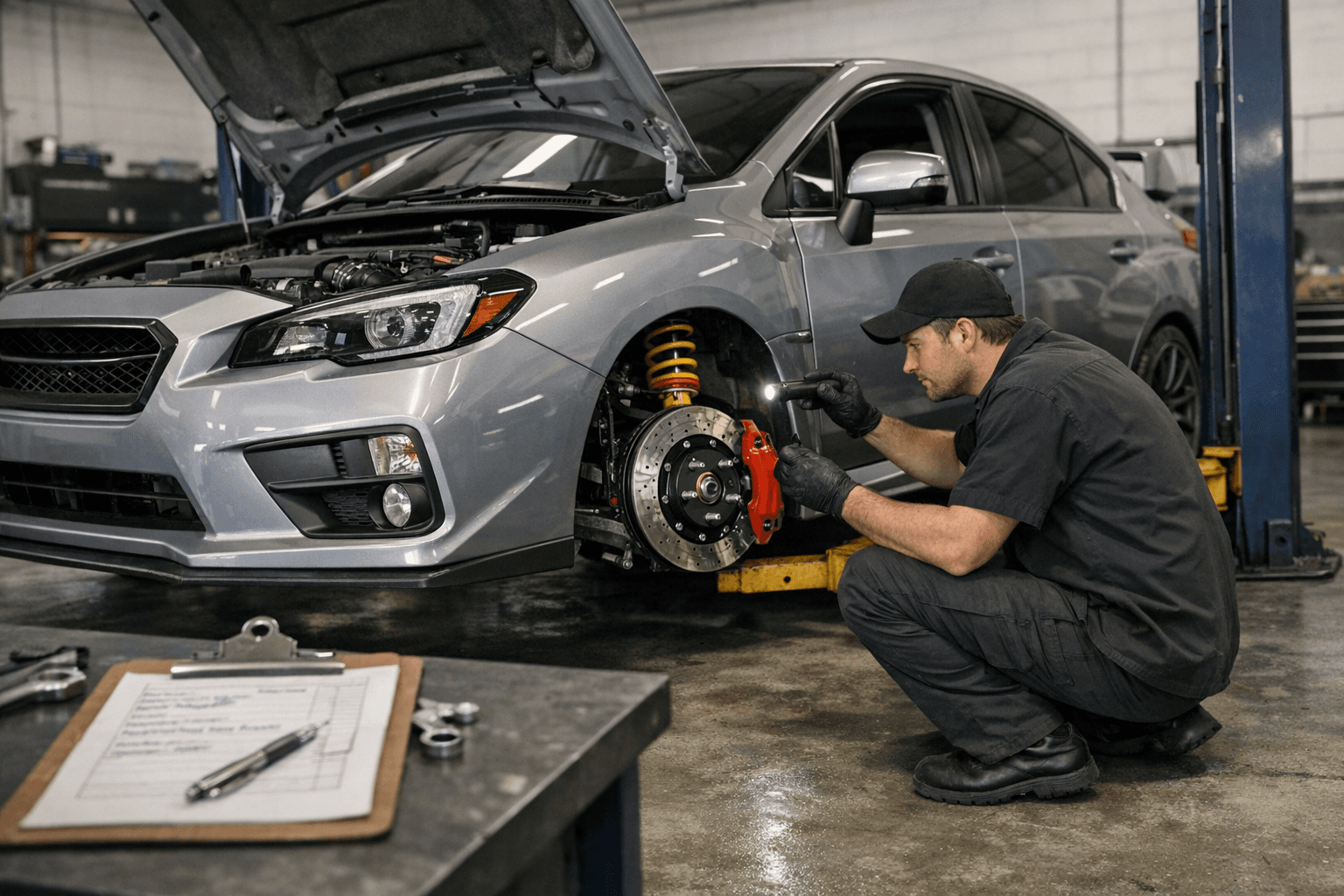
- Suspension and steering: Check for cheap hardware, uneven tire wear, rubbing, poor alignment, stressed ball joints, and questionable install quality.
- Engine and tuning: Scan for readiness monitors, codes, unusual fuel trims, aftermarket boost control, and evidence that parts were swapped back to stock right before sale.
- Brakes and wheel fitment: Make sure the wheel and tire package clears correctly, the offset is sane, and braking performance has not been compromised by form-over-function choices.
- Wiring and electronics: Look for spliced harnesses, poor grounds, aftermarket alarms, lighting hacks, and audio work that turns into parasitic-draw headaches later.
This is why a pre-purchase inspection earns its keep fast on modified cars. The seller may honestly believe the build is sorted because it drives straight and looks good in pictures. That is not the same thing as sorted.
A clean vehicle-history report still matters here
Vehicle history will not tell you everything about a tune or a lift kit, but it still changes how you read the modification story.
- Accident history changes the interpretation. If the car also has prior collision damage, aftermarket body panels or lighting become a different conversation.
- Ownership pattern matters. A long-term owner with records usually gives a cleaner signal than a car that bounced through auctions, short ownership periods, or dealer flips.
- Title or total-loss history compounds mod risk. A modified car with a branded-history story deserves a much harder look than a modified car with an otherwise straightforward background.
This is the VINSCRIBE angle. The report may not certify the quality of the upgrades, but it tells you whether the rest of the car's story gives those upgrades room to be believable.
Watch these before you buy someone else's build
These are actually useful for this topic. One video covers the real tradeoffs of buying a modified car, one explains the insurance side, and one shows why skipping inspection on a non-stock vehicle is asking for trouble.
A practical decision rule for buyers
Proceed
The parts are sensible, the paperwork exists, insurance is comfortable, and the inspection supports the seller's story.
Proceed carefully
The car is interesting but not perfectly documented. Price it like a risk asset, not like a premium collector build.
Walk away
No receipts, no alignment proof, no insurance clarity, mystery tune, or obvious evidence that appearance got more attention than engineering.
The right modified car can be a fun buy. The wrong one becomes a negotiation with your insurer, your mechanic, and your own regret.
What VINSCRIBE helps you do before the inspection gets expensive
VINSCRIBE is the first screen, not the only screen. That matters.
- Check title, total-loss, theft, and ownership history before you spend time validating the build quality.
- See whether the vehicle's background supports the seller's story or makes the modifications feel like a cover for something rougher.
- Bring one clean vehicle-history report into the insurance quote, financing conversation, inspection, and negotiation so everyone is working from the same baseline facts.
That is the smart order here: verify the car's paper trail, verify the modifications, then decide whether the price still makes sense.