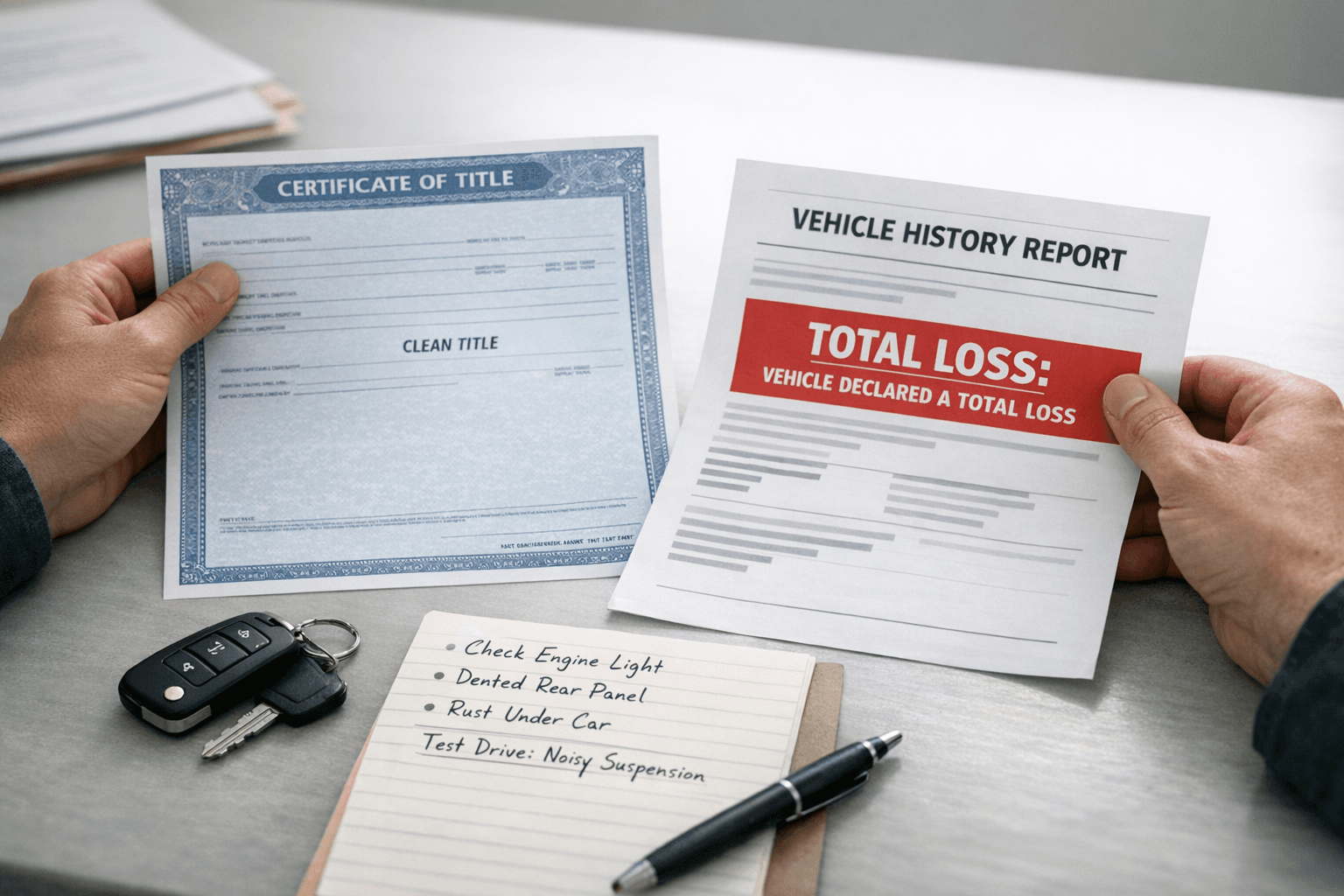
Clean Title, Total-Loss History in 2026: The Used-Car Mismatch That Catches Buyers Too Late
"Clean title" is one of those phrases that short-circuits people. A listing says it, the seller repeats it, and suddenly buyers stop asking harder questions. That is exactly how a car with ugly prior history still gets sold as if the paperwork settled everything.
The part that trips people up is simple: a clean title and a prior total-loss history are not the same question. A title tells you what the current paper status looks like. A total-loss record tells you what happened to the car in the insurance world. Those two things can line up neatly, but they do not always.
This is not the same article as rebuilt-title shopping. There, the warning is obvious. Here, the whole problem is that the obvious warning may be missing. If you are buying a used car and the history report shows a prior total loss while the title still looks clean, you should slow the deal down right there.
Why this catches buyers off guard
Paper signal
Looks fine
The title may not show a scary brand in the way buyers expect, so the listing feels safer than it is.
Damage history
Still matters
A prior total-loss call usually means the car once crossed into serious insurance-loss territory, even if it later returned to market.
Buyer mistake
Stops early
People hear "clean title" and stop investigating when they should be asking for the loss story, repair path, and inspection proof.
I would treat this combination as a history mismatch, not a green light. It does not automatically make the car a bad buy, but it absolutely means you are past the point where surface-level reassurance is enough.
What a prior total-loss record actually tells you
According to the Bureau of Justice Assistance's NMVTIS guidance, total-loss history matters because it usually points to severe prior damage. NICB also notes that "total loss" and "salvage" are not identical terms. That distinction matters more than most buyers realize.
- Total loss is an insurance decision. The carrier decided the claim crossed the point where paying out the value of the vehicle made more sense than normal repair handling.
- Salvage is not always the same label. Whether a vehicle becomes salvage depends on insurer policy and state law, which means the paper outcome can vary even when the damage was serious.
- A clean-looking title does not erase the old event. It just means the title itself is not the only place you should be looking for risk.
That is the core buyer problem. A clean title sounds final. It is not. It is one data point sitting next to an insurance-loss record that deserves equal attention.
The real reasons these cars end up back on the market
-
The damage was repaired well enough to photograph nicely.
Plenty of risky used cars do not look risky in listing photos. Straight panels and glossy paint tell you almost nothing about what happened underneath.
-
The seller is leaning on the clean-title phrase because they know it calms people down.
Sometimes that is sloppy shorthand. Sometimes it is strategic. Either way, you should not let the phrase do more work than the documents.
-
The buyer is comparing it to rebuilt-title cars and feeling relieved.
That is the wrong benchmark. The better comparison is a genuinely clean-history car priced nearby, not a worse one that is easier to reject.
-
Insurance, financing, and resale questions get postponed until after the purchase.
That delay is where expensive regret lives. If the history is complicated, those calls need to happen before money moves.
How to vet one without fooling yourself
-
Get the VIN history first, not after the test drive.
FTC guidance is still the right starting point here: pull a vehicle history report before you buy, then compare the report against the seller's story line by line.
-
Ask what caused the total loss.
Flood, collision, theft recovery, fire, hail, and vandalism do not create the same kind of future risk. "It was minor" is not an explanation.
-
Ask for repair invoices, not just before-and-after photos.
You want to know what parts were replaced, what was repaired instead of replaced, and whether structural, electrical, restraint-system, or ADAS work was involved.
-
Pay for a real pre-purchase inspection.
The FTC is explicit that a history report does not replace an independent inspection. With a prior total loss on record, that inspection is not optional in any serious sense.
-
Call your insurer on the exact VIN before you commit.
Do not ask in the abstract. Ask about this car, this VIN, and this history. Coverage and claim treatment can feel very different once the record is in front of the underwriter.
-
Price it like the next buyer will also see the history.
Even if you are comfortable with the car, you are not the last person who will run the VIN. The resale penalty is part of the purchase price whether you like it or not.
When the deal is workable and when it is not
Maybe workable
The cause of loss is documented, the repair file is credible, the inspection is strong, and the price leaves real room for future stigma and uncertainty.
Renegotiate hard
The car might be fine, but the seller is pricing it like the total-loss history is ancient trivia. It is not. History you have to explain later should be bought at a discount now.
Walk away
The seller is vague, paperwork is thin, the inspection raises structural or electrical questions, or the price barely moves off clean-history comps.
The last point matters more than people want to admit. If the car carries a history premium in risk but only a tiny discount in price, you are doing the seller a favor, not yourself.
Watch these before you let a clean title talk you into a bad deal
These two are actually useful for this topic. One breaks down how title branding and salvage history affect a buyer later. The other is NHTSA's reminder that the inspection step still matters, especially when the paperwork story is already complicated.
What this means for VINSCRIBE users
This is exactly the kind of car where a casual read of the listing is not enough.
- VINSCRIBE helps surface title, insurance-loss, theft, and mileage context before the seller's phrasing starts steering the decision.
- It gives you one report you can compare against the title, inspection notes, and seller explanation instead of trying to remember six half-clear red flags later.
- It helps you decide whether you are looking at a manageable discount car or a future argument with your insurer, lender, and next buyer.
That is the real use case here. Not panic. Just clearer judgment before the money is gone.