Curbstoning Risk in 2026: How to Catch Fake Private Sellers Before You Pay
A lot of "private seller" listings are exactly what they claim to be. Some are not. Curbstoning is when someone sells cars as a private party while operating like an unlicensed dealer.
Why does that matter? Because these deals are where buyers often lose the paper trail. You can end up with title assignment problems, missing disclosures, and a registration headache that shows up after your payment is gone.
This guide gives you a quick way to screen these deals before money moves.
What curbstoning looks like in the real world
Listing Pattern
Repeat Inventory
Same seller account with multiple vehicles rotating in and out quickly.
Meeting Setup
Neutral Lot
Seller avoids home address or business location and pushes a fast handoff.
Title Chain
Name Mismatch
Person selling the car is not the titled owner, or assignment fields are incomplete.
This is not just a negotiation issue. It is an ownership-transfer risk. If title transfer fails, your "good deal" gets expensive fast.
A 12-minute pre-payment checklist
-
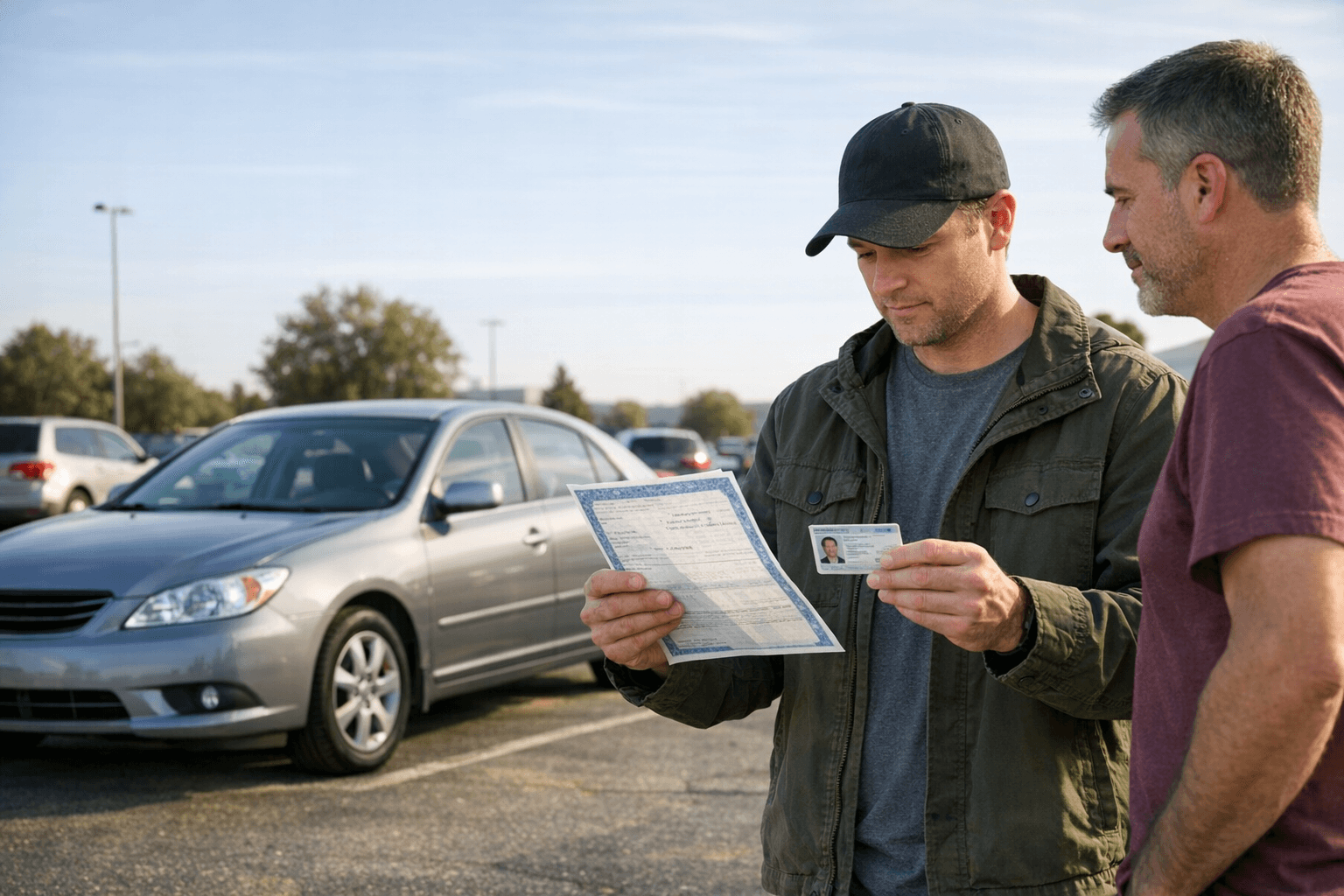
Match the seller's ID to the title, exactly.
If legal name or signature does not line up, pause immediately.
-
Check the title assignment section line by line.
Look for blanks, cross-outs, or mismatched dates that suggest skipped transfers.
-
Ask where the vehicle was last registered and serviced.
Evasive answers are a stronger signal than cosmetic flaws.
-
Run a VIN history report before handing over funds.
Use VINSCRIBE to verify title brands, ownership timeline, and mileage consistency.
-
Confirm plate and VIN match all paperwork and listing photos.
This catches recycled listings and "bait" vehicles.
-
Use a reversible payment method when possible.
Wire pressure and urgency language are common in fraudulent private-party deals.
When to proceed, when to walk
Proceed
ID matches title, assignment is complete, and VIN history supports the seller's story.
Conditionally proceed
You found minor clerical issues, and seller agrees to resolve them before payment.
Walk away
Seller name mismatch, pressure tactics, or incomplete title chain. Do not negotiate past this.
You do not need to prove someone is a curbstoner. You only need enough uncertainty to stop the transaction.
Video briefings
These videos are useful because they show how curbstoning and title-chain issues appear in real transactions.
Where VINSCRIBE fits in this workflow
VINSCRIBE helps you pressure-test the seller's claims before payment:
- Review title and ownership signals before meeting the seller.
- Catch timeline mismatches that often show up in curbstoner inventory.
- Share one report with your mechanic, co-buyer, or lender so decisions are based on the same facts.
A clean test drive is not enough if the paperwork trail is weak. Validate the VIN first.