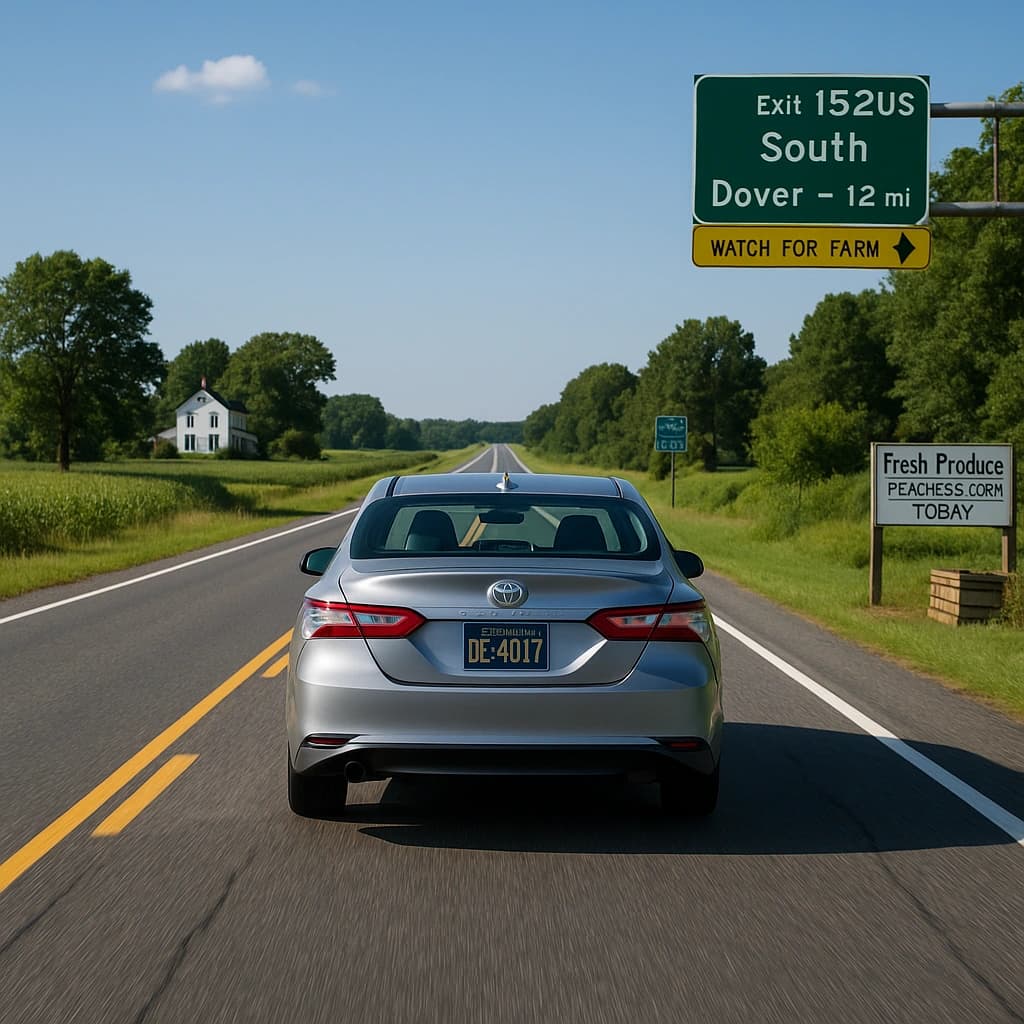
Delaware VIN Lookup: Complete Guide to Vehicle History in the First State
VIN Lookups in Delaware: What You Need to Know
Despite being the second-smallest state in the country, Delaware packs a surprising number of vehicle history challenges into its borders. The I-95 corridor funnels enormous volumes of traffic through New Castle County, coastal Sussex County faces Nor'easters and flood surges, and the state's lack of sales tax makes it a magnet for vehicle registrations from across the Mid-Atlantic. Delaware requires annual safety inspections and biennial emissions testing—more rigorous than many neighboring states—but a VIN lookup remains essential because inspections only capture a snapshot of current condition, not the vehicle's full history.
What a VIN Lookup Reveals
A Vehicle Identification Number (VIN) is the unique 17-character code assigned to every vehicle built since 1981. A comprehensive VIN lookup pulls data from national databases to uncover:
- Accident and damage history — collisions, structural damage, and airbag deployments reported to insurance companies and law enforcement.
- Title brands — salvage, flood, rebuilt, and other designations that signal major past issues.
- Odometer readings over time — a mileage trail that helps detect rollback or tampering.
- Ownership and registration history — how many owners, where the vehicle was registered, and how long each owner kept it.
- Open recalls — manufacturer safety recalls that haven't been addressed.
Delaware Division of Motor Vehicles (DMV) Resources
Vehicle titles in Delaware are managed by the Delaware Division of Motor Vehicles (DMV), which handles title issuance, registration, and inspections. The DMV maintains records of:
- Title history: Basic ownership and title brand records for vehicles titled in Delaware.
- Lien records: Outstanding liens on vehicles registered in the state.
- Salvage and rebuilt designations: Records of vehicles branded as salvage or rebuilt within Delaware.
- Inspection records: Results from Delaware's annual safety inspections and biennial emissions tests.
These state-level records are limited to Delaware activity. They won't show you an accident that happened in Maryland, a flood title from Virginia, or service records from any state. VINSCRIBE pulls from NMVTIS and other national databases to give you the complete picture across all 50 states.
Inspection and Emissions Requirements
Delaware requires annual safety inspections for all registered vehicles, covering brakes, lights, tires, steering, suspension, windshield, and exhaust. Additionally, biennial emissions testing (every two years) is required for most vehicles. This makes Delaware more stringent than many neighboring states. However, inspections only verify current condition—they don't reveal a history of flood damage, prior accidents, title brands from other states, or how the vehicle was maintained over its lifetime. A VIN report fills those critical gaps.
Key Delaware Title Laws
- Salvage threshold: Delaware brands a vehicle as salvage when the cost of repair exceeds 75% of its actual cash value (ACV).
- Rebuilt title: A salvage vehicle can be retitled as "Rebuilt" after passing a DMV inspection verifying the repairs were properly completed.
- Flood title disclosure: Vehicles with water damage are required to carry a flood or water damage brand on the title.
- Title transfer: Delaware requires title transfer within 30 days of purchase. Delaware has no sales tax—one of only five states without one—which makes it an attractive state for purchasing and registering vehicles. Buyers pay only the title fee, registration fee, and a document preparation fee.
- No odometer disclosure required for 20+ year old vehicles: Delaware follows the federal exemption for vehicles over 20 model years old, making odometer fraud harder to detect on older vehicles without a VIN report.
Delaware-Specific Risks and Common Issues
Delaware's coastal location, heavy I-95 traffic, and unique role as a tax-advantaged registration state create a distinct set of risks that used car buyers need to understand.
Climate and Environmental Risks
- Coastal flooding and storm surge: Delaware's entire eastern border is coastline—the Atlantic Ocean and Delaware Bay. Coastal Sussex County (Rehoboth Beach, Lewes, Bethany Beach) and low-lying areas of New Castle County are vulnerable to flooding from Nor'easters, hurricanes, and tropical storms. Storm surge can push saltwater miles inland, submerging vehicles in parking lots and driveways. The flat terrain means water lingers rather than draining quickly.
- Road salt corrosion: Delaware applies road salt during winter months, particularly on the I-95 corridor and major highways in New Castle County. While Delaware's winters are milder than New England, salt still accelerates corrosion on undercarriages, brake lines, and body panels over multiple seasons.
- Salt air from the ocean and bay: Vehicles in coastal communities face year-round exposure to salt-laden air from the Atlantic and Delaware Bay. This corrodes paint, electrical connections, and metal components even without direct contact with saltwater. Vehicles stored outdoors near the coast deteriorate faster than those inland.
- High traffic density on I-95: The I-95 corridor through Wilmington and New Castle County carries heavy traffic between Philadelphia, Baltimore, and the wider Northeast. Vehicles commuting this corridor accumulate significant stop-and-go wear on brakes, transmissions, and suspension components, plus exposure to road debris and fender-bender risks.
- Nor'easter wind and debris damage: Coastal storms bring high winds that can cause tree limb damage, flying debris impacts, and other exterior damage that may be repaired cosmetically without documenting the underlying cause.
Common Scams and Red Flags
- Tax-motivated registration games: Delaware's zero sales tax attracts out-of-state buyers and corporate fleet registrations. Some vehicles show Delaware titles despite being driven primarily in Pennsylvania, Maryland, or New Jersey. This creates gaps in service history and can obscure the vehicle's true usage pattern and condition.
- Undisclosed flood damage: Coastal Delaware vehicles are at risk of flood damage from storms. Some flood-damaged vehicles are dried out, cleaned up, and sold privately without proper flood title branding, especially if the owner did not file an insurance claim.
- Title washing from neighboring states: Delaware borders Pennsylvania, Maryland, and New Jersey. Vehicles with salvage or flood titles from these states may be brought to Delaware to obtain a cleaner title, taking advantage of differences in state title branding requirements.
- Corporate fleet vehicle history: Delaware's business-friendly laws mean many corporate fleets are registered in the state. These vehicles may have had multiple drivers, been driven hard on sales routes, or been maintained on a minimum-cost schedule. Fleet history isn't always obvious from the title alone.
- Curbstoning: Unlicensed dealers buying vehicles at auction and reselling them as private sellers to avoid Delaware's dealer disclosure requirements.
Regional Variations Within Delaware
- Wilmington / New Castle County: The most densely populated area, dominated by I-95 corridor traffic. Heavy commuter wear, road salt exposure, and urban driving conditions. Many corporate fleet vehicles are registered here due to Delaware's incorporation laws. Vehicles face congestion-related wear similar to Philadelphia suburbs.
- Dover / Kent County: Central Delaware with a mix of suburban and rural driving. Dover Air Force Base means some military vehicle transfers with diverse ownership histories. Less traffic congestion but still exposed to winter road salt and occasional coastal storm effects.
- Sussex County / beach communities: Coastal flooding is the primary risk here. Tourist traffic in summer creates seasonal congestion. Vehicles from beach towns face year-round salt air corrosion and increased flood risk during storm season. Some vehicles are seasonal-use beach cars that may have irregular maintenance patterns.
- Rural areas: Agricultural use, unpaved road driving, and towing wear. Vehicles may have been used for farm operations with wear patterns not reflected in the odometer. Less access to service facilities can mean deferred maintenance.
Buying a Used Car in Delaware: Practical Guide
Delaware's annual safety inspection requirement provides more protection than many states, but inspections only capture current condition. A VIN lookup reveals the full history that inspections cannot.
Pre-Purchase Checklist
- Run a VINSCRIBE report before visiting the vehicle. Check for title brands, accidents, flood history, and mileage patterns.
- Check the NHTSA recalls database for any open safety recalls on the specific VIN.
- Take advantage of Delaware's zero sales tax—you'll pay only title, registration, and document preparation fees.
- Verify the vehicle has a current Delaware safety inspection sticker. If not, factor in the cost of repairs needed to pass inspection.
- Arrange for a pre-purchase inspection by an independent mechanic, especially for coastal vehicles where salt air corrosion may not show up in a standard safety inspection.
Inspection Tips for Delaware Vehicles
- Check for coastal corrosion: If the vehicle was registered in Sussex County or near the Delaware Bay, inspect electrical connectors, battery terminals, and underhood wiring for green oxidation from salt air. Check body panel edges, door bottoms, and wheel wells for corrosion that salt air accelerates.
- Look for flood indicators: Check under carpets and floor mats for water staining, silt deposits, or musty odors. Inspect the trunk and spare tire well for waterline marks. Look for corroded fasteners and electrical connectors under the dash. Check for fogging inside headlight and taillight assemblies.
- Inspect the undercarriage: Even though Delaware's winters are milder than New England, road salt still causes corrosion. Put the vehicle on a lift and check brake lines, fuel lines, exhaust, and structural components for rust. Pay extra attention to vehicles driven on the I-95 corridor.
- Verify the registration matches actual use: Ask where the vehicle was primarily driven. If it's Delaware-titled but shows service records only from Pennsylvania or Maryland, the vehicle may have been registered in Delaware for tax purposes while being driven elsewhere.
- Check for fleet vehicle indicators: Look for remnants of fleet markings, commercial equipment mounts, or logos that have been removed. Check the interior for wear patterns consistent with multiple drivers (adjustable seat tracks worn, steering wheel wear, multiple key copies).
- Have a mechanic check it: Even with Delaware's annual safety inspection, a mechanic can catch issues that a basic inspection might miss, such as early-stage corrosion, worn drivetrain components, or evidence of poorly repaired damage.
Title Transfer Process
- Obtain the signed title and bill of sale from the seller.
- Visit a DMV office to complete the title transfer within 30 days of purchase.
- Pay the title fee, registration fee, and document preparation fee. There is no sales tax on vehicle purchases in Delaware.
- Provide proof of liability insurance (Delaware requires 25/50/10 minimum coverage).
- The vehicle must pass a Delaware safety inspection before registration can be completed.
- For out-of-state vehicles, a VIN inspection may be required.
Delaware DMV vs. VINSCRIBE
| Feature | Delaware DMV | VINSCRIBE |
|---|---|---|
| Geographic Coverage | Delaware only | Nationwide (all 50 states via NMVTIS) |
| Accident History | Limited to Delaware-reported incidents | Comprehensive accident history across all states |
| Title Brand History | Delaware title brands only | Full title brand history from all states |
| Service Records | Not included | Includes records from participating service facilities |
| AI Analysis | None | AI-powered risk assessment and plain-language analysis |
| Recall Information | Not included | Active recall data with completion status |
Table can be scrolled horizontally on mobile devices.
See VINSCRIBE in Action
Watch these demos to see how VINSCRIBE helps Delaware buyers uncover hidden vehicle history and make confident purchasing decisions: