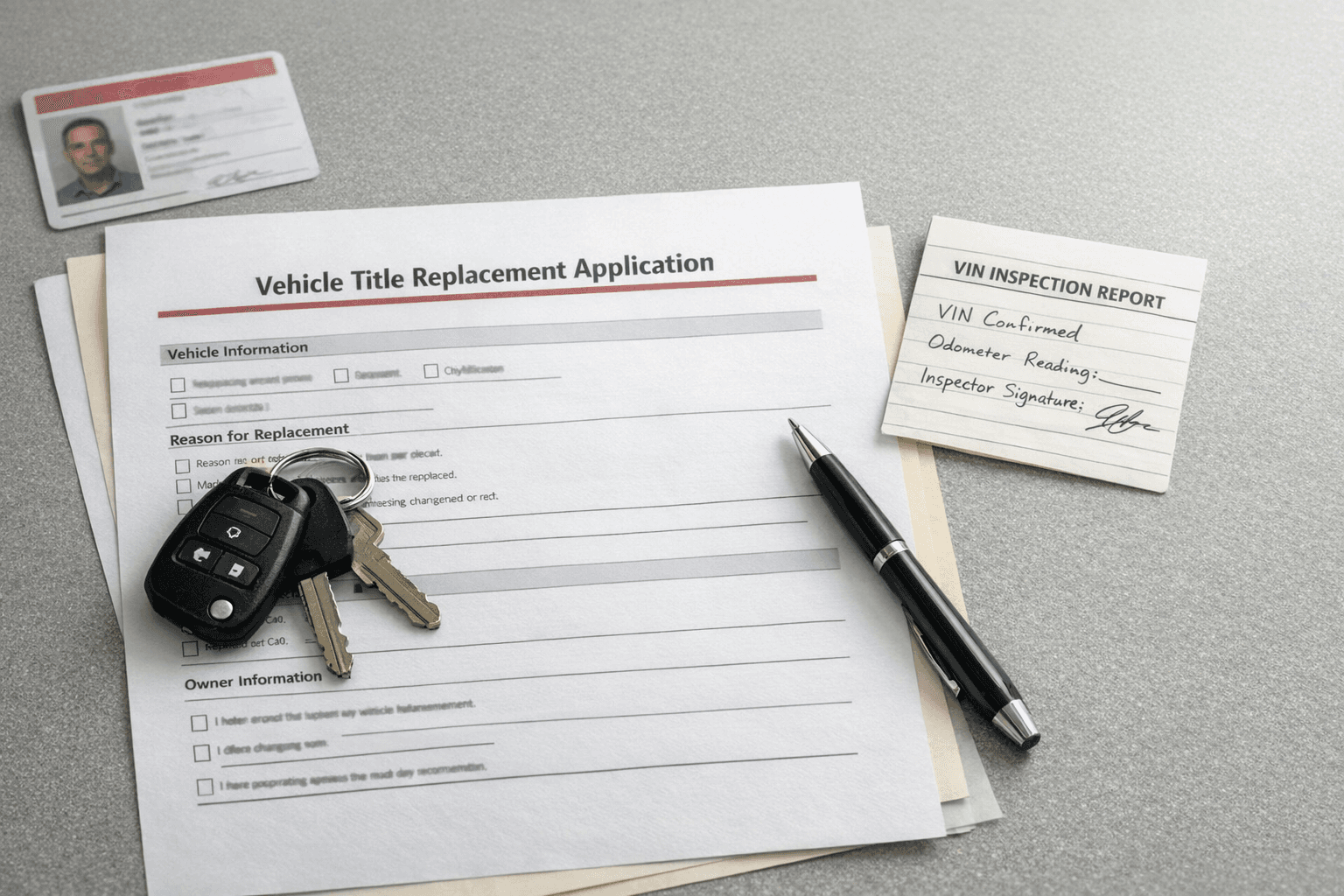
Duplicate Title Used Car Risk in 2026: When a Seller Says the Title Is Lost but the Deal Is Still Easy
"I lost the title, but I can get a duplicate next week" is one of those sentences that can mean two very different things. Sometimes it means the seller is disorganized but legitimate. Sometimes it means you are about to wire money into a paperwork fog and hope the ownership story clears up later.
I would not treat those two scenarios the same, and neither should you. A missing title is not just an inconvenience. It changes who controls the timeline, who still has leverage, and whether the person in front of you can actually transfer ownership cleanly.
That is what makes this different from the rebuilt-title, lien-payoff, and out-of-state problems we have already covered. The main risk here is document control. Before you argue about price, you need to know whether the seller can prove they are the right owner, whether the VIN matches, whether a lienholder is still attached, and whether the replacement-title process is real instead of theoretical.
Why a missing title changes the deal immediately
Ownership proof
Not in hand
The seller may own the car. They may also just control the keys. Those are not the same thing.
Timeline
Now uncertain
The sale is no longer "pay, sign, leave." It depends on DMV processing, state rules, and whether the seller is telling the full story.
Fraud exposure
Much higher
A fake excuse about a lost title can hide title jumping, a leftover lien, identity mismatch, or a car that should not be sold yet.
This is the part buyers often underestimate. The car can look great. The seller can sound calm. None of that fixes a broken ownership chain.
The seller stories you should hear more critically
-
"I already applied for the duplicate title."
Maybe they did. Ask what state issued the current title, when they applied, and what document confirms the request. Vague answers matter here.
-
"I have the registration, so we are good."
Registration helps identify the vehicle, but it is not the same thing as a transferable title.
-
"You can pay me now and I will overnight the title when it arrives."
That is the version I dislike most. Once your money is gone, your leverage is gone too.
-
"The title is electronic, so I do not need anything in hand."
Electronic title systems are real, but the transfer process is still specific. You need the exact state workflow, not a casual summary from the seller.
-
"My relative's name is on the paperwork, but I sell the car for them all the time."
No. That is where title-jumping and identity problems start getting expensive.
A legitimate seller can answer these questions without getting offended. Maybe they are annoyed. Fine. They still need to answer them.
What a duplicate title does fix, and what it does not
It can fix a missing document
If the actual owner of record lost, damaged, or never received the title, many states let that owner request a replacement or a transfer-with-replacement form.
It does not fix ownership confusion
A duplicate title does not erase an open lien, a mismatched seller name, a forged signature problem, or a car being sold by someone who is not the titled owner.
It does not make the old title usable
Some states warn that once a replacement title is issued, the original title is canceled. If the seller "finds the old one later," that can create a brand-new problem, not a solution.
It does not replace VIN homework
You still need to check the VIN against the vehicle, the seller's ID, and the vehicle-history record before you act like the paperwork issue is the only issue.
That distinction matters. Buyers hear "duplicate title" and think the seller is solving the problem. Sometimes they are only describing one small slice of it.
The safest way to handle a used-car deal with a missing title
-
Make the seller replace the title before the sale, not after.
This is the cleanest answer most of the time. If they are the real owner, let them complete that part before your money enters the story.
-
Check the seller's ID against the ownership record.
The name needs to make sense. If the seller starts explaining cousins, exes, roommates, or "I am selling it for my uncle," slow everything down.
-
Confirm whether a lienholder still exists.
A lost title can be the first clue that the title was never free and clear to begin with.
-
Match the VIN everywhere.
Check the dashboard VIN, door-jamb VIN label, and every ownership document you are shown. If even one digit becomes a conversation, stop.
-
Run the vehicle-history report before discussing deposits.
A missing title becomes much more dangerous when it is attached to theft history, prior title brands, odometer inconsistencies, or state-to-state movement that does not fit the seller's story.
-
Complete the transfer at the DMV or state-approved office when possible.
That is not overkill. It is the easiest way to make sure the ownership handoff actually happens instead of being promised later.
When a deposit might be reasonable, and when it absolutely is not
Usually no deposit
If the title is missing and the seller has not finished the replacement process, you do not owe them trust-funding.
Rare exception
A tiny, documented deposit might make sense only if the seller has proven ownership, shown the DMV workflow, and agreed in writing that the deal dies if the title issue is not cured by a set date.
Hard stop
If they want full payment before the title is in transferable form, move on. There are easier cars to buy.
This is one of those moments where a cheap price can make people act strangely. Do not let a $1,500 discount turn you into the seller's unsecured lender.
Red flags that point to a bigger problem than a lost document
- The seller's name does not match the title record, and the explanation is a speech instead of a document.
- The VIN on the car, registration, bill of sale, and title paperwork do not line up perfectly.
- The seller wants to meet anywhere except a DMV office, tag agency, bank, or other place where paperwork can be checked in real time.
- The story keeps changing about which state issued the title, whether the title is paper or electronic, or whether a lien was already cleared.
- The price is low enough to make you feel rushed.
- The vehicle-history report shows theft recovery, title-brand history, or state movement that the seller did not mention until you asked.
I would pay close attention to that last one. Once the story and the record stop agreeing, the title problem stops being administrative and starts looking strategic.
How this differs from the other paperwork traps
Not the same as a bonded title
A bonded-title situation usually starts after ownership documents are already broken in a more serious way. A duplicate-title problem starts with a seller claiming the ownership trail is intact, just missing on paper.
Not the same as a lien payoff
Lien-payoff deals revolve around satisfying a lender and releasing the title. This issue is more basic: can the seller prove they can transfer the car at all?
Not the same as out-of-state buying
Out-of-state deals add distance and registration friction. A duplicate-title deal can go sideways even in your own zip code if the ownership record is sloppy or fake.
Closer to a control problem
The real question is who controls the paperwork and whether they can finish the transfer without asking you to trust a story that has not been documented yet.
Where VINSCRIBE helps before the DMV counter does
VINSCRIBE does not replace title-transfer rules. It helps you decide whether this seller and this car deserve more of your time in the first place.
- Use the VIN report to check title-brand history, odometer readings, theft signals, and cross-state activity before you get trapped in a paperwork promise.
- Compare the report with the seller's story. If they say the car has been local forever and the record says otherwise, that matters.
- Bring one clean report into the title-transfer conversation so you are not trying to solve a document problem without knowing the vehicle-history problem attached to it.
That last part is where people save themselves a lot of grief. There is no point untangling a title issue for the wrong car.
Sources
- USA.gov: Vehicle title and transfer basics
- Bureau of Justice Assistance: NMVTIS consumer information
- Florida Highway Safety and Motor Vehicles: Selling a Vehicle
- Florida Highway Safety and Motor Vehicles: Title Fraud
- California DMV: Vehicle Titles
- California DMV: REG 227 Application for Replacement or Transfer of Title