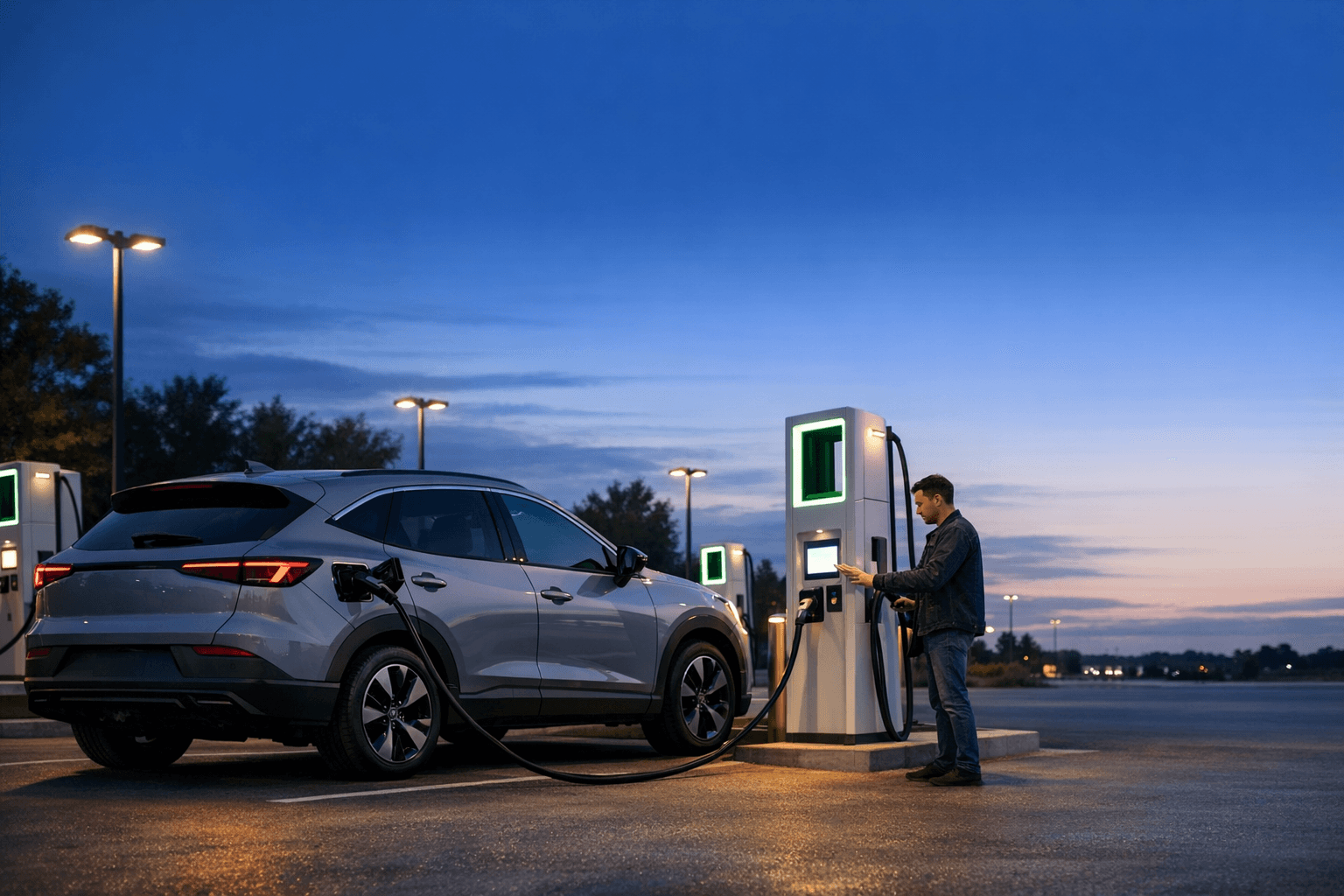
Public EV Charging Reliability in 2026: A Buyer + Dealer Checklist to Avoid Stranded Deals
As of 2026-02-11, used EV pricing is no longer the only friction point in a deal. Charging reliability is the hidden variable that can make a buyer walk, delay a delivery, or force a last-minute price concession.
This guide turns charging reliability into a practical decision system. You will get a market snapshot, a checklist for buyers and dealers, and a clear framework for when to proceed, reprice, or walk away.
Market Snapshot: Reliability Is Improving, But The Gaps Still Hurt Deals
Non-Charge Visits
14%
EV owners who visited a public charger but could not charge in the 2025 EVX study.
Public Stations
61,000+
Public Level 2 or DC fast charging stations in the U.S. (Feb 2024).
Public Ports
200,000+
Public U.S. charging ports reached in October 2024 and exceeded 207,000 by January 2025.
Reliability is getting better, but it is uneven. The 2025 JD Power EVX study shows non-charge visits falling to 14%, yet satisfaction scores for public Level 2 and DC fast charging still declined year over year. The same study notes that the most common cause of failed charging visits is chargers being out of service or not working properly.
Infrastructure is expanding quickly, but density and quality are not evenly distributed. Pew Research shows more than 61,000 public charging stations nationwide, yet access remains concentrated in urban areas. Federal tracking through the Joint Office and CRS confirms total public ports have passed the 200,000 mark, but growth does not automatically mean predictable uptime at every site.
Why Charging Reliability Is A Real Deal Risk For Used EVs
Charging reliability matters at three decision moments:
- Before purchase: buyers need proof that their daily routes can be supported by a stable mix of home and public charging.
- During recon and delivery: dealers need a predictable public charger for test drives, delivery-day top-offs, and customer onboarding.
- After purchase: if a buyer struggles to charge in the first week, the deal becomes a return risk or a reputation hit.
The most reliable EV deal is the one where charging is already solved. That means verifying port compatibility, real-world charging availability, and payment setup before a buyer signs.
Checklist: Validate Charging Reliability Before You Buy or List
-
Confirm port type and adapter plan.
Identify whether the vehicle uses CCS or NACS and confirm the buyer has the right adapter for the networks they will use.
-
Lock in a home or workplace charging plan.
A predictable Level 2 option lowers public charging dependence and reduces early ownership friction.
-
Map the top two weekly routes.
Verify there are at least two reliable fast-charging options on each route, not just a single station.
-
Test a real charging session.
Dealers should test a DC fast session during recon; buyers should complete a public charge before closing.
-
Validate payment setup.
Install the network apps, add payment methods, and confirm Plug&Charge if supported.
-
Check software and recall status.
Charging behavior and compatibility can change with software updates and recall remedies.
-
Price-in charging cost volatility.
Public charging prices vary widely by network, so confirm the buyer’s expected cost per mile.
Decision Framework: Proceed, Price-Adjust, or Walk
Gate 1: Charging Access Verified?
If home or workplace charging is not realistic, only proceed if public charging coverage is proven on the buyer’s routes.
Gate 2: Real Session Completed?
If no successful public session has been completed, pause delivery or discount to offset risk.
Gate 3: Costs Understood?
If expected charging costs exceed budget, adjust the price or recommend a different vehicle.
Gate 4: Support Plan Ready?
If the buyer cannot explain how they will charge for the first 30 days, the deal is fragile.
This framework keeps the decision objective. It turns charging reliability into a clear gating signal instead of a post-delivery surprise.
Dealer Playbook: Reduce Early EV Return Risk
- Run a fast-charge test during recon. Document session start time, payment method, and peak kW to prove the vehicle and charger work.
- Deliver with a charging guide. Provide a one-page checklist with local charging options, recommended apps, and payment steps.
- Verify adapter inventory. If a NACS adapter is required, include it in the deal and document the serial number.
- Show the buyer a first charge. A quick public charge before delivery removes uncertainty and builds trust.
Watch: Charger Connector Tips
A quick visual refresher for safe, consistent connector use.
What This Means for VINSCRIBE Users
VINSCRIBE helps turn charging reliability into a confident decision by tying the vehicle’s history to the charging plan:
- Verify ownership history, title status, and odometer integrity before you commit to an EV.
- Confirm open recalls or software updates that can affect charging behavior.
- Share a clean report with buyers or lenders to keep EV deals moving without surprises.
If charging reliability is the last remaining concern, a VINSCRIBE report helps remove the rest of the uncertainty.
Sources
- JD Power 2025 U.S. EVX Public Charging Study
- Pew Research: EV Charging Infrastructure in the U.S.
- Joint Office of Energy and Transportation: 200,000 Public Ports Milestone
- CRS: EV Charging Infrastructure FAQ (January 2025 Inventory)
- Electrify America Charging Guide
- Electrify America: Charger Connector Tips (Video)