Fake Dealer Websites in 2026: How Cloned Dealership Pages Steal Deposits From Used-Car Buyers
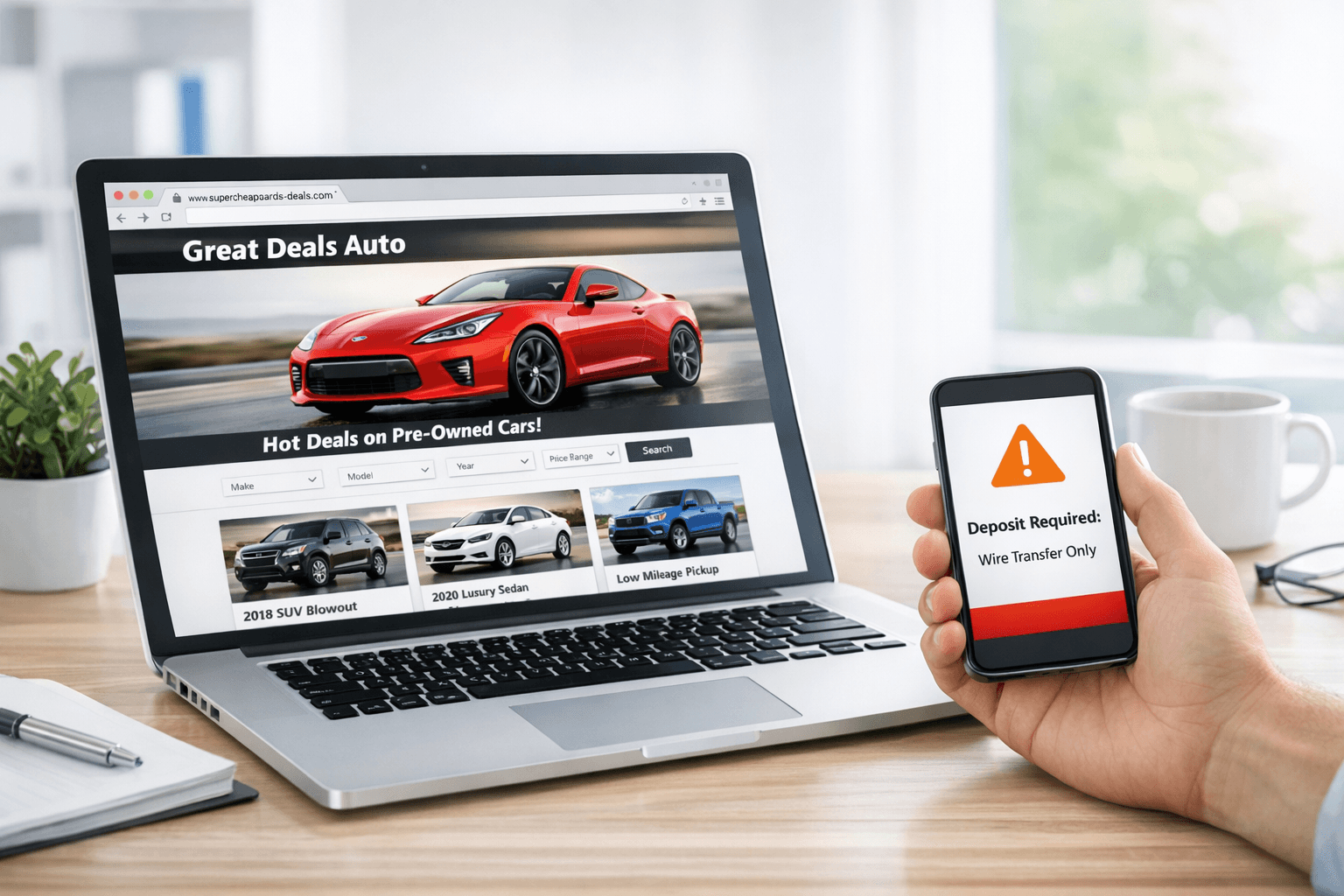
There is a version of the used-car scam that does not start on a sketchy corner lot. It starts on a polished website that looks normal.
That is why this story matters. On March 24, 2026, WYDOT warned buyers about a spoof site posing as a real Wyoming dealership. Two days later, Auto Finance News reported that Point Predictive had identified more than 100 dealership-cloning sites. Then this week, BBB Scam Tracker logged fresh April 16 reports from shoppers who said fake auto sellers tried to collect large down payments while posing as legitimate businesses.
This is not the same problem as our ghost-listing post, our curbstoning post, or our dealer-fees post. In those stories, you are still dealing with a real seller who is playing games with availability or price. Here, the seller may not exist at all. The site, phone number, paperwork, and "deposit instructions" can be part of a straight theft operation.
Why this is a different kind of used-car risk
March 24, 2026
Wyoming warning
WYDOT said a spoof site was posing as a legitimate dealership and warned buyers not to trust design alone.
March 26, 2026
100+ sites
Auto Finance News reported that Point Predictive had identified more than 100 dealership-cloning sites.
April 16, 2026
Fresh reports
BBB Scam Tracker showed new complaints describing fake dealer identities and large requested down payments.
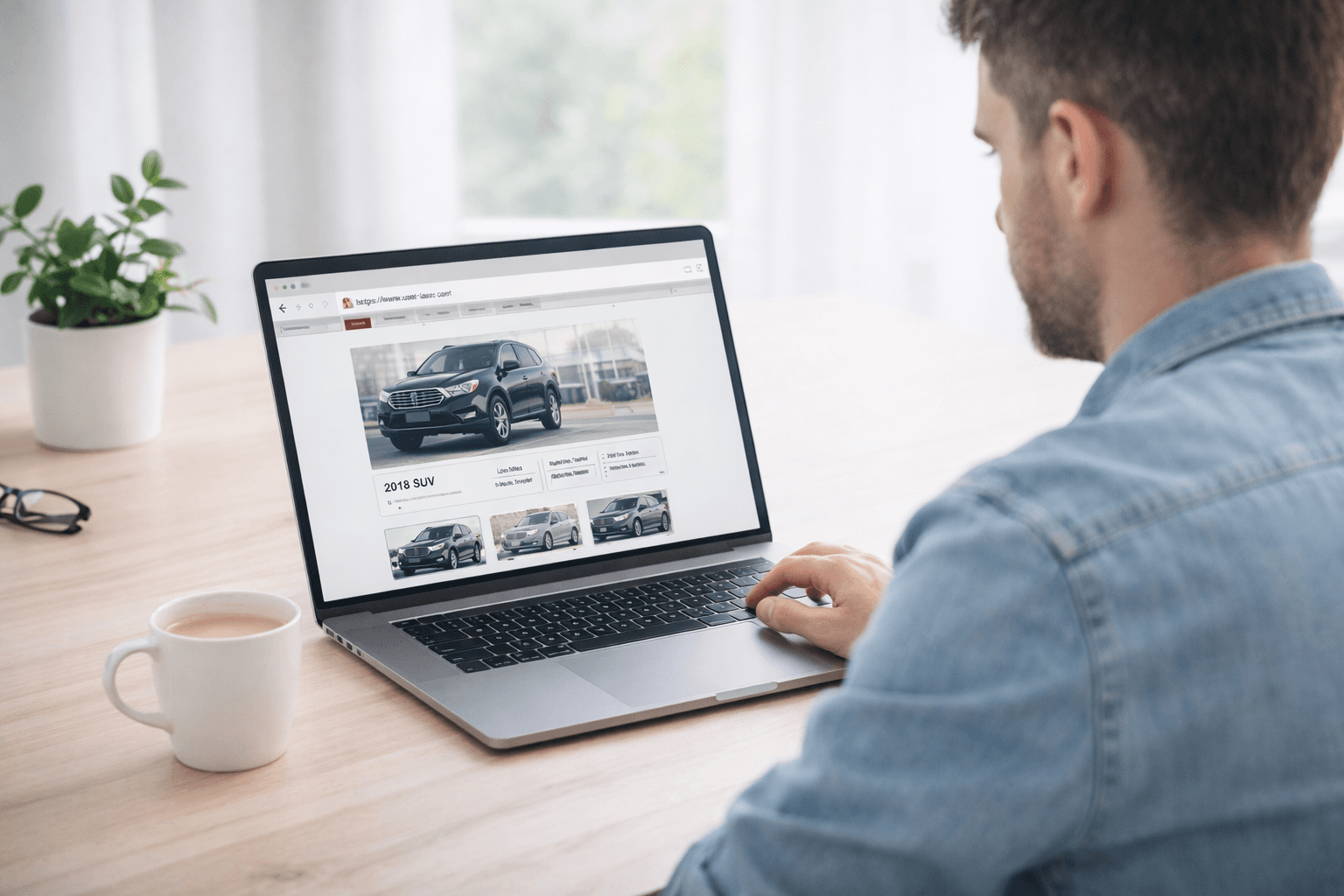
The dangerous part is how normal this can look. Tennessee's attorney general warned in March that these scams often use sophisticated websites, answer phone calls, send videos, and even provide fake business licenses. That is exactly why a rushed buyer gets trapped. You think you are doing normal online shopping for a truck, SUV, or collectible car. You are really being walked toward a wire transfer.
The playbook is simple and ugly
-
You find a vehicle priced just low enough to feel urgent.
Not always absurdly cheap. Just cheap enough that you worry somebody else will grab it first.
-
The website looks real.
It may copy a real dealer's name, inventory photos, address, logo, or staff bios. WYDOT said the design and graphics can match the real site while the URL quietly does not.
-
A human answers.
This is the part that throws people. Tennessee warned that scammers may answer calls, send videos, and produce fake documents to calm you down.
-
Then comes the payment pressure.
The scammer wants a deposit, a down payment, or a bank-to-bank transfer before you verify the seller, the location, and the actual vehicle.
I would treat any "reserve it today" pitch like a flashing hazard light if the seller still cannot prove, in a clean and boring way, that the business, the vehicle, and the VIN all line up.
What makes these scams work
Distance helps the scammer
Out-of-state buyers are easier to rush because they cannot casually drive by the store, inspect the car, or compare the lot to the listing.
The paperwork feels reassuring
Fake bills of sale, fake licenses, and copied dealer branding make people lower their guard too early.
Wire transfers are hard to unwind
Once funds leave your account, recovery odds get bad fast. That is why scammers keep pushing irreversible payment methods.
Modern AI lowered the cost of fake trust
Point Predictive's 2026 fraud trends report specifically flags AI dealer cloning alongside other fast-rising fraud tools.
That last point matters. You no longer need a sloppy scam page full of broken English to get burned. A cloned dealership site can look cleaner than a real independent dealer's website. That is the uncomfortable part.
The checks I would do before sending a single dollar
-
Check the URL character by character.
Do not trust the logo or the photos. Look for swapped letters, extra words, odd domains, or a site that pretends to be local but lives on a weird address.
-
Call the business using a number you found independently.
Use a state dealer-license list, a secretary of state listing, Google Maps, or the manufacturer's dealer locator if it applies. Do not rely on the number printed on the suspicious site.
-
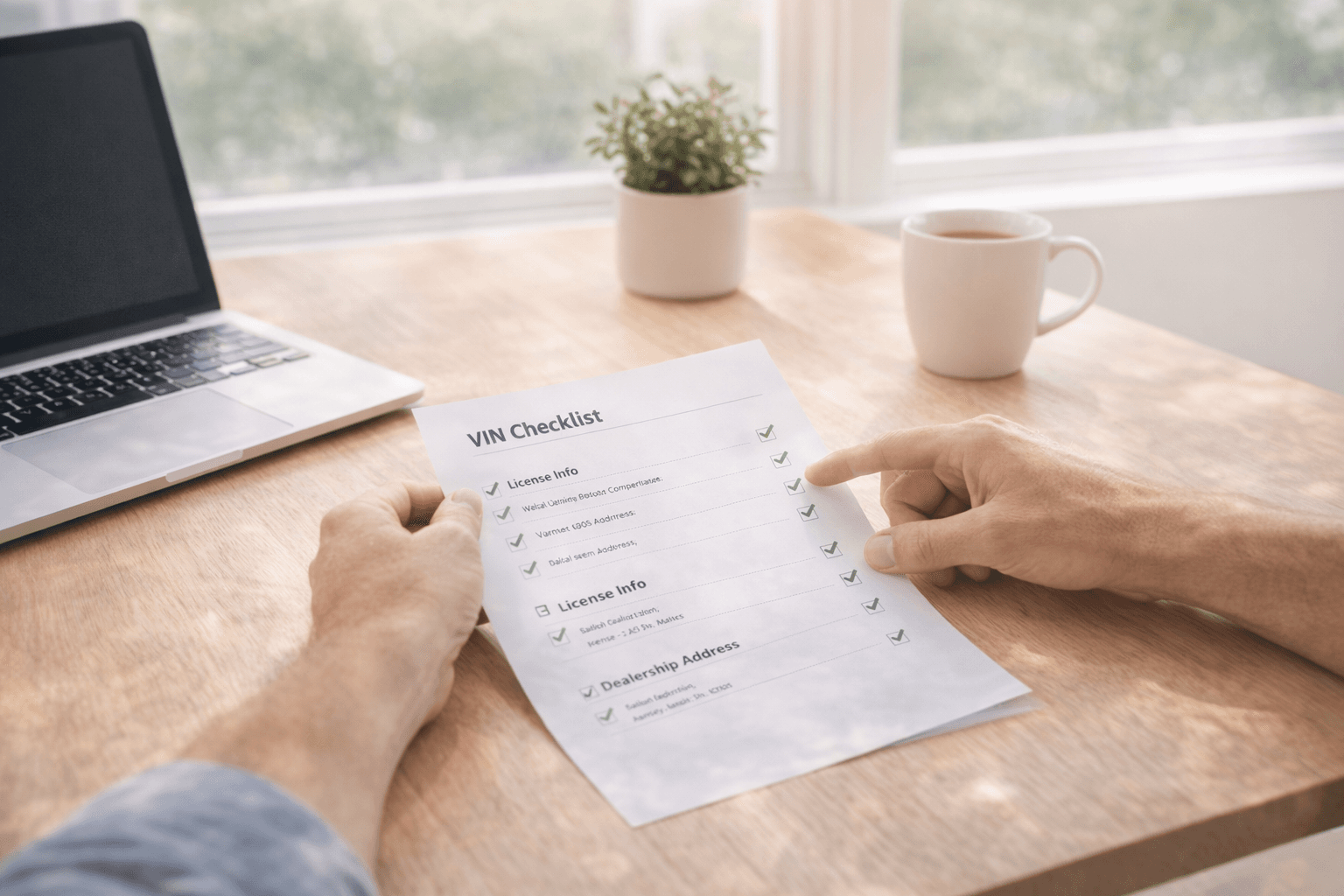
Ask for the VIN and confirm it two different ways.
A legitimate seller should be able to send the full VIN. Then check whether that VIN matches the vehicle shown, the trim claimed, and the story being told.
-
Verify the dealer license and business registration.
Wyoming publishes licensed dealer lists. Tennessee's guidance points buyers to its business entity search. Most states have some equivalent tool.
-
Refuse wire pressure.
If the seller insists on a wire, Zelle, crypto, or instant bank transfer before verification, assume you are being steered into a loss you probably will not reverse.
-
Use an in-person or neutral third-party inspection.
That advice came straight from Tennessee. Paying for inspection is cheap compared with wiring thousands into the void.
Where VINSCRIBE actually helps in a scam like this
VINSCRIBE will not prove a website is legitimate by itself. That is not the job.
- It forces the conversation back to a real VIN. Scams are easier to run when the inventory is vague or copied. A VIN-specific workflow makes bluffing harder.
- It helps you catch mismatches. If the seller claims one-owner local cream puff status and the vehicle history says something else, the story breaks early.
- It keeps you from switching into emotion-first mode. The whole scam depends on urgency. A report gives you something factual to review before money moves.
This is the connection people miss. Vehicle history is not only about accident damage or title brands. It is also a reality check. If a seller resists giving the VIN, gives a VIN that does not fit the ad, or gives you a story that falls apart under basic history review, you are not in a normal transaction anymore.
Three red flags that should end the conversation
No independent footprint
The dealer exists only through the website or ad you clicked. No reliable state record, no trustworthy map presence, no verifiable phone trail.
Deposit before proof
The seller wants your money before a real inspection, a real VIN check, or a call to a number you sourced yourself.
Urgency plus secrecy
You are told to move fast, keep it simple, skip the normal checks, or trust that paperwork will come later.
That combination is enough for me. I do not need a fourth red flag. I am out.
Bottom line
The old mental model was that used-car scams happened at the dealership. The newer problem is that the dealership can be fake.
If the site is cloned, the photos are copied, and the payment method is irreversible, you are not shopping. You are being staged.
Slow the deal down. Verify the business outside the ad. Demand the VIN. Run the history. If anything feels improvised or strangely urgent, keep your money and move on.
When you do get a real VIN from a real seller, start with the vehicle history page and make the seller prove the car is as real as the website claims.
Sources
- WYDOT: WYDOT warns of potential vehicle scams via spoof dealer websites (March 24, 2026)
- Auto Finance News: AI "cloning" scam impersonates dealerships with fake websites (March 26, 2026)
- Point Predictive: 2026 Auto Lending Fraud Trends Report landing page
- Action News 5: Tennessee attorney general warns of car dealership impersonators (March 18, 2026)
- BBB Scam Tracker lookup page, including April 2026 vehicle-related scam reports