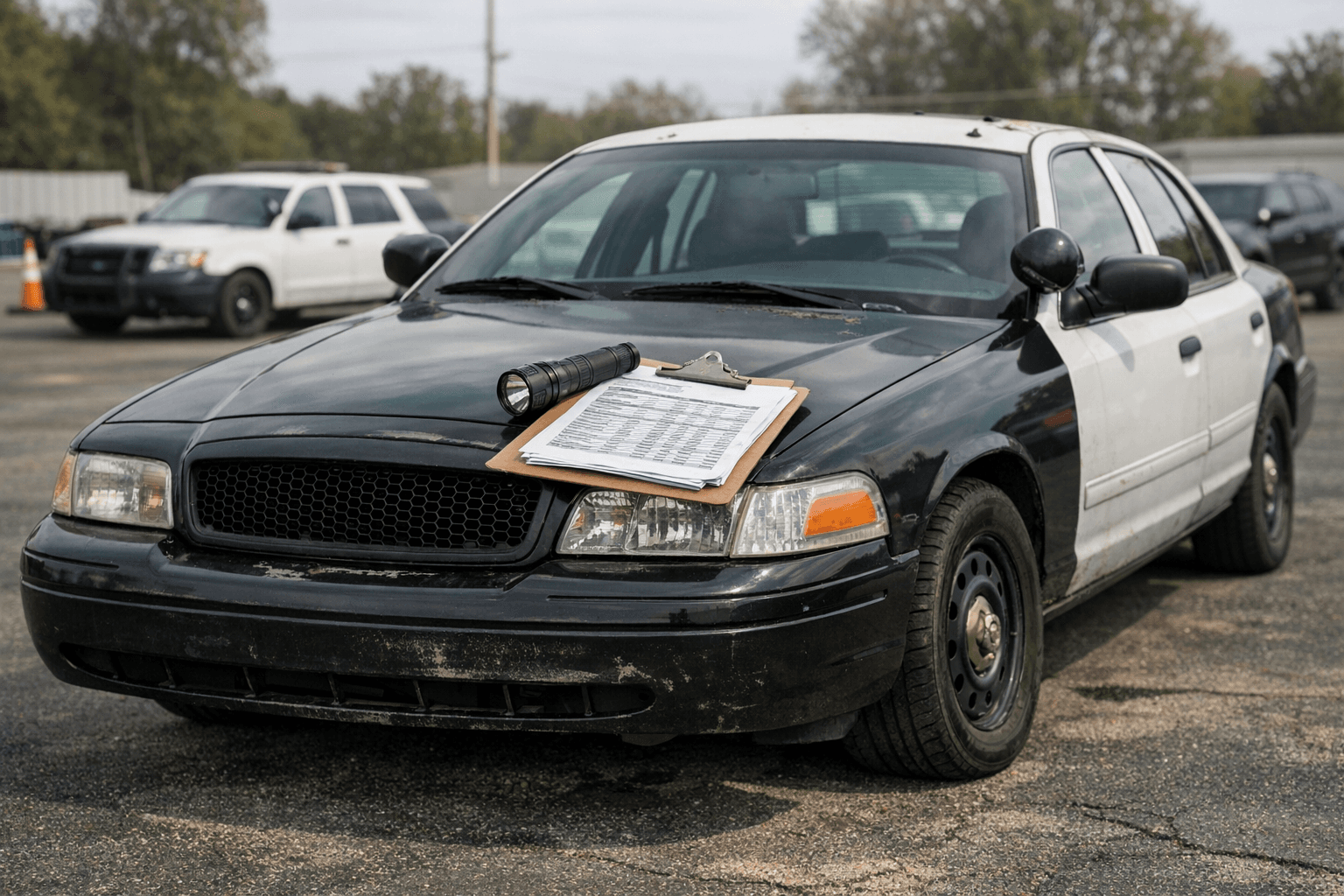
Former Police Car Risk in 2026: What a Cheap Interceptor Can Hide
Retired police cars trigger a very specific used-car fantasy. Heavy-duty cooling. Big brakes. Tough suspension. Cheap auction price. Maybe it even looks cooler than the civilian version parked next to it.
Sometimes that fantasy works. Some departments maintain their cars on schedule and retire them before they become total disasters. I would not tell anyone to rule out an ex-police car on sight.
But an interceptor is not just a used sedan or SUV with stiffer springs. It may have spent years idling, running lights and electronics, hopping curbs, sitting through long shifts, and getting drilled full of equipment that has since been removed. Odometer mileage does not tell that whole story. That is why this risk deserves its own checklist instead of being lumped in with rental cars, repo cars, or normal fleet units.
Why ex-police cars can fool smart buyers
Heavy-duty hardware
Feels reassuring
Police-spec parts sound like a bonus. They can be, but they do not erase years of severe-duty use.
Low sticker price
Short-circuits caution
People forgive a lot when the starting number is low. That is exactly when wiring, idle wear, and cosmetic clues get missed.
Clean title
Incomplete comfort
A clean title does not mean the car had an easy life. Severe use can live outside the title record.
That mix is what gets buyers in trouble. The car sounds durable, looks official, and seems underpriced. Then the real story starts showing up after purchase.
The five inspection points that matter most
-
Check engine hours, not just miles.
Some police platforms expose idle hours through the cluster or scan data. If you can get that number, get it. A car with modest mileage can still have a lot of engine time from sitting and running accessories during traffic stops, events, or patrol.
-
Inspect the wiring like someone recently moved out.
Look around the dash, center console, headliner, A-pillars, trunk, and firewall for cut wires, empty switch blanks, patched holes, loose connectors, or sloppy accessory removal. This is where ex-police cars separate into "clean decommission" and "future electrical gremlin."
-
Scrutinize cooling, brakes, suspension, and tires.
Heavy-duty use means harder heat cycles, curb contact, abrupt stops, and lots of time at low speed. If the car needs tires, brakes, bushings, and cooling work right away, the bargain gets expensive fast.
-
Read the interior and trunk for work-life clues.
Seat wear, vinyl patches, trunk holes, rough trim, missing mats, and odd plastic replacements tell you how the vehicle was used and how carefully it was retired. None of that is fatal by itself. Together it paints a pretty honest picture.
-
Verify the fleet exit paperwork before money moves.
Auction paperwork, title reassignment, and selling authority should all line up cleanly. If I were bidding on one tomorrow, I would sort the paperwork before I worried about polishing the headlights.
The engine-hours problem most listings never explain
Mileage can look normal
A patrol unit might not have shocking mileage for its age, which makes buyers feel safe too early.
Idle time changes the story
Long idle periods still age engines, cooling systems, batteries, and charging components even when the odometer barely moves.
Accessory load matters
Lights, radios, computers, and other equipment ask more from the electrical system than a normal commute ever will.
This is the trap. Buyers see a number on the odometer and assume it represents the whole workload. On retired police cars, sometimes it does not even come close.
How this differs from rental, repo, and title-risk posts
Not the same as former rental risk
Rental cars usually bring driver churn and cosmetic wear. Ex-police cars bring severe-duty operation, idle time, and equipment-removal issues.
Not the same as repo risk
Repo cars often raise deferred-maintenance questions. Police cars may have regular service, but they can still be worn out by the job they did.
Not primarily a title-brand story
The paperwork can be clean and legitimate. The risk is usually in usage history and decommission quality, not a branded title.
Closer to a severe-duty fleet story
The right question is not "Was this once a police car?" It is "How much hard use is hiding behind the price?"
Watch before you bid on one
These are worth your time because they show the exact stuff buyers miss in person: auction-condition reality, platform-specific inspection points, and the tradeoffs that make some retired units worth chasing while others are pure headache.
Buy it, renegotiate it, or walk away
Buy it
The history checks out, decommission work looks clean, the inspection is honest, and the price still works after immediate maintenance.
Renegotiate it
You found real needs such as tires, brake work, electrical cleanup, or missing trim. Price the catch-up work into the deal instead of pretending it is future-you's problem.
Walk away
The paperwork is fuzzy, the wiring looks hacked, or the seller is asking clean-retail money for a car that still looks half decommissioned.
That last category is bigger than people think. Cheap ex-police cars only work when the discount is bigger than the weirdness.
What VINSCRIBE helps you catch early
VINSCRIBE will not tell you whether a roof plug was sealed cleanly or whether a trunk harness was rewrapped by someone patient. It does help you sort out the part of the story that should be verified before inspection:
- Ownership and fleet-history patterns tied to the VIN.
- Title, theft, and loss-history signals that do not belong in a supposedly simple surplus bargain.
- A cleaner way to compare auction paperwork and seller claims with the actual VIN-based record.
That is the real value here. You want to know whether the car deserves your inspection time before you start talking yourself into the price.