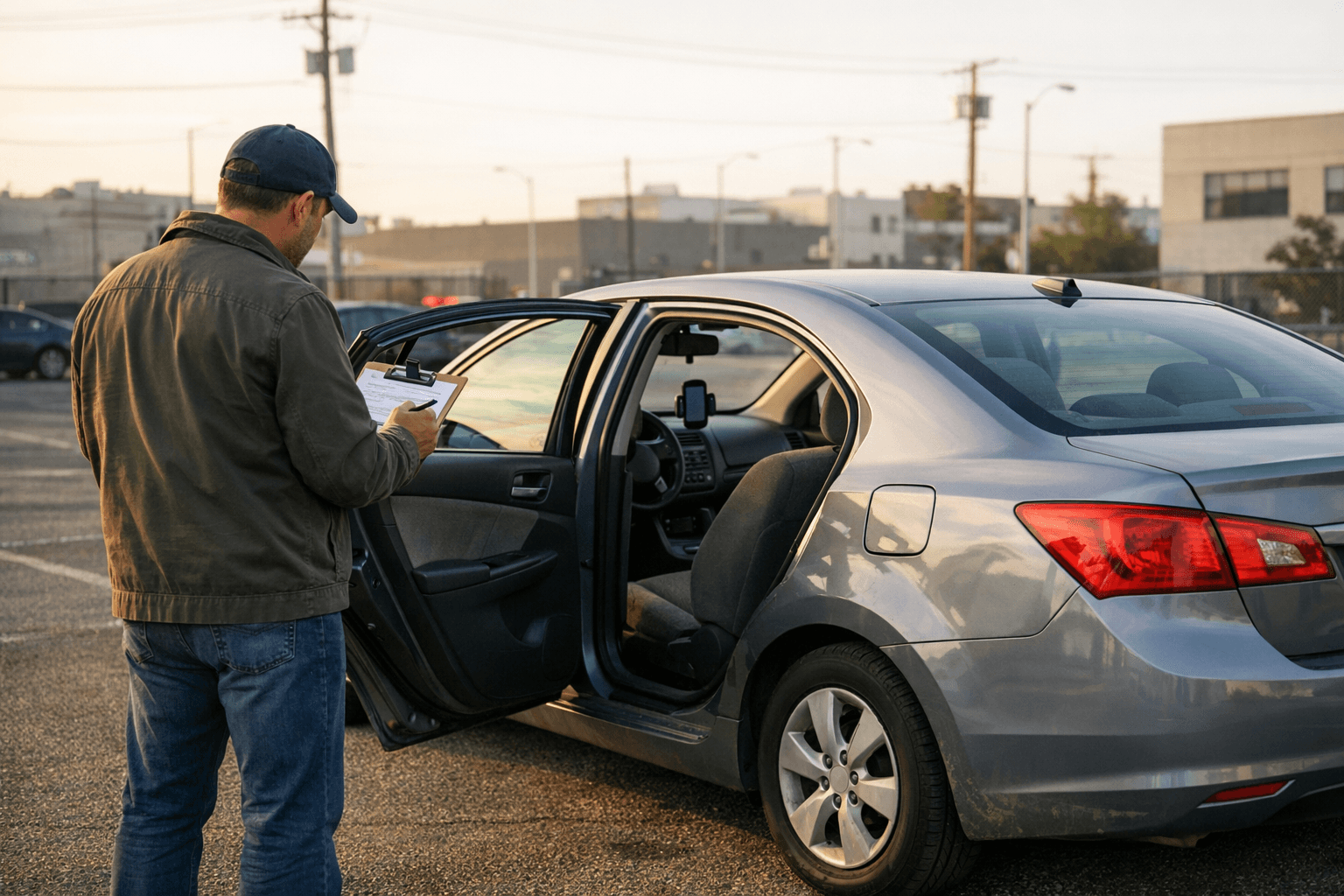
Former Rideshare Car Risk in 2026: How to Spot an Ex-Uber or Lyft Vehicle Before You Buy
A former rideshare car can be sneaky in a way a former rental usually is not. The seller may not mention it. The title may look clean. The car may even drive fine for the first 15 minutes. Meanwhile the real story is sitting in the wear pattern: lots of stop-and-go miles, a ton of idling, back-seat traffic all day, curb rash from city pickups, and a life built around short waits and hard accelerations.
That does not make every ex-Uber or Lyft car a bad deal. Some were maintained well. Some were driver-owned cars that got serviced obsessively because downtime cost money. But if I were shopping one, I would assume the car worked harder than the photos admit until the evidence proved otherwise.
This guide is about how to find that evidence before you pay private-owner money for a car that lived a commercial-use life.
Why this is different from rental-car risk
One Driver
But Constant Use
A rideshare car may have lived with one owner, but it can still rack up relentless city duty every week.
Passenger Wear
Rear Seat Tells
Back-seat trim, seatbacks, door pulls, and charging ports often age faster than the odometer alone would suggest.
Disclosure Risk
Easy To Miss
Unlike fleet inventory, prior rideshare use is not always disclosed cleanly in the listing headline.
The big difference is visibility. Former rentals often come with obvious fleet context. Former rideshare cars can show up looking like ordinary one-owner commuter cars.
The wear pattern I would look for first
-
Rear-seat fatigue.
Check the back seats like a paying passenger would. Scuffed door cards, loose trim, stained carpets, broken vents, tired USB ports, and shiny seat bolsters tell a story.
-
Idle-heavy mechanical clues.
Rideshare cars spend a lot of time waiting at curbs, airports, and pickup zones. Listen for rough idle, weak cooling performance, noisy accessory drives, and A/C that is fine on the move but not great while parked.
-
City-use cosmetic damage.
Wheels, lower bumper corners, rocker panels, and door edges often take more abuse on airport loops and downtown curbs than a normal commuter car does.
-
Phone-mount and device leftovers.
Adhesive marks, vent clips, charger splitters, dash wear, and wiring tucked around the console are small clues, but they matter when several appear together.
What the paperwork can tell you, and what it cannot
This is where buyers get tripped up. A clean title is helpful, but it does not automatically mean "lightly used."
- Vehicle history can help surface prior use clues. NMVTIS-backed reports are built to show title, odometer, brand, and condition data. Some records can include prior-use branding such as taxi, but many rideshare cars will never carry a clean, obvious "rideshare" label in title data.
- Commercial use can still hide behind ordinary ownership wording. One-owner is not the same as privately used. A single owner can still put a car through years of airport runs and late-night city miles.
- Inspection forms are not the same as a serious pre-purchase inspection. Uber and Lyft both require driver vehicles to pass basic inspections in many markets. That helps with roadworthiness, but it is not a deep resale-grade condition report and it definitely does not price the wear for you.
That mix is what makes these cars tricky. The history report matters. The mechanical inspection matters. Neither one is enough by itself.
A practical screening checklist before you make an offer
-
Run the VIN before the test drive.
Look for ownership timing, title brands, prior-use clues, mileage consistency, and anything that clashes with the seller's "just my personal car" story.
-
Ask direct usage questions.
Do not ask vague questions like "How was it driven?" Ask whether the car was ever used for Uber, Lyft, delivery work, airport runs, or other paid driving. Then stay quiet and let the answer get specific or evasive.
-
Inspect the cabin from the back seat forward.
Most shoppers start in the driver seat. Flip that. Back-seat condition often tells you more on an ex-rideshare car.
-
Check maintenance cadence, not just whether records exist.
A car driven commercially should show frequent oil changes, tire replacements, and brake service. Sparse maintenance on a high-mileage city car is a bad sign.
-
Do a long idle test.
Let the car sit with the A/C on. Watch temperature behavior, idle smoothness, fan performance, and any warning lights that show up only after waiting.
-
Price it like a commercial-use car if the clues add up.
If the seller wants clean private-owner money, but the car looks like it worked for a living, that is your negotiation anchor right there.
Where lending, insurance, and resale get awkward
Loan-to-value pressure
If you overpay because the commercial-use history was hidden, the lender does not care that the seller called it "lightly driven."
Insurance value mismatch
In a total-loss scenario, settlement value is tied to market evidence. Hidden commercial wear can make that conversation uglier than buyers expect.
Resale discount later
Even if you are comfortable with the car now, your next buyer may not be once the clues are obvious in person.
That is why this topic belongs next to lending and insurance, not just used-car shopping. Commercial-use history changes the financial side of the deal too.
Buy it, renegotiate it, or walk away
Buy it
The history is coherent, the inspection is clean, the maintenance cadence makes sense, and the price already reflects harder use.
Renegotiate it
The car is workable, but the rear-seat wear, tires, brakes, and idle behavior are telling you it needs commercial-use pricing.
Walk away
The seller dodges usage questions, the story and VIN timeline do not line up, or the car feels tired in ways the asking price refuses to acknowledge.
The mistake is not buying an ex-rideshare car. The mistake is buying one by accident.