Frame Damage Risk in 2026: How to Spot Structural Repairs Before You Buy a Used Car
Frame damage is one of those phrases sellers hate and buyers tend to oversimplify. Some people hear it and assume the car is automatically junk. Others shrug it off because the title is still clean and the paint looks fresh.
Reality sits in the uncomfortable middle. A used car can have real structural repair history and still show up with a clean-looking listing, a decent test drive, and a seller who insists it was "just cosmetic." That is where people get trapped.
This guide is for the cars that do not wave a giant red flag. They just leave clues. If you know where to look, you can catch them before the alignment starts wandering, the tire wear gets weird, or your insurer starts asking harder questions than the seller did.
Why this risk slips past buyers
Listing Photos
Too Clean
Fresh paint, wet tires, and tight crops can hide uneven panels and repaired sheet metal.
Title Status
Not Always Branded
Structural repairs do not always show up as salvage or rebuilt history in the way buyers expect.
Test Drive
Can Feel Fine
A short drive may not reveal subtle tracking, noise, or tire-wear problems tied to prior damage.
This is what makes frame damage different from the easier stories. Flood cars smell odd. VIN mismatches create paperwork friction. Structural damage can hide behind a normal-looking sale.
A 10-minute structural-risk walkaround
-
Start with panel gaps.
Look at hood, trunk, and door spacing from both sides. Uneven gaps do not prove damage, but they earn extra scrutiny fast.
-
Check the reflections in the paint.
Stand at an angle and look for waviness, tape lines, or a mismatch between one repaired panel and the next panel over.
-
Open the doors and inspect the jambs.
Fresh seam sealer, overspray, or tool marks around hinges can mean more happened than the seller admitted.
-
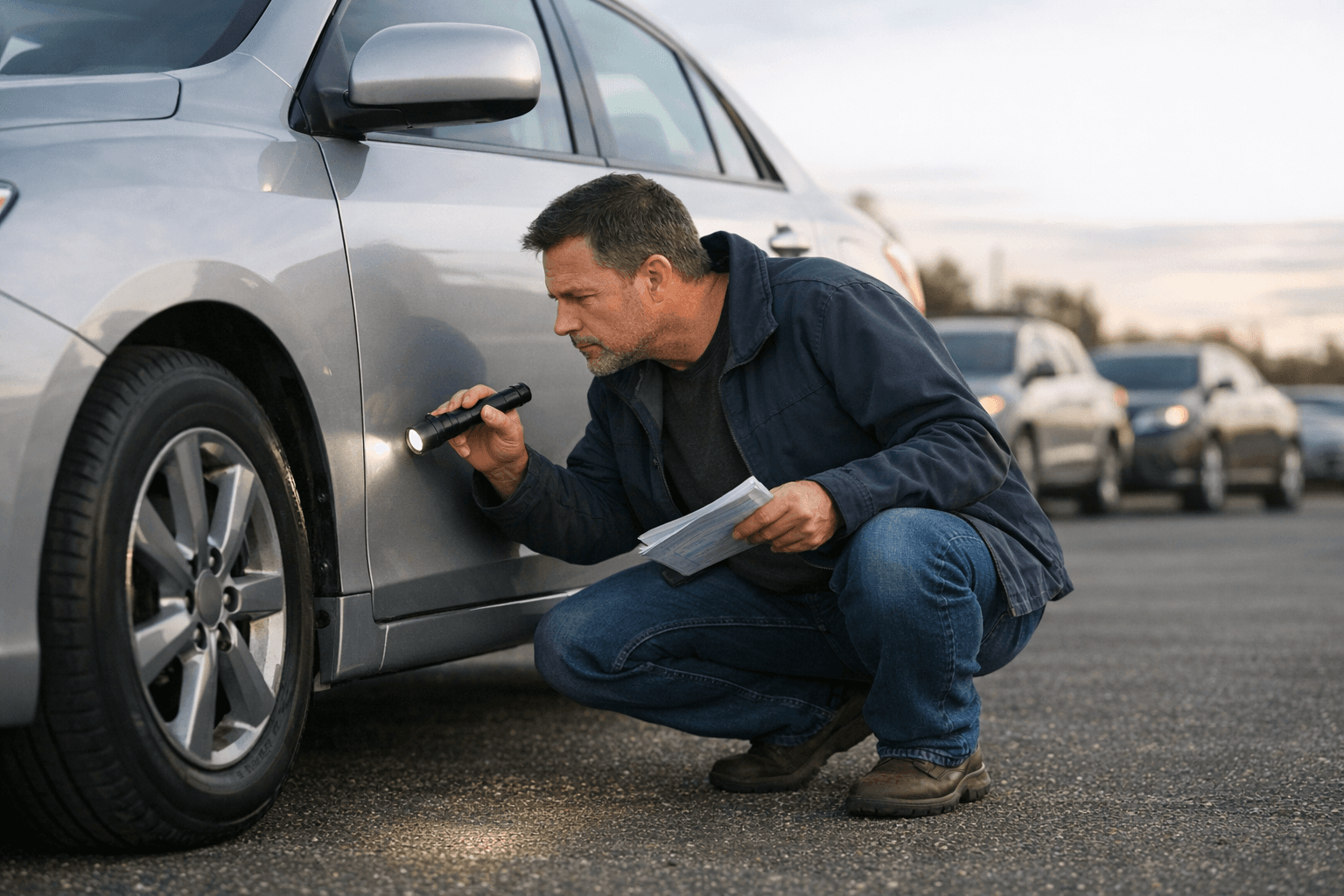
Look underneath with a flashlight.
You are checking for bent pinch welds, ripples, odd undercoating texture, and areas that look newer than the rest of the underbody.
-
Read the tire story.
Uneven inside-edge wear or one newer tire in a suspicious corner can hint at a history the listing left out.
-
Run a VIN report before you rationalize anything.
Damage records, auction history, title events, and ownership timing can either support the seller's story or make it collapse.
The clues buyers miss most often
Welds that do not match
Factory welds usually look consistent. Uneven spot welds or rough repair beads deserve a second opinion from a body shop.
Bolt heads with disturbed paint
If fender, hood, or door bolts show wrench marks, that panel was moved or replaced at some point.
New parts in old neighborhoods
A brand-new headlamp, radiator support, or suspension arm next to aged components usually means there is more story left to uncover.
Straight steering wheel, crooked history
A seller can align a car well enough for a short drive. That does not erase poor structural repair or future tire-wear headaches.
This is the part where a lot of people talk themselves into a maybe. I would rather spend another weekend shopping than spend the next two years defending a bad purchase.
Why lenders, insurers, and future buyers care
Lenders
Collateral risk
Structural history can weaken how confidently a lender values the car as collateral, especially if damage records and repairs are thin.
Insurers
Claim friction
Prior damage can change inspection needs, repair assumptions, or how hard a future claim gets debated.
Resale
Trust discount
Even if you are comfortable buying the car, the next buyer may not be. That usually shows up in your exit price.
That is why structural damage is not just a body-shop issue. It is a pricing issue, a financing issue, and eventually your problem if you are the one holding the keys.
When to buy it, renegotiate it, or leave it alone
Buy It
The seller has repair records, a clean inspection from a qualified body shop, and the price reflects the history honestly.
Renegotiate
The car may still work, but only after an independent inspection and a meaningful discount for future resale and underwriting friction.
Walk Away
The seller minimizes obvious clues, the paperwork is thin, or the VIN report and physical car tell two different stories.
There is no medal for rescuing the sketchiest listing in your area. If the numbers only work when you ignore the risk, the numbers do not work.
Video briefings worth your time
These videos help because they show the physical clues buyers tend to miss: weld quality, underbody irregularities, panel replacement signs, and the difference between cosmetic work and structural repair.
Where VINSCRIBE helps
VINSCRIBE will not replace a body-shop inspection. It does make your screening process sharper before you spend inspection money or start negotiating.
- It helps surface prior accident, damage, and title signals you can compare against the seller's version of events.
- It gives you a cleaner timeline for ownership changes, auction movement, and mileage patterns.
- It helps you decide whether this is worth a deeper inspection or whether the car has already failed the common-sense test.
That matters because structural-risk cars get expensive in stages. The cheapest moment to walk away is before you get emotionally attached to the deal.
Sources
Continue Your Research
Take the next step before you buy
These hand-picked pages turn broad article research into practical next actions, whether you are comparing report options, narrowing a model shortlist, or checking a real VIN.
History check
Understand the VINSCRIBE Vehicle History Check
See what a VINSCRIBE report is designed to surface before you commit to a listing or schedule an inspection.
Title-risk page
Review the Rebuilt Title Risk Guide
Use this landing page when title branding, prior damage, or salvage concerns are central to the buying decision.
Half-ton truck
Ford F-150 Buying Guide
Work-truck research covering towing wear, common repairs, and which ownership patterns deserve extra caution.