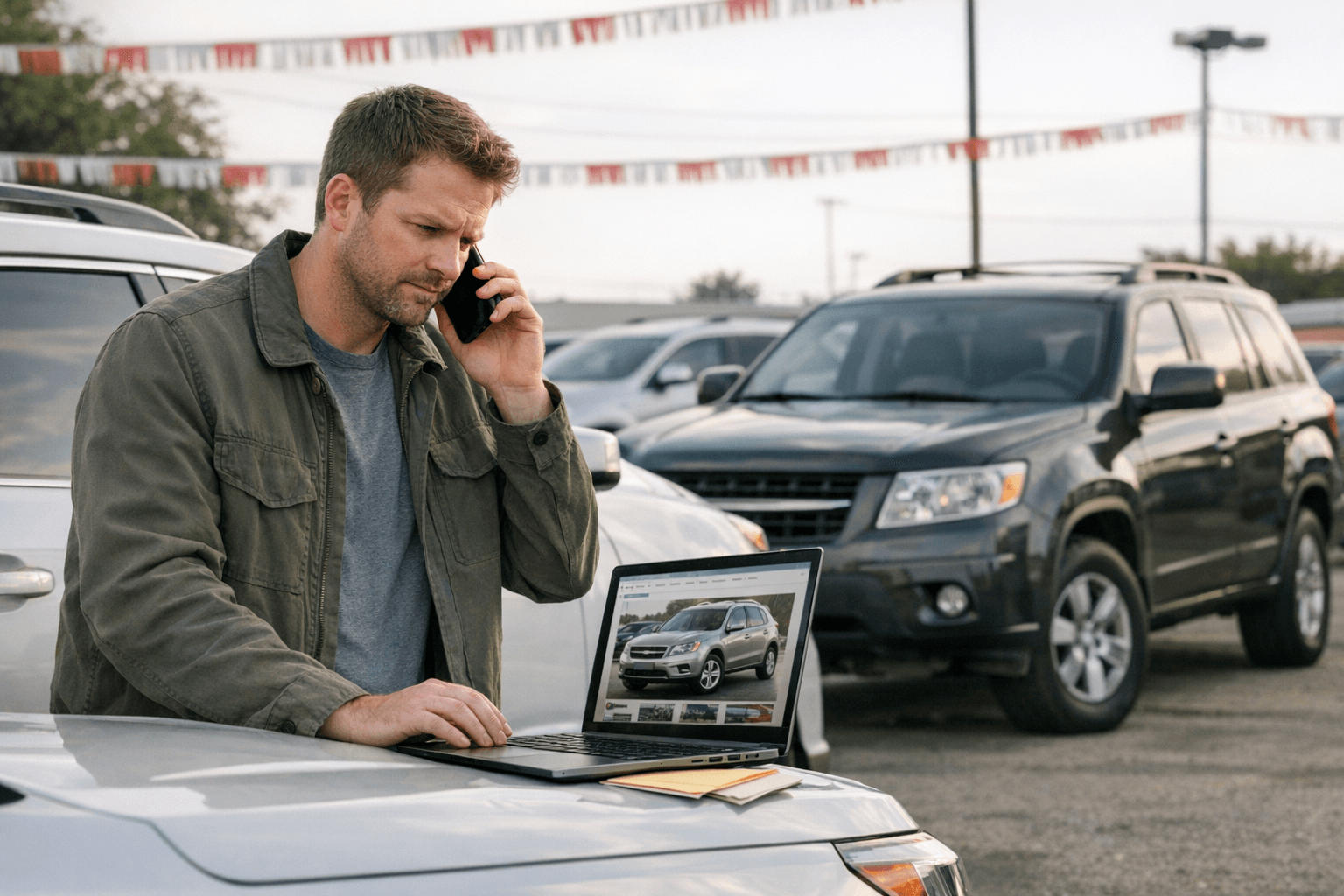
Ghost Listings in 2026: Why the Used Car in the Ad May Not Exist at That Price
A lot of bad used-car deals start before anyone hands you a worksheet. They start with the ad.
The Federal Trade Commission warned 97 dealership groups in March that certain pricing and availability tactics may violate the law. A few days later, Alaska announced a settlement with Swickard Auto Group over claims that included misleading online prices and ads for vehicles that were not actually available. That is the part used-car shoppers should pay attention to. If the listing is shaky, everything that happens after it tends to get worse.
This is not the same post as our dealer-fees piece, our yo-yo financing piece, or our broad used-car pricing post. Those are about how the deal changes after you sit down. This one is about the trap that gets you to drive across town in the first place: bait inventory, fake discounts, and ad terms that quietly depend on financing, trade-in status, or some condition nobody mentioned in the headline price.
Why this matters right now
FTC warning letters
97 groups
The FTC said dealerships should stop misleading shoppers on pricing, discounts, add-ons, and vehicle availability.
Alaska settlement
March 24
State regulators said shoppers were shown vehicles and prices online that did not line up with what they actually got in store.
Buyer mistake
Trusting the ad
Once you drive over, test-drive something, and picture the car in your driveway, your leverage drops fast.
I do not think of this as a minor paperwork issue. It is a time-and-judgment problem. A deceptive listing gets you emotionally invested before you have verified whether the actual vehicle, actual price, and actual terms are real.
What a ghost listing usually looks like in the real world
Sometimes the car never existed at the advertised terms. Sometimes it existed for five minutes and stays online because it keeps the phone ringing. Sometimes the unit is real, but the headline price only works if you finance with the store, trade in a qualifying vehicle, belong to a narrow group, or buy products that were never obvious in the ad.
- The car is "already sold," but the salesperson has something "very similar" they want to show you.
- The price changes when you mention paying cash or using outside financing.
- The discount disappears unless you qualify for rebates that clearly do not apply to you.
- The ad says one thing and the buyer's order says another, usually after you have already invested time in the visit.
That is why I keep calling this a different category of risk. It is not the finance-office ambush yet. It is the setup.
The tells that make me slow down before I leave home
-
No clear stock number or VIN in the ad.
If the listing is vague about the exact unit, it is harder to pin the store down later.
-
A price that sounds aggressive, but the disclaimer is doing all the work.
Watch for language that pushes key terms into tiny print, especially if financing, trade, or rebate conditions are involved.
-
The salesperson answers "yes" too quickly.
If you ask whether the exact car is still available at the advertised price and get a slippery answer, take that as your answer.
-
The store resists sending a buyer's order or out-the-door quote.
Serious stores can put real numbers in writing. The ones playing games usually want your body in the showroom first.
-
The ad has been up forever on a hot car.
A sharply priced used truck, hybrid, or clean one-owner SUV should not linger untouched if the terms are real.
A checklist that protects you before the appointment
-
Screenshot the ad.
Save the vehicle page, headline price, stock number, VIN, and every rebate or disclaimer you can see.
-
Ask one very specific question by text or email.
Try this: "Is stock number X / VIN Y available right now at the advertised price before tax, title, registration, and government fees? If not, what exactly changes?"
-
Get the out-the-door number before you drive over.
Not a monthly payment. Not a range. The actual figure with dealer charges separated from government fees.
-
Confirm whether the ad assumes dealer financing, trade-in, military status, loyalty cash, or other conditions.
If the discount stack is theoretical, the ad is not really your price.
-
Only then decide whether the VIN is worth your time.
Once the price and availability survive first contact, run the vehicle history and see whether the actual car deserves the attention.
That order matters. Too many buyers run the VIN on a car they do not even have a real shot at buying on the advertised terms. First make sure the deal exists. Then make sure the car is good.
Why this can still become a VINSCRIBE problem
Ghost listings are ad problems, but they bleed straight into vehicle-history decisions.
Bait unit
The listing gets you in the door with one VIN, then the conversation drifts to a different unit that may have a worse history or weaker value story.
Price pressure
Once the ad has done its job, buyers get nudged to accept more risk because they already invested the afternoon.
VIN discipline
A clean report on the exact stock number keeps the dealer from sliding you onto a similar-looking car with a different past.
That last point is the real VINSCRIBE angle. When a dealership pivot starts happening, the VIN becomes your anchor. If the car on the lot is not the VIN from the ad, you are not negotiating the same deal anymore.
Watch this before you trust the listing
This FTC video is short and worth the two minutes. It is basically the pre-showroom version of consumer self-defense.
Proceed, verify harder, or leave
Proceed
The exact VIN is available, the advertised terms survive email confirmation, and the store sends a clean quote before you arrive.
Verify harder
The car may be real, but pricing depends on conditions that were not obvious in the ad. Slow the process down and make every term explicit.
Leave
The advertised unit is gone, the price changes on first contact, or the salesperson keeps saying "come in and we will work it out."
I would rather offend a salesperson by being rigid than lose four hours to a car that never really existed at that number.
Why VINSCRIBE still earns a place in this workflow
VINSCRIBE helps once you confirm the exact unit and the actual terms are real enough to deserve attention.
- Run the report on the exact VIN from the ad so you can catch any switch to a different vehicle.
- Use the vehicle history to decide whether the advertised price still makes sense after accident, title, commercial-use, auction, or theft records show up.
- Keep one factual record in front of you when the conversation tries to drift from the ad you answered to the car they now want you to buy.
That is the practical rule. First verify that the advertised deal is real. Then verify that the car behind it is worth buying.
Start from the vehicle history page once the store gives you the exact VIN and a real number in writing.
Sources
- FTC: FTC warns 97 auto dealership groups about deceptive pricing and other potentially unlawful practices
- FTC: Car dealer ads and promotions: know before you go
- Alaska Department of Law: State settles deceptive-practices case against Swickard Auto Group
- Car and Driver: FTC warns 97 dealers to knock off fake discounts, add-ons, and ads for unavailable cars