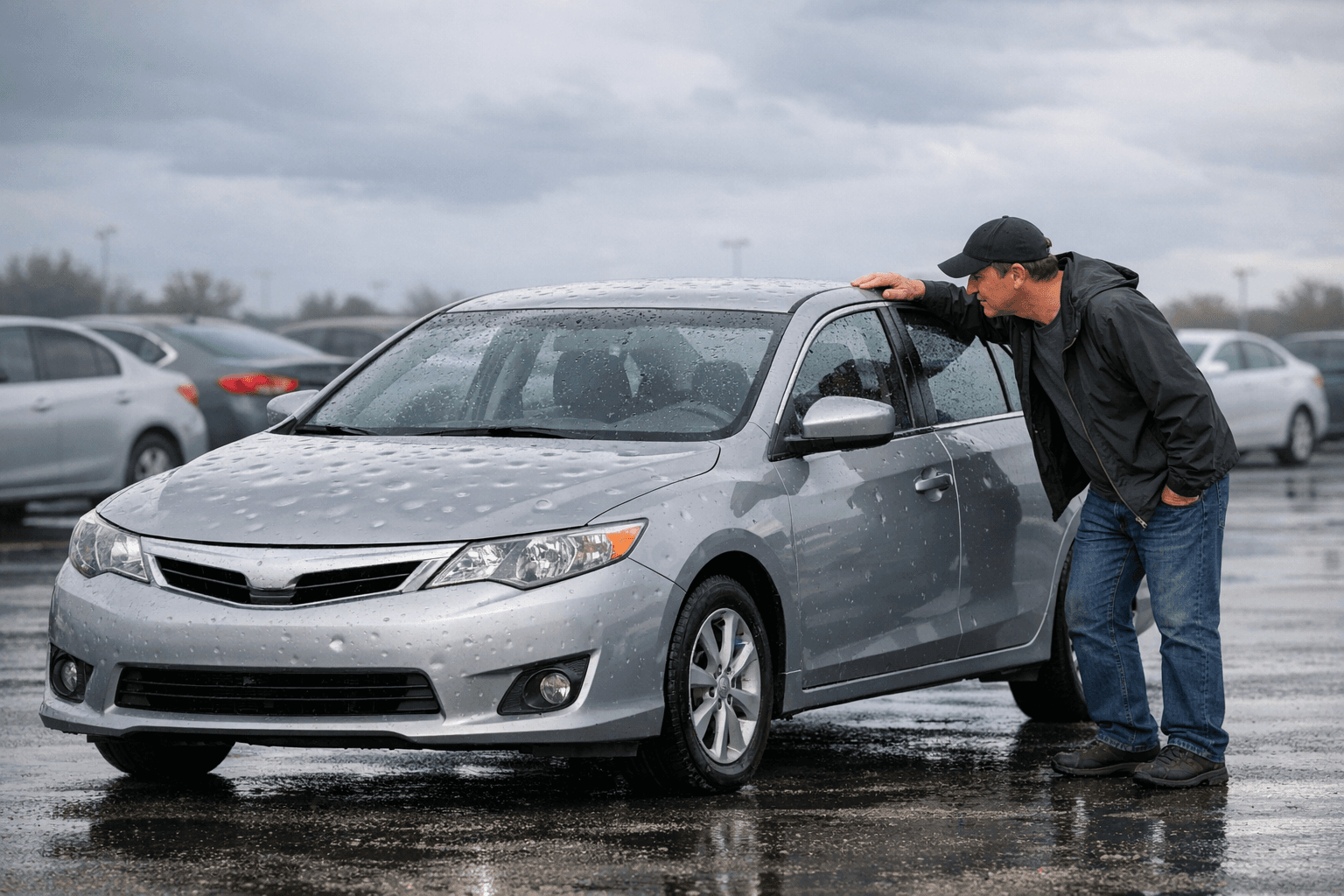
Hail Damage Risk in 2026: How to Tell When a "Cosmetic" Used Car Isn't Such a Bargain
Hail damage is one of those used-car problems that gets waved away with a shrug. "Just a few dents." "Purely cosmetic." "That's why it's cheap." Sometimes that is true. Sometimes it is the sales pitch right before you inherit cracked trim, bad bodywork, wind noise, and a car that nobody wants to appraise generously later.
What makes hail damage tricky is that many of these vehicles still carry a clean title. They are not flood cars. They are not always rebuilt-title cars. They can look honest in the listing and still turn into a negotiation about glass, paint, prior insurance claims, and whether the seller actually fixed anything or just made the dents harder to notice in photos.
If you are shopping one, the goal is not to avoid every hail car on principle. It is to separate cheap-and-usable from cheap-for-a-reason.
Why hail cars fool buyers
Title status
Often clean
A hail-damaged car can avoid the branded-title stigma that makes buyers slow down and ask harder questions.
Visual effect
Looks minor
Small dents on a cloudy day or in dealer photos can seem harmless until you see the roof, hood, and trunk in bright light.
Resale reality
Discount sticks
Even if you can live with the dents, the next buyer, lender, or appraiser may not value the car kindly.
This is the real difference versus some other damage stories. Flood and rebuilt-title cars usually announce themselves eventually. Hail cars often slip through as "just cosmetic," which is exactly why buyers under-check them.
What can actually go wrong
- Cracked or weakened glass. The obvious issue is a chipped or cracked windshield. The less obvious one is replacement glass or seal work that was done cheaply after the storm.
- Bad cosmetic repair. Some sellers pay for proper paintless dent repair. Others use filler, repaint panels poorly, or leave roof dents untouched where buyers are less likely to look.
- Trim and weather-seal issues. A heavy storm event can leave trim damage, clogged drains, or sealing problems around glass and roof openings.
- Insurance and appraisal friction. A hail claim in the vehicle history is not automatically a deal-breaker, but it can change how the car is valued later, especially if the damage was never repaired well.
- Seller-story mismatch. The seller says "a couple dings," but the report, photos, or inspection show broad roof and hood damage from a prior catastrophe claim.
That is why "cosmetic only" is not a conclusion. It is a claim that needs proof.
The 7-point hail damage check before you buy
-
Inspect the car in direct light.
Do not rely on dusk, rain, or showroom lighting. Walk the hood, roof, decklid, and upper door surfaces in daylight so the dent pattern is obvious.
-
Start with the roof, not the fenders.
Roof dents are often the most severe and the least photographed. If the roof is rough, the "minor hail" story usually falls apart fast.
-
Check the windshield and surrounding trim carefully.
Look for chips, replacement glass markings, uneven sealing, wind noise clues, and water-entry signs around the pillars and headliner.
-
Ask what was repaired and how.
Paintless dent repair, panel replacement, and glass replacement are all different stories. Ask for invoices. If the seller has none, assume less than you were told.
-
Run the VIN report before negotiating.
You want the claim or damage timeline to line up with the seller's explanation. If the car went through an insurance event or auction after a storm, that context matters.
-
Get a body shop or PDR opinion.
A pre-purchase inspection is good. A quick look from someone who actually handles dent repair is better if the car clearly took a hail hit.
-
Price the exit, not just the entry.
Ask yourself what happens when you sell it. If the discount feels modest now, it will feel worse when you are the one explaining the dents later.
When hail damage is probably acceptable
Proceed
The damage is visibly limited, glass and seals check out, repair records make sense, and the price is meaningfully below comparable clean-condition cars.
Renegotiate
The car may still work for you, but only if the discount covers future cosmetic annoyance, resale drag, and the cost of unfinished repair work.
Walk away
The seller has no paper trail, the roof and glass damage are worse than advertised, or the car is priced like a clean example with a few "easy" dents.
A hail car can be fine as a commuter. It is a bad buy when the discount depends on you pretending the damage will not matter later.
Questions worth asking the seller
- Was this car part of an insurance hail claim, and if so, when?
- Which panels were repaired, and were any panels or the windshield replaced?
- Do you have invoices from the body shop or paintless dent repair shop?
- Has the car ever had water intrusion, headliner staining, or wind noise after the storm?
- Why is this car priced below similar listings, and does that discount already account for resale stigma?
Pay attention to how the answers land. Honest sellers usually know the hail story. Vague sellers usually want you focused on the monthly payment, not the roof.
What VINSCRIBE helps you verify
VINSCRIBE does not measure dents. It helps you pressure-test the backstory around the car:
- Review claim, title, and event timing so the seller's explanation can be checked against the VIN history.
- Spot auction movement, insurance events, or title activity that make the hail story more important, not less.
- Share one clear report with your mechanic, co-buyer, lender, or insurer before you commit.
That matters because hail damage is rarely about one dent. It is about whether the vehicle's story, condition, and price all agree with each other.