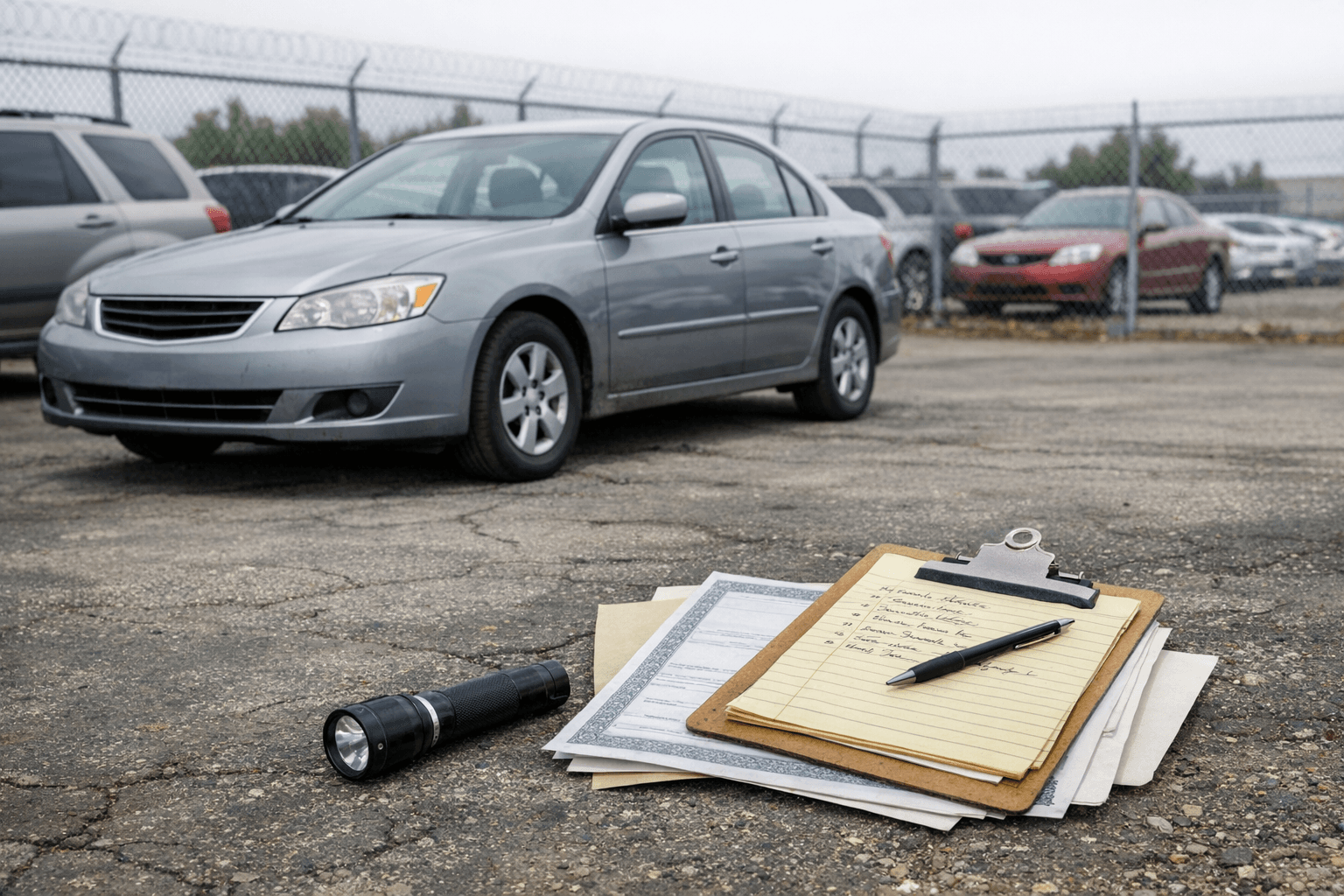
Lien-Sale Used Car Risk in 2026: Why a Cheap Tow-Yard or Mechanic-Sale Car Can Be Hard to Own
A lien-sale car usually gets sold with one irresistible hook: the price looks lower than it should. Maybe it is sitting behind a repair shop. Maybe it came out of a storage yard. Maybe the seller tells you the owner disappeared, the debt went unpaid, and now it is your lucky day.
Sometimes that story ends fine. Sometimes it ends with a car you cannot register quickly, cannot finance on normal terms, or cannot insure without extra questions. That is the part buyers miss. The risk is not just mechanical condition. It is whether the legal path into your name is as clean as the ad makes it sound.
This is also why lien-sale risk deserves its own category. It is not the same thing as repo inventory, title-jumping, or a normal dealer auction car. A lien-sale vehicle often comes with thin history, limited keys, limited records, and state-specific paperwork that has to be right the first time.
Why lien-sale cars fool careful buyers
Low ask
Feels like hidden value
The discount pulls your attention away from the title path, which is where the real trouble usually starts.
Thin backstory
Very little context
Tow yards and shops can explain why they have the car, but they often cannot tell you much about service history, prior damage, or what happened before the vehicle was abandoned.
Paperwork confidence
Easy to fake in conversation
Sellers say things like "it comes with lien-sale papers" as if that settles the matter. It does not. You still need to know whether your DMV, insurer, and lender will accept that path cleanly.
The price can be real. So can the headache. That is why I would treat any lien-sale car as a paperwork-first deal, not a test-drive-first deal.
What a lien sale actually means
In plain English, a lien sale usually means a business had lawful possession of the vehicle, the bill went unpaid, and state procedures allowed that business to sell the car to recover charges. That does not mean the car is automatically bad. It does mean the paper trail matters more than usual.
- The sale may be valid, but state-specific. What works cleanly in one state can become a slower conversation in another, especially if the next DMV clerk wants additional proof.
- The title story may be thinner than a normal retail car. You may have less ownership history, fewer service records, and no meaningful promises about prior condition.
- The mechanical risk can be weirdly concentrated. Abandoned cars often sit. Sitting creates its own problems: dead batteries, stale fuel, brake rust, rodent damage, mold, flat spots, and deferred repairs that were never worth doing for the prior owner.
That combination is what makes these cars tricky. They are not always disasters. They are just easy to misread as normal used inventory when they really are edge-case inventory.
The four buyer risks that matter most
-
Registration friction.
The seller may hand you a packet and say you are good to go. Your DMV may still want additional forms, inspections, fees, or corrections if anything in the chain looks incomplete.
-
Insurance friction.
Some insurers will cover it without much drama. Others may want a clearer ownership trail, an inspection, or more explanation if the documents are unusual.
-
Finance limits.
If you need a loan, a lien-sale vehicle can be harder to place. Lenders prefer easy collateral, not title stories that require interpretation.
-
Condition surprises from long storage or unresolved repairs.
The unpaid bill tells you something already went wrong. Maybe it was storage. Maybe it was repair work. Maybe it was an owner who stopped spending on the car long before it got left behind.
My checklist before money moves
If I were looking at one tomorrow, this is the order I would use:
-
Read the paperwork before you discuss price.
Do not settle for "comes with lien papers." Ask to see the exact ownership documents, sale documents, notices, and any state forms tied to the sale process.
-
Call your DMV with the actual scenario.
Do not ask a vague question. Ask whether this kind of lien-sale paperwork from this state is enough to title and register the car in your state, and what else they will require.
-
Run the VIN history before the test drive gets in your head.
You want title brands, theft or total-loss signals, odometer consistency, ownership timing, and anything that clashes with the seller's explanation.
-
Check whether the car still has basic sale reality.
How many keys? Any service records? Any repair invoice for why it landed at the shop in the first place? If the answers are none, none, and no idea, treat that as part of the valuation.
-
Inspect it like a stored car, not a normal used car.
Look for tire age and flat-spotting, battery age, fluid condition, moisture smell, rodent traces, warning lights, rust on rotors, and signs the car sat longer than the seller admits.
-
Ask your insurer and lender before you commit.
A five-minute call can save you from buying a cheap car that becomes expensive the moment financing or coverage gets awkward.
How this differs from repo, auction, and title-jumping risk
Not the same as a repo car
Repo risk usually points to deferred maintenance and fast remarketing. Lien-sale risk adds a more technical title-transfer question on top of any mechanical risk.
Not the same as auction history
Auction history tells you where the car moved. A lien sale tells you why a business ended up selling it to recover money, and that changes the paperwork conversation.
Not the same as title jumping
Title jumping is about an illegal skipped ownership step. A lien sale may be legal, but still messy enough that you need to confirm every document in the chain.
Closer to an edge-case title deal
That is the right mindset. You are not just buying transportation. You are buying a story the DMV has to accept.
When to buy it, renegotiate it, or leave it alone
Buy it
The documents make sense, your DMV confirms the path, the VIN history is coherent, and the inspection still supports the discount.
Renegotiate it
The car is workable, but the missing key, storage wear, weak records, or extra registration hassle should move the price lower.
Walk away
The seller gets vague, the paperwork packet is incomplete, your DMV sounds uncertain, or the inspection suggests the cheap car was already expensive before you arrived.
That last category matters more than people want to admit. There is no prize for successfully buying the most complicated $4,500 car on the internet.
What VINSCRIBE helps you catch early
VINSCRIBE will not validate your DMV paperwork for you, and it should not pretend to. What it does well is give you the VIN-side context that tells you whether this unusual title story is also hiding a bad vehicle story.
- Title-brand, total-loss, theft, and odometer signals that should match the seller's explanation.
- Ownership and event timing that help you see whether the story feels coherent or improvised.
- A cleaner report you can use while talking to the seller, your insurer, your lender, or your DMV.
That is the real advantage. On a lien-sale car, you need fewer assumptions and more cross-checks.