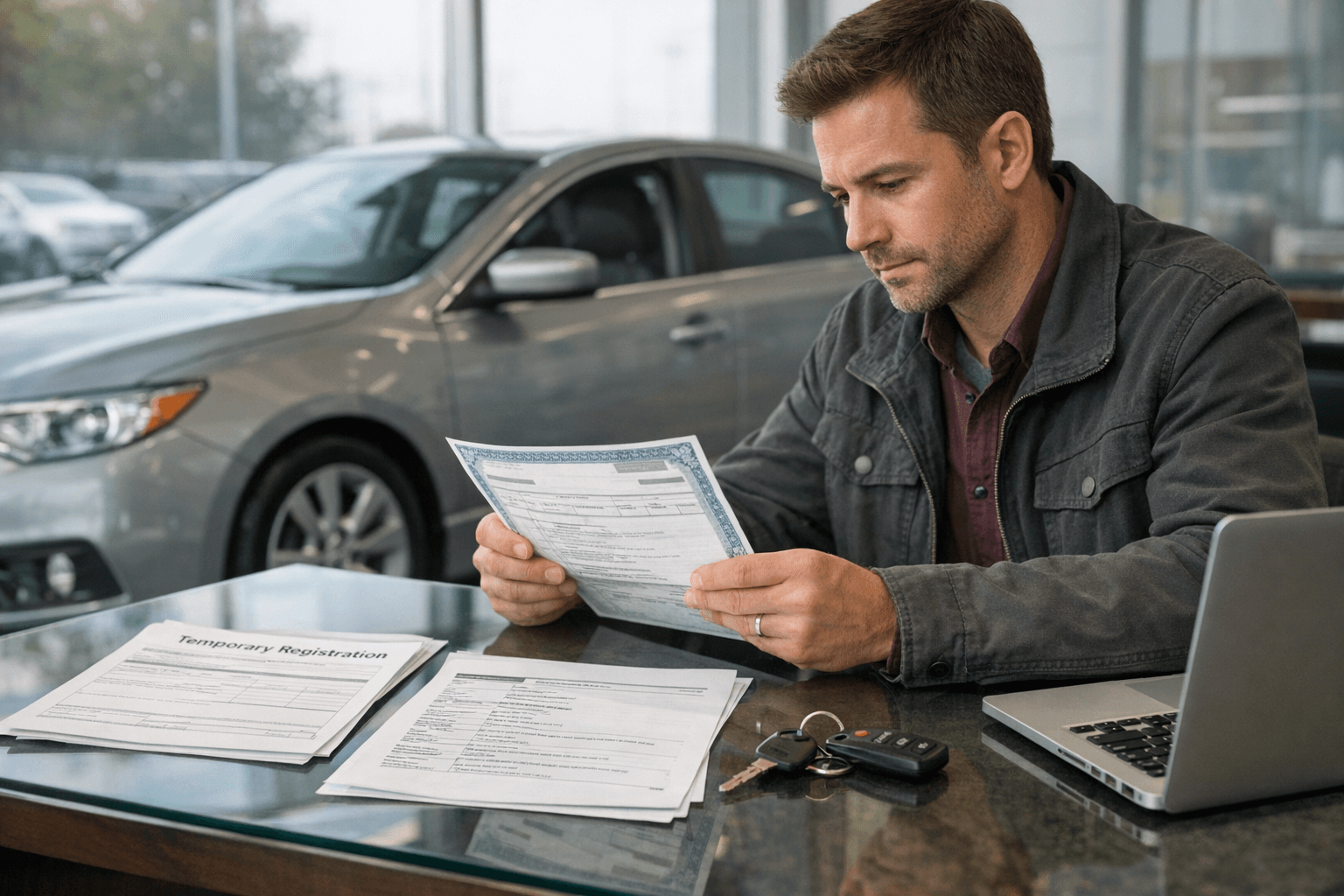
Buying a Used Car From Another State in 2026: How to Avoid Title Delays, Temp-Tag Trouble, and Travel-First Mistakes
Buying out of state sounds simple when you are still looking at photos. The car is cheaper, the miles are lower, the spec is better, and the seller swears the paperwork is easy. Then you actually try to get the car home. Suddenly you are dealing with title timing, temporary tags, insurance, taxes, maybe a lender, maybe a shipper, and a DMV clerk in your home state who wants one more document nobody mentioned.
This is not the same problem as our state VIN lookup guides. Those posts help you understand how vehicle history and title records work in a specific state. This one is about the purchase itself: what changes when the car is somewhere else, why remote deals fail after the money moves, and how to keep the paperwork from turning a decent buy into a month-long headache.
If I were buying a used car out of state, I would treat the trip like a closing, not a shopping day. You want the title path, tag path, tax path, and VIN story lined up before you leave home.
Why out-of-state deals go sideways
Document mismatch
Common
The seller has a title, but not the exact assignment, lien release, bill of sale, or odometer paperwork your home state wants.
Travel pressure
Expensive
Once you have paid for a flight, hotel, or transport slot, you are more likely to talk yourself into accepting sloppy paperwork.
State-to-state friction
Real
Registration rules, emissions checks, tax collection, and temporary permits do not work the same way everywhere.
The bad version of this deal is easy to picture. You arrive, the car is mostly what you expected, and the seller tells you the title problem is "normal." At that point you are no longer comparing cars. You are deciding how much paperwork risk you are willing to eat because you already showed up.
The checks I would finish before booking a flight
-
Run the VIN report first.
Do not start with airfare and excitement. Start with title brands, odometer readings, prior total-loss signals, theft history, and ownership context. If the history is wrong, the rest of the travel plan does not matter.
-
Ask for photos of the actual title and current registration.
Not screenshots from an old listing. You want the real ownership document, lienholder status, and names exactly as they appear now.
-
Find out whether your home state needs inspections or VIN verification on arrival.
Some states want a VIN inspection. Some care about emissions. Some have special rules if the title is from a non-title state or if a lienholder still holds the original.
-
Check recall status yourself.
Free recall repairs are great, but they still affect timing. You do not want to drive a fresh purchase home and then learn an open recall complicates your next step.
-
Get your insurer and lender involved early if either one matters.
Out-of-state deals get awkward fast when the binder, lienholder address, or proof-of-insurance name does not match the title paperwork.
This is the part buyers skip because it feels less exciting than seeing the car. That is exactly why it saves money.
The title is the whole trip
Every out-of-state deal eventually becomes a title-transfer problem. The car can be perfect and the price can be fair, but if the title chain is incomplete, you still have a problem sitting in your driveway.
- Make sure the seller's name matches the title. If the explanation gets messy, slow down. Title jumping does not get less risky because the car is two states away.
- Ask whether there is a lienholder. If there is, find out who holds the original title and what your home-state DMV accepts while the lien is still open or recently released.
- Do not assume every state treats proof of ownership the same way. California, for example, publishes a separate out-of-state title transfer checklist. New York's registration instructions spell out special steps when an out-of-state lienholder still holds the original title.
- Get the bill of sale right the first time. Names, VIN, sale price, date, and odometer reading need to be clean and consistent. Tiny mismatches have a way of turning into second trips to the DMV.
People get hung up on whether the seller seems trustworthy. I care more about whether the paperwork stands on its own when the seller is no longer in the room.
The costs people forget to price in
- Travel and transport: flights, fuel, hotels, shipping, inspections, and lost time all change whether the cheap out-of-state car is still cheap.
- Home-state taxes and fees: your final cost depends on where you register, not just what you pay the seller.
- Inspection and emissions work: some vehicles pass the listing test and still fail your state test.
- Insurance timing: you may need proof before you can legally drive, finance, or register the car.
- Title cleanup: overnighting documents, duplicate-title requests, and lien-release follow-up can eat time and money fast.
A lot of out-of-state "deals" stop looking special once you price the correction work honestly. If the margin is thin, your safest move may be staying local.
Two videos worth watching before you go
These are not state-specific title classes, and that is why they help. Both are short reminders of the checks buyers skip when remote shopping starts to feel urgent.
The out-of-state closing checklist
-
Verify the VIN history before you send a deposit.
If the report changes the story, you saved yourself a trip.
-
Confirm who owns the car and who holds the title.
If there is a lienholder, get the release process in writing.
-
Call your home-state DMV or review its checklist before you travel.
You need the receiving state's answer, not the seller's guess.
-
Line up insurance and financing documents in the same legal name that will appear on the title application.
Small name mismatches cause dumb delays.
-
Have a walk-away rule.
If the title packet is incomplete, the VIN story changes, or the car fails inspection, leave. The travel cost is cheaper than owning the problem.
Where VINSCRIBE fits
VINSCRIBE is most useful in remote deals before the purchase feels emotionally locked in.
- Check title brands, salvage or total-loss signals, theft history, and odometer readings before you commit travel money.
- Use one clean VIN report to pressure-test whether the seller's story about ownership, damage, and state history actually holds together.
- Bring the report into the inspection, financing, and DMV prep stage so you are not solving paperwork for the wrong car.
That is the order I trust: history first, documents second, travel last.
Sources
- FTC Consumer Advice: Buying a Used Car From a Dealer
- FTC: Dealer's Guide to the Used Car Rule
- Bureau of Justice Assistance: NMVTIS for Consumers
- NHTSA: Resources Related to Investigations and Recalls
- California DMV: Title Transfers and Changes
- Texas Attorney General: Buying a New or Used Car
- New York DMV: Instructions for Vehicle Registration and Title Application