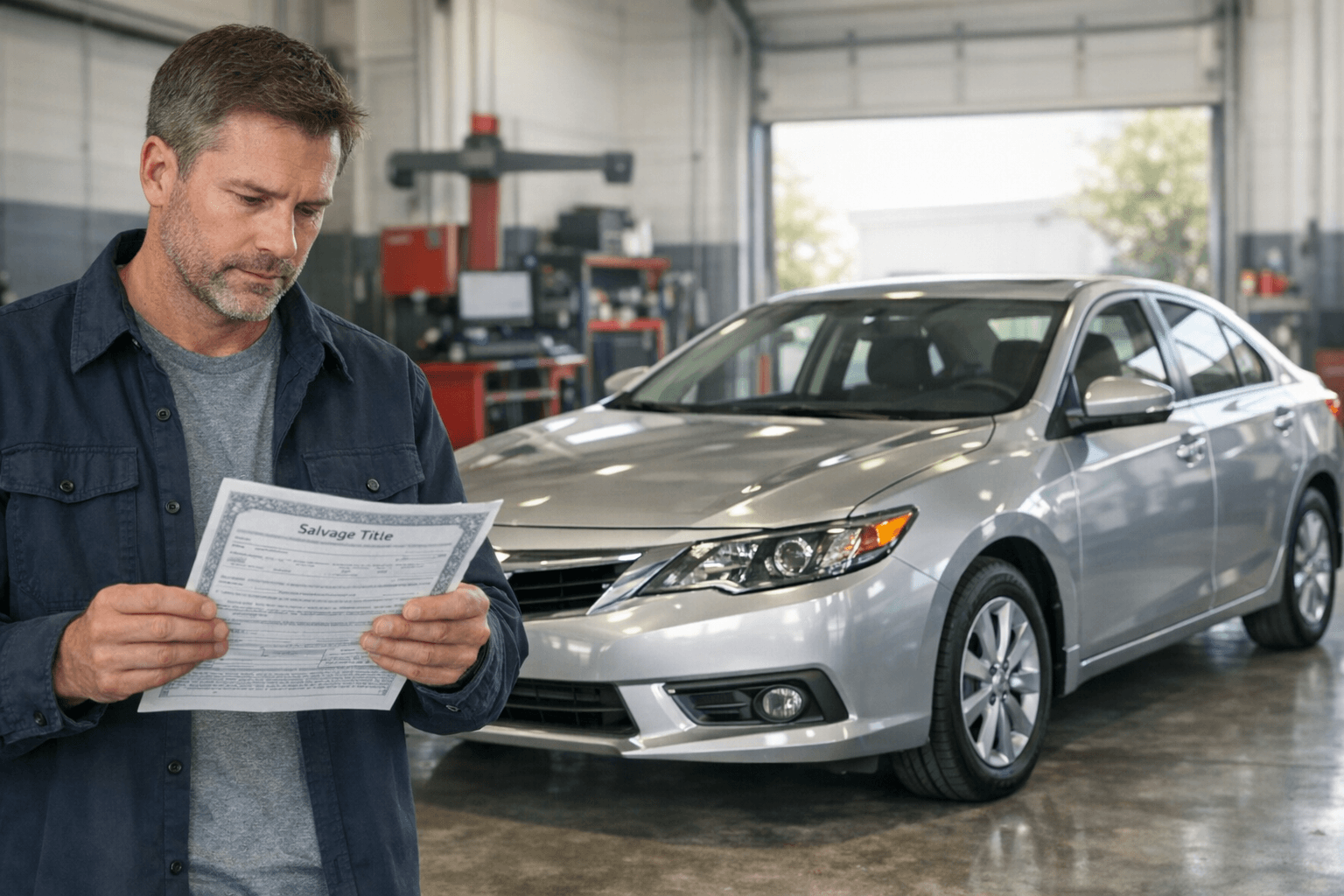
Salvage Title Risk in 2026: What the Brand Means Before You Buy, Finance, or Insure a Used Car
Salvage-title cars make people weird. One seller talks like the brand is no big deal. Another buyer hears the word salvage and acts like the car is radioactive. The truth is less dramatic and more annoying: a salvage title usually means the car took enough damage, or suffered a big enough loss event, that an insurer decided it was not worth repairing in the normal insurance channel.
That does not automatically mean the car is junk. It also does not mean the cheap asking price is smart. What you are really buying is a vehicle plus a much heavier due-diligence burden. If the paperwork is thin, the repairs are vague, or financing and insurance get slippery, the discount disappears fast.
This is the part buyers miss. A salvage-title deal is not just a condition question. It is a title-history question, an inspection question, and often a lender-and-insurer question too. You want those answers before money moves, not after.
What a salvage title actually means
California DMV says a salvage vehicle is one that was wrecked, destroyed, or damaged enough that the insurer or owner considered it too expensive to repair. That is the clean definition most buyers should start with. It tells you the car crossed a serious threshold at some point in its life, even if it now looks tidy in photos.
Insurance event
Total-loss history
A salvage brand usually starts with an insurer declaring the vehicle a total loss after collision, flood, theft recovery, or another major event.
Not the final step
Salvage is not rebuilt
A salvage title means the vehicle hit the loss threshold. It does not prove the repairs were completed correctly or that the car passed the next title stage cleanly.
State process
Rules vary
Every state handles branding, inspections, and re-registration a little differently. That means you need the actual paper trail for this VIN, not a generic promise.
If a seller talks about a salvage title like it is only a pricing quirk, slow the deal down. The brand exists because the loss was meaningful.
Why salvage-title cars fool buyers
The trap is simple: many salvage cars look better than they read on paper. Fresh paint hides panel work. A detailed interior makes the damage feel old and resolved. And a low price gives buyers an excuse to stop asking hard questions.
- Photo-ready repairs can hide ugly root causes. A front-end hit may also mean structural work, airbag replacement, sensor recalibration, and parts sourcing shortcuts that are not visible in listing photos.
- The title tells you a threshold was crossed, not whether the repair was good. A salvage brand is a starting point for inspection, not an answer.
- Paperwork quality varies wildly. Some sellers have before photos, insurer estimates, receipts, and state inspection records. Others have a one-line story and a freshly washed car.
- Insurance and financing friction often shows up late. That is when the cheap deal starts feeling expensive.
I would rather hear a seller say, "Here is the damage file, here is the rebuilt inspection, here are the receipts," than hear a seller keep repeating that the car drives great. A lot of bad cars drive fine for fifteen minutes.
Salvage, rebuilt, and clean-title total-loss history are not the same thing
Salvage title
The car was declared a total loss or reached a comparable state threshold. This is the clearest warning label of the three.
Rebuilt or revived salvage
The car moved past the salvage stage and was repaired well enough to re-enter the road under that state's process. It can still carry repair-quality, insurance, and resale risk.
Clean title with total-loss history
This is the messy one. The title may look clean today even though the VIN history still shows a prior total-loss signal. That mismatch deserves its own investigation.
That distinction matters because buyers often treat rebuilt as if it means fully solved, or clean title as if it means nothing serious happened. Neither shortcut is safe.
Seven checks worth doing before you pay for a salvage-title car
-
Run the VIN history first.
Use a report that surfaces title brands, total-loss indicators, theft history, and state title movement. You want the whole paper trail before you decide whether the story is even worth chasing.
-
Ask what caused the brand.
Flood, collision, theft recovery, fire, and vandalism do not create the same repair risk. "Insurance totaled it" is not specific enough.
-
Get pre-repair photos and the estimate if they exist.
This is the fastest way to tell whether you are looking at bolt-on panel work or a much bigger story involving structure, airbags, or water intrusion.
-
Confirm the title stage in your state.
If the vehicle is still branded salvage and not yet rebuilt or revived under your state's process, registration and road use may be a bigger headache than the seller admits.
-
Call insurance before leaving a deposit.
Do not assume you will get the coverage you want at the price you want. Ask about liability-only, comprehensive, collision, and valuation expectations for this exact VIN.
-
Ask a lender before you start rationalizing the discount.
Some lenders will not finance salvage-title cars at all. Others only consider rebuilt units and may still tighten loan-to-value assumptions.
-
Pay for a serious inspection, not a casual once-over.
A salvage-title candidate needs more than a quick "looks okay." You want someone checking structure, restraint-system evidence, alignment clues, corrosion, water intrusion, and how the repairs were actually finished.
This is where a lot of people blow it. They spend hours negotiating price and almost no time validating the paperwork and repair trail. The order should be the opposite.
When the discount is real, and when it is bait
Buy it
The cause of loss is documented, the repair file is strong, your insurer and lender answered clearly, and the inspection supports the price.
Renegotiate it
The car may be workable, but the missing records, uncertain valuation, or coverage limits mean the discount needs to be much larger.
Walk away
The seller cannot explain the loss event, the inspection finds deeper issues, or the insurance and title answers stay fuzzy.
That last bucket matters. Salvage-title cars are only interesting when the paperwork is better than the fear. If the paperwork is worse than the fear, leave it alone.
Video briefings
These are not salvage-only explainers. They are still worth watching because every salvage-title decision should include a real safety inspection and a recall check, not just a conversation about price.
What this means for VINSCRIBE users
VINSCRIBE helps you figure out whether a salvage-title car is merely discounted or genuinely messy:
- Surface salvage, rebuilt, total-loss, theft, and title-movement history before you start trusting the seller's version of events.
- Catch paper-trail conflicts that should match the repair story, not fight with it.
- Bring one report into insurance, financing, and inspection conversations so you are working from the same VIN-level facts.
That is the real use case. A salvage-title deal only works when everyone involved is looking at the same history and nobody is forced to improvise later.
Sources
- FTC: Buying a Used Car From a Dealer
- FTC: Dealer's Guide to the Used Car Rule
- California DMV: Register a Salvaged Vehicle
- California DMV: Junk, Revived Junk, Salvage Vehicles
- Bureau of Justice Assistance: NMVTIS Consumer Guide
- NHTSA: Recalls
- NHTSA Traffic Safety Marketing: Used Car Safety Check
- NHTSA Traffic Safety Marketing: SaferCar App