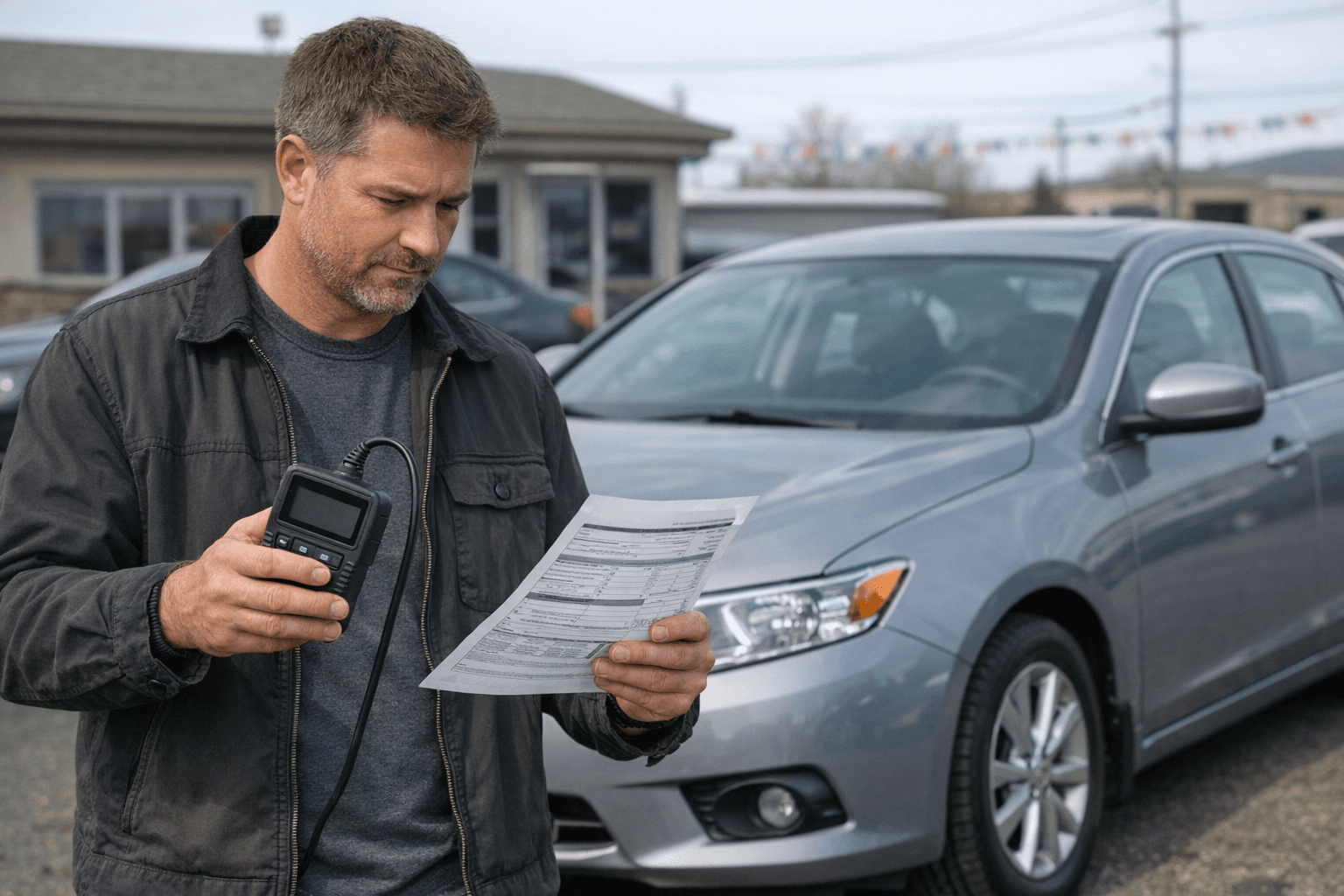
Used-Car Smog Check Risk in 2026: How Not-Ready Monitors, Catalytic Converter Swaps, and Tune Tricks Turn a Cheap Deal Into a Registration Problem
Some used cars are sold because the owner wants something newer. Some are sold because the math stopped working. And some get dumped right before the next emissions inspection starts asking awkward questions. That last group is the one buyers underestimate.
A car can idle smoothly, keep the check-engine light off, and still be a registration headache. Maybe the battery was disconnected so the readiness monitors never reset. Maybe the catalytic converter was replaced with the wrong unit. Maybe the tune was changed and the seller hopes you only discover that after the title is signed over.
This is not the same problem as flood damage, title fraud, or a branded-history car. It is a compliance problem hiding inside an otherwise normal deal. If you buy in a smog-check state, or plan to move, register, finance, or resell across state lines, it matters more than most people think.
Why this problem catches buyers off guard
Emissions trouble is sneaky because it often shows up after the test appointment, not during the test drive. Sellers know that. A cleared code, a fresh battery disconnect, or an incomplete drive cycle can buy just enough time to make the car feel fine in the driveway.
What you feel
Normal test drive
Many emissions issues do not make the car obviously drive badly during a short inspection.
What the station sees
Readiness + hardware
An inspection can fail because monitors are not ready, the converter is wrong, or the ECU calibration is illegal.
What it costs
Time and leverage
Once you own the car, the discount you should have negotiated is gone and the repair bill is yours.
California's BAR guidance is especially useful here because it spells out how stations look for missing or wrong catalytic converters, illegal software modifications, and incomplete OBD readiness. The same habits help buyers anywhere.
The three stories sellers tell when the emissions side is weak
- "The check-engine light was on, but I fixed it." Maybe. Or maybe the codes were cleared yesterday and the monitors have not run long enough to expose the real issue.
- "It just needs to be driven a little." That can be true after a legitimate repair. It is also the perfect line when a seller does not want you scanning readiness before purchase.
- "The catalytic converter was replaced already." Great. With what? In states with stricter rules, the wrong converter or missing paperwork can still mean a failed inspection.
I would not call all of that fraud. Sometimes it is just sloppy ownership. The problem for the buyer is that intent does not matter much once the car fails and you are the one standing at the counter.
Five checks worth doing before you pay
-
Scan readiness monitors, not just stored codes.
A cheap OBD-II scanner can tell you whether the emissions monitors are complete. "No codes" is not enough if the monitors are still not ready.
-
Ask for the most recent emissions or smog paperwork.
A recent pass is useful. A recent fail is even more useful because it tells you what the seller is hoping you do not ask about.
-
Inspect the catalytic converter story.
If the converter was replaced, get the invoice. In stricter states, paperwork and approved part numbers matter.
-
Be suspicious of fresh resets.
Recently disconnected batteries, just-cleared codes, or a seller who refuses a longer test drive are all reasons to slow down.
-
Cross-check the VIN history with the emissions story.
Out-of-state moves, theft recovery, prior collision repair, or long registration gaps can help explain why the inspection record feels thin or inconsistent.
When to renegotiate and when to walk
Buy it
Monitors are ready, recent inspection paperwork is clean, and the converter or exhaust story is documented.
Renegotiate
The issue looks fixable, but the price needs to reflect diagnostic time, possible parts cost, and a failed first inspection.
Walk away
The seller has no paperwork, the monitors are not ready, and the story keeps changing. Cheap gets expensive fast in that version.
This is where buyers get themselves in trouble. They treat emissions failure like a small clerical nuisance. Sometimes it is. Sometimes it is the first sign that the car was tuned, patched together, or unloaded for a reason.
Video briefings
These two videos are worth your time because they cover the part buyers usually skip: checking readiness and scanning the car before money moves.
What this means for VINSCRIBE users
VINSCRIBE is not a substitute for a state smog-history lookup or a scan tool. It does something different, and useful: it helps you decide whether the emissions story fits the rest of the car's paper trail.
- Use the VIN report to catch out-of-state history, title events, theft recovery, and prior damage that make a weak emissions story less believable.
- Use it to spot long registration gaps or ownership changes that should push you to ask for more paperwork.
- Use it before financing or insuring the car so a compliance problem does not become your problem after closing.
The cleanest used-car deals are boring. The paperwork lines up, the scan data lines up, and the seller does not mind you checking both. That is the kind of boring you want.