Stolen-Recovered Car Risk in 2026: What to Check Before a Cheap Listing Gets Expensive
Some used cars get discounted for a reason you can see right away. Theft-recovery cars are different. The paint may look fine. The test drive may feel normal. The trouble often shows up later, when you start chasing a dead module, a missing key, an insurance question, or a resale conversation you really do not want to have.
If a seller says the car was "just recovered" and wants you to focus on how cheap it is, slow down. This is not automatically a bad car, but it is a car that deserves a much better inspection than most buyers give it.
This guide is about how to sort the manageable theft-recovery cars from the ones that become a long, annoying project.
Why theft-recovery risk is its own category
Body Damage
May Be Minimal
A recovered car can look cleaner than a rebuilt-title car, which makes buyers drop their guard too early.
Real Problem
Hidden Disruption
Missing modules, cut wiring, broken locks, and key-programming issues are easy to miss on a quick walkaround.
Paper Trail
Can Get Weird
Some theft-recovery cars keep a normal-looking title, while others pick up claim, auction, or branding baggage that changes value fast.
That is why this topic does not fit neatly inside a normal theft post or a rebuilt-title post. You are not screening broad theft exposure. You are screening the aftermath on one specific VIN.
Where the damage usually hides
I would worry less about the glossy exterior photos and more about these boring details:
- Locks, glass, and trim: forced-entry damage can be repaired cheaply on the surface while clips, seals, and sensors are left half-right.
- Wiring and modules: stolen vehicles are often stripped for radios, screens, airbags, steering wheels, headlights, or control modules.
- Keys and immobilizer programming: missing original keys and rushed reprogramming can create intermittent no-start headaches.
- Interior contamination: some recovered cars sit open for days or weeks. Water intrusion and odor problems can linger long after detailing.
- Insurance and resale stigma: even if the car drives well, the theft history can change how a future buyer, insurer, or lender views it.
This is the part sellers tend to wave away with "everything works now." Maybe. Make them prove it.
A pre-offer checklist that is actually worth doing
-
Run the VIN before you schedule anything.
Use VINSCRIBE to confirm theft, recovery, title, mileage, and ownership timeline details. If the report and the seller story are already drifting apart, stop there.
-
Ask how long the car was missing and where it was recovered.
A car taken for one night is a different bet than one missing for weeks and later sold through an auction lane.
-
Test every electronic function, not just the engine and AC.
Windows, locks, infotainment, cameras, blind-spot alerts, seat controls, charging ports, steering-wheel buttons, and every key fob you are supposed to receive.
-
Look closely at the steering column, dash, console, trunk, and headliner.
Those areas often tell the truth faster than the outside of the car does.
-
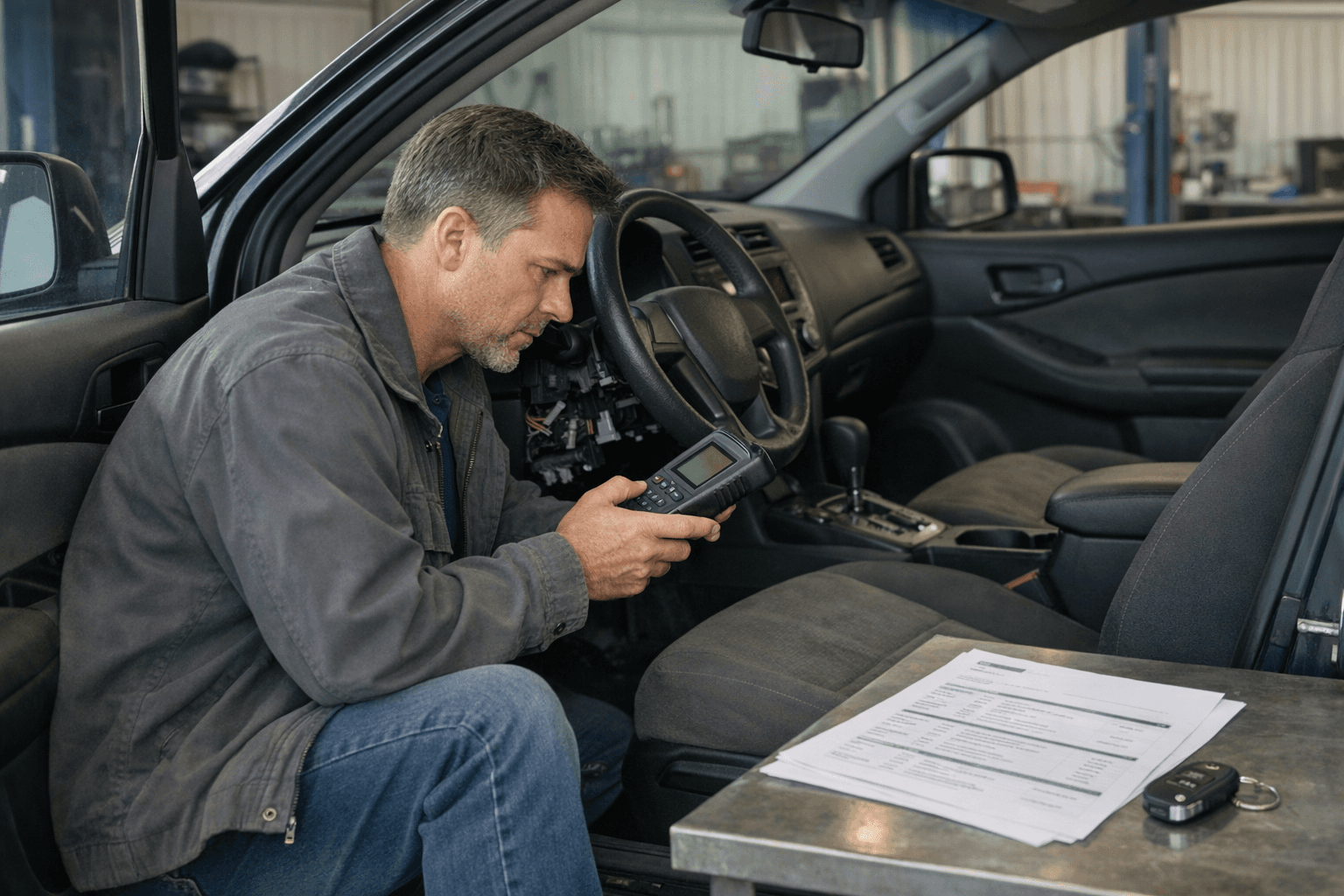
Get a scan tool on it before you agree on price.
Intermittent communication faults and stored body-control codes matter on theft-recovery cars. This is not optional.
-
Ask what parts were replaced after recovery.
You want invoices, not a verbal list. Screens, airbags, catalytic converters, headlights, and modules are the kinds of items that change the real cost story.
-
Call insurance on the exact VIN before you buy.
If the history creates underwriting friction, better to hear that before the title transfer than after it.
-
Price it against compromised-history comps.
Do not compare this car to a clean private-owner equivalent and call the discount a deal.
When the deal still works, and when it clearly does not
Buy it
History is documented, diagnostics are clean, every function works, insurance is normal enough, and the price reflects the baggage.
Renegotiate hard
The car may be usable, but missing keys, replacement electronics, or unresolved codes mean the number needs to move.
Walk away
Thin paperwork, no invoices, warning lights, weird electrical behavior, or a seller who wants blind trust instead of inspection.
A theft-recovery car only makes sense when the discount is real and the uncertainty is small. Cheap plus vague is not a bargain. It is a hobby you did not ask for.
Video briefings
These are worth watching because they focus on the inspection and paperwork side of theft history, not just the headline drama.
How VINSCRIBE helps before money moves
VINSCRIBE is useful here because theft-recovery deals fall apart when people rely on the seller's summary instead of the VIN trail.
- Check whether the theft and recovery timeline matches the seller's explanation.
- Compare title, mileage, and ownership signals before you pay for a specialty inspection.
- Give your mechanic, lender, insurer, or co-buyer one clean record to review with you.
That will not repair a bad car. It does help you avoid buying one by accident.