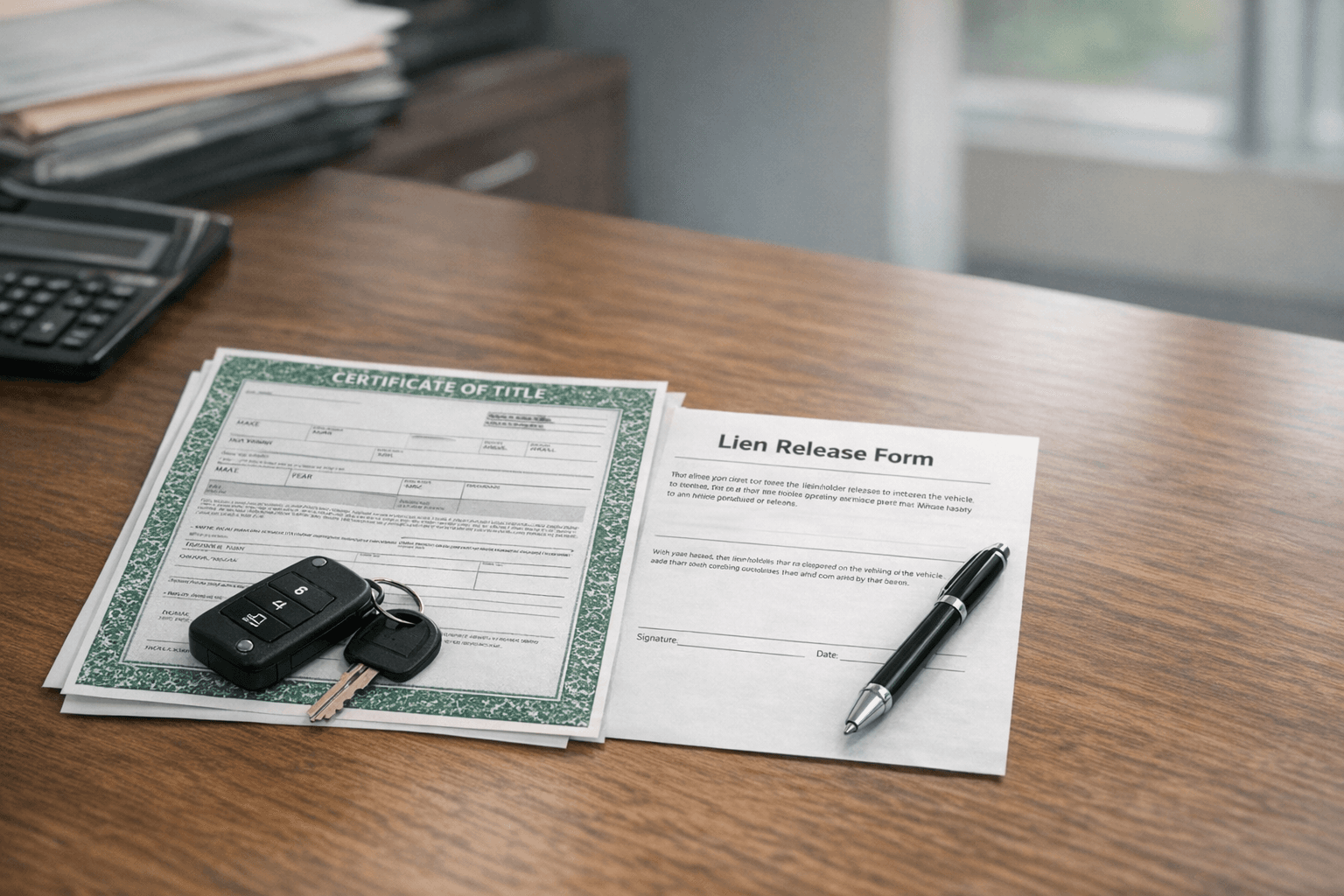
Title Lien-Release Fraud in 2026: How Buyers, Lenders, and Insurers Can Stop Title Jumping
As of 2026-03-10, title fraud risk in private-party and informal dealer channels is less about obvious fake VIN stickers and more about document-layer manipulation: forged lien releases, skipped title assignments, and “title jumping.” The car may drive fine, but the paperwork can block registration, financing, or claim payment later.
This is a different risk than accident history alone. A vehicle can show normal service records yet still carry unresolved ownership encumbrances. For buyers, lenders, and insurers, the control point is a pre-close title workflow, not post-close damage discovery.
Why This Risk Is Different in 2026
Document Fraud
High Impact
A forged or incomplete lien release can block transfer even if the vehicle itself appears clean.
Transaction Speed
Faster Closings
Online listings and remote deals reduce in-person DMV checks, which increases paperwork blind spots.
Downstream Cost
Registration Delays
Ownership disputes can trigger storage fees, financing unwind, and claim friction.
Unlike a normal pricing negotiation, title defects do not improve with a discount. They can suspend legal transfer rights entirely. That is why title validation must happen before funds move.
The Three Failure Modes to Screen
- Forged lien release: A stamped letter or signed statement claims the lien is paid, but the secured party record is still active or unverifiable.
- Title jumping: The seller is not the titled owner and avoids recording transfer to skip taxes, title fees, or ownership accountability.
- Assignment chain breaks: Missing signatures, altered buyer fields, or reassignment sections that do not match the ownership timeline.
If any one of these appears, pause the transaction. Mechanical condition does not cure title-chain risk.
Pre-Close Verification Workflow
-
Match seller identity to title front and back.
Require government ID and verify legal name matches titled owner or documented power-of-attorney authority.
-
Validate lien status with source systems.
Do not rely only on printed letters. Confirm lien release status through the state DMV process or the lienholder's official payoff/release channel.
-
Review assignment chronology end-to-end.
Check issue dates, odometer statements, reassignment boxes, and signatures for timeline consistency.
-
Run VIN history before payment authorization.
Use a report to identify title brands, loss events, theft recovery context, and ownership anomalies that should align with paperwork claims.
-
Use controlled payment release.
For higher-risk deals, route funds through escrow or a conditional release process tied to successful transfer confirmation.
Decision Matrix: Proceed, Condition, or Exit
Proceed
Owner identity, lien release, and assignment chain all verify against source records.
Condition
Issue appears administrative but unresolved. Hold funds until documented cure is confirmed.
Exit
Seller cannot prove authority, lien record conflicts persist, or assignment sequence is broken.
This matrix protects buyers from unregistrable vehicles and protects lenders/insurers from collateral defects entering the portfolio.
Video Briefings
What This Means for VINSCRIBE Users
VINSCRIBE strengthens title-risk diligence by adding VIN-level context before closing:
- Surface title-brand and ownership-risk signals that should match your transfer documents.
- Flag prior total-loss or theft-recovery context that can increase title-chain scrutiny.
- Create a single report trail for buyers, finance teams, and insurance underwriting.
If paperwork and vehicle history disagree, stop and resolve the discrepancy before payment.