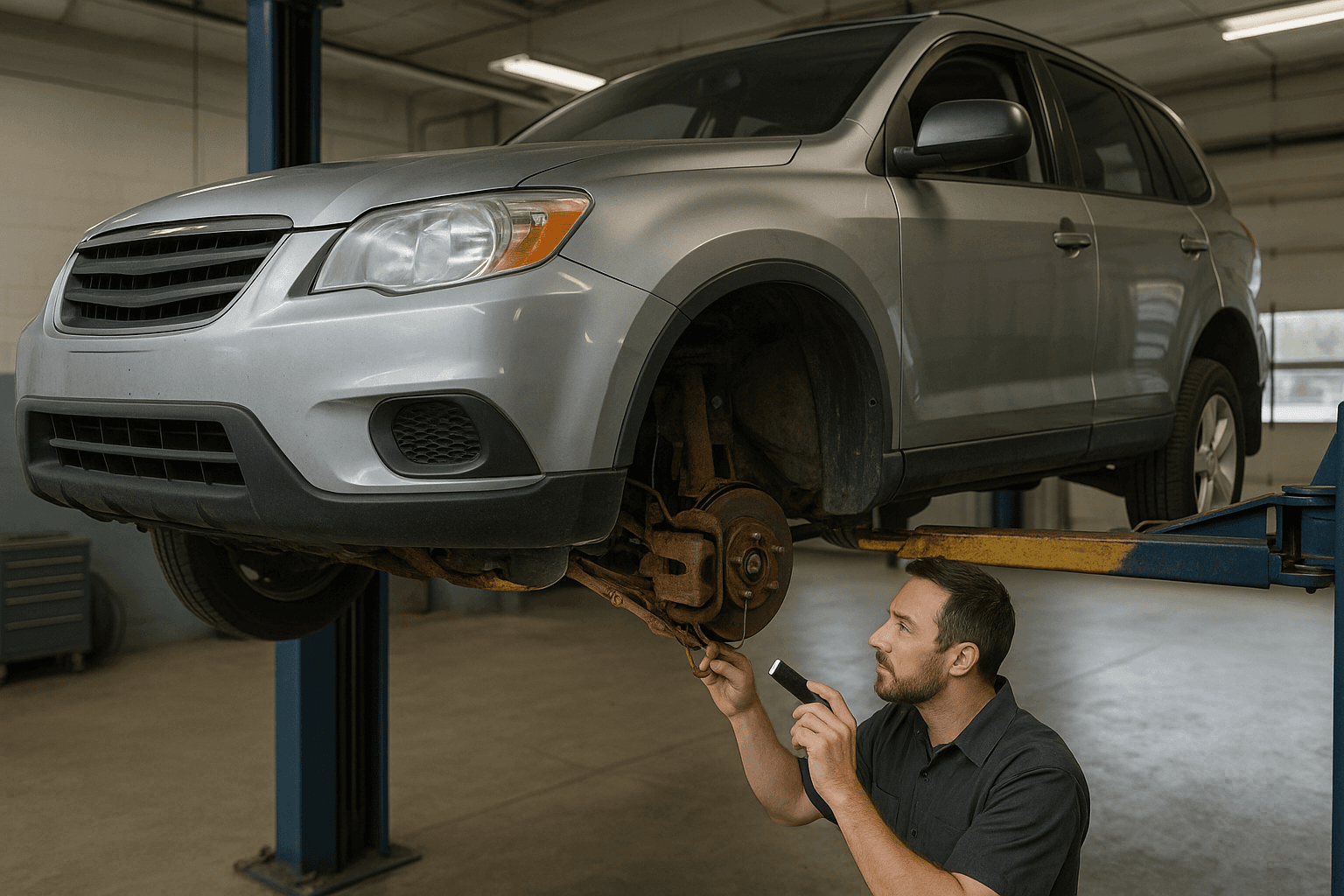
Underbody Rust Risk in 2026: How to Catch a Salt-Belt Used Car Before Corrosion Turns Structural
Rust is one of those used-car problems people hand-wave until the car is on a lift and the mood changes. A listing can look clean, the paint can shine, and the seller can swear it "only has normal rust for its age." Then you get underneath it and find brake lines flaking apart, jack points folding in, or a subframe that no shop wants to trust.
This is a different problem than collision frame damage, and it is not the same as flood damage either. Underbody corrosion is its own category of risk. It builds slowly, hides well, and gets expensive at exactly the moment you hoped the car would be a bargain.
The good news is that rust usually leaves clues. Some are physical. Some come from the vehicle's history. If you know what to look for before money moves, you can avoid turning a cheap used car into a long explanation.
What kind of rust matters, and what kind usually does not
Surface rust
Light orange-brown film on exhaust parts, fasteners, and bare metal is common on older cars. By itself, it is usually not the deal-killer.
Scaling rust
Flaking layers on subframes, control-arm mounts, rocker seams, or metal lines deserve real scrutiny. This is where "normal" can start getting expensive.
Perforation
Holes, soft metal, split seams, or lift points that crush are walk-away territory for most buyers. Toyota's own Tacoma rust-perforation inspection bulletin treats visible perforation as a major threshold, and that is the right instinct.
I keep coming back to this because sellers blur these categories on purpose. "Just surface rust" sounds small. Sometimes it is small. Sometimes it is a sentence people use when they do not want you looking too closely at the rear subframe or the brake lines above the fuel tank.
Why salt-belt history should change your inspection plan
A vehicle history report does not measure metal thickness. It does not tell you whether a line will burst next month. What it does tell you is where the car has lived, how it moved, and whether its story makes sense.
- Long winters matter: If the car spent years in places that lean hard on road salt, underbody corrosion should move to the top of your checklist. Toyota and Kia both published corrosion-related service campaigns that call out cold-climate or heavy-salt states for frame and brake-line inspection.
- Sudden state jumps matter too: A car that lived in New York, Massachusetts, Ohio, Michigan, or coastal New England and is now being sold in Georgia, Texas, or Arizona is not automatically bad. It just deserves a lift inspection, not a parking-lot shrug.
- History still sets the context: NMVTIS data helps you check title states, brand history, salvage context, and total-loss history. It will not replace a mechanic, but it tells you whether the inspection should start from "probably fine" or "prove it."
That is where VINSCRIBE actually earns its keep on a rust-risk deal. It helps you see whether this "southern car" was only southern for the last six months.
The underbody checklist I would use before buying
-
Ask for underbody photos or a lift inspection before you negotiate hard.
If the seller refuses a lift or gets slippery about underside photos, treat that as information. Rust is easiest to hide when nobody looks up from below.
-
Look at brake lines, fuel lines, and their mounting points.
Kia's corrosion campaign language is blunt: road-salt exposure can rot brake lines over time, and lack of underbody maintenance makes it worse. On an inspection-standard level, Maine rejects lines that are rusted to the point of flaking, while making clear that light surface rust alone is different.
-
Check subframes, suspension mounts, spring perches, and control-arm pickup points.
This is where a car stops being "cosmetically rusty" and starts becoming structurally sketchy. Flakes, swelling metal, recent patchwork, or fresh black coating in one suspicious area should slow you down.
-
Inspect rocker panels, pinch welds, and jack points.
If a shop cannot safely lift the car, you do not have a minor problem. You have a car that is already hard to service, inspect, and later resell.
-
Check the trunk well, spare-tire area, and lower seams.
These spots catch moisture and often tell the truth faster than the exterior paint does.
-
Pay attention to uneven undercoating or fresh paint underneath.
Fresh coating is not automatically dishonest, but it can absolutely be used to cosmetically bury a problem. Ask what was treated, when, and why.
Price it, pause it, or walk away
Price it
Surface rust is present, but brake lines, mounts, pinch welds, and subframes are still solid. This is usually a maintenance conversation, not a structural one.
Pause it
There is scaling on important components, inconsistent coating underneath, or one area that looks worse than the rest. Get an independent pre-purchase inspection on a lift before deciding.
Walk away
Rust has perforated structural areas, brake or fuel lines are flaking, jack points are soft, or a shop does not want to lift the vehicle. Cheap stops being cheap right there.
This is where a lot of buyers talk themselves into trouble. They imagine rust as a future problem when, in reality, severe rust is often a current-value problem, a current-safety problem, and a current resale problem all at once.
Why rust changes the insurance, lending, and resale math
Insurance and lenders do not need a special "rust title" for corrosion to matter. If a vehicle is hard to inspect safely, hard to repair cleanly, or likely to need line, mount, or subframe work soon, the collateral story gets worse. So does resale.
That is especially true with borderline-value vehicles. A cheap SUV or pickup can look appealing until the repair estimate includes brake lines, seized hardware, suspension parts, and labor nobody wants to underquote. Then the market starts treating the vehicle exactly how buyers should have treated it earlier: with caution.
I would be even more careful when the seller leans on cosmetic reassurance. "No rust on the body" is not the same thing as "no rust where the car actually carries its weight."
What this means for VINSCRIBE users
VINSCRIBE cannot tell you whether a rear brake line will fail next Tuesday. It can tell you whether the car's history makes that inspection more urgent.
- Use title-state history to spot long salt-belt exposure that a seller may minimize.
- Check for salvage, flood, or total-loss context that can overlap with corrosion concerns.
- Share one report with your mechanic, lender, or co-buyer so everyone starts from the same facts before the inspection happens.
That is the right order for this kind of deal: run the history first, inspect the underside second, and only negotiate once both stories line up.
Sources
- FTC: Buying a Used Car From a Dealer
- Bureau of Justice Assistance: Understanding an NMVTIS Vehicle History Report
- NHTSA: Hurricane- and Flood-Damaged Vehicles
- NHTSA / Toyota: 2001-2004 Tacoma Frame Inspection for Rust Perforation
- NHTSA / Toyota: Tacoma Frame Corrosion Limited Service Campaign
- NHTSA / Kia: Forte Brake Line Corrosion Service Campaign
- Maine Motor Vehicle Inspection Manual