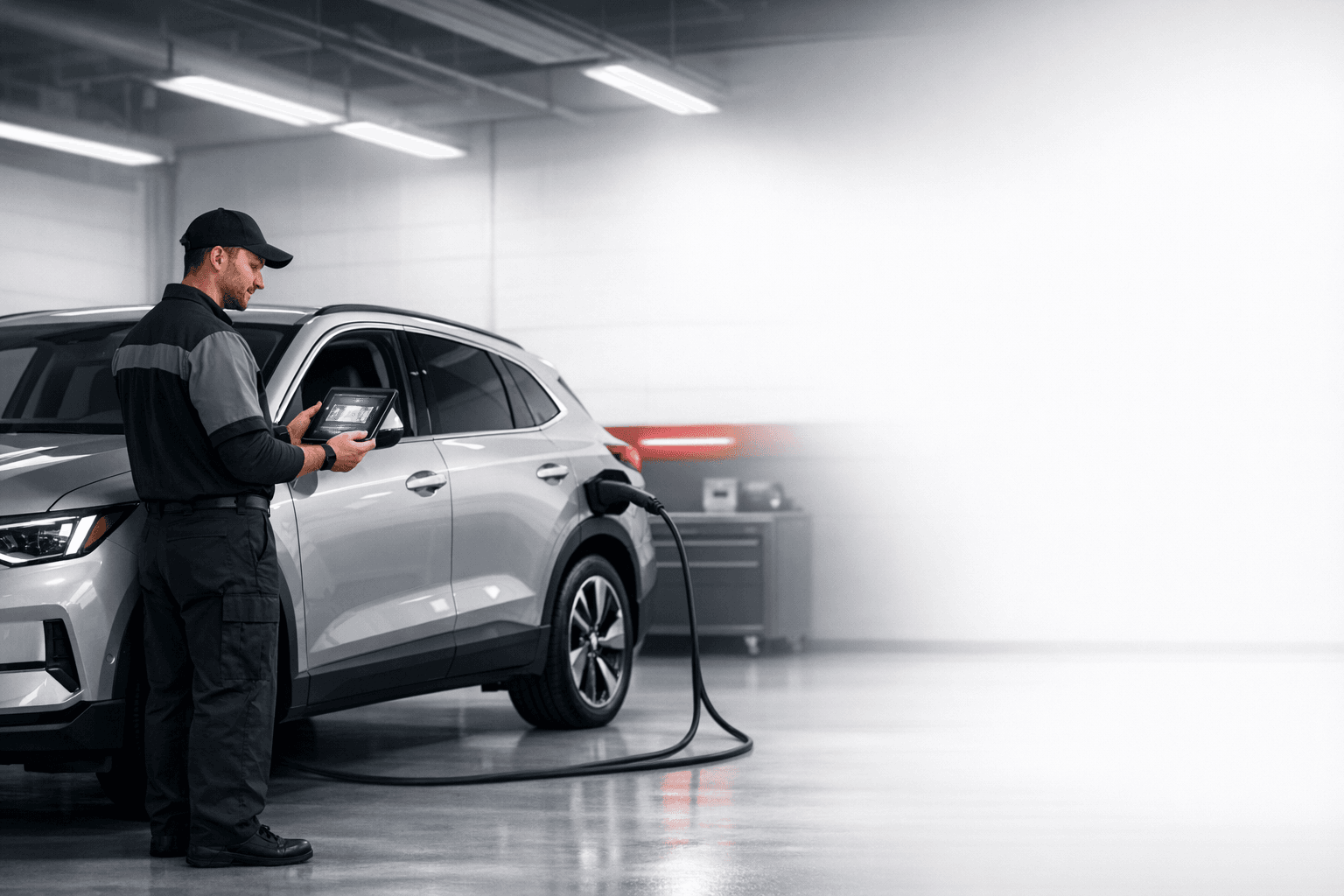
Used EV Battery Health in 2026: A Dealer & Buyer Checklist for Pricing Risk
As of 2026-02-07, used EV inventory is no longer niche. Buyers are comparing prices across gas, hybrid, and electric options, while dealers are trying to protect margin in a fast-moving market. The difference between a clean used EV and a risky one is often invisible: battery health.
This guide turns battery health into a practical decision system. You will get a market snapshot, a checklist you can use at intake, and a simple framework to decide when to price, renegotiate, or walk away.
Market Snapshot: Why Battery Health Is a 2026 Pricing Signal
EV Sales
607,089
Cox Automotive reported a record first half of 2025 for U.S. EV sales.
Used EV Price
$36,046
Average used EV listing price (June 2025) per the EV Market Monitor.
Budget Segment
43%
Share of used EV listings priced under $25k (June 2025).
As prices normalize and volume rises, buyers and lenders are asking better questions. Range matters, but so does battery condition. A healthy pack protects residual value and lowers warranty risk.
Battery Health by the Numbers
Large-scale fleet data now makes battery health trends visible. A 2026 Geotab study analyzing 22,700 EVs across 21 makes shows average degradation around 2.3% per year. It also highlights two risk multipliers: frequent DC fast charging and hot climates.
- Average degradation: About 2.3% per year across the sample.
- Fast charging impact: High-power DC fast charging (over 100 kW) correlated with higher annual degradation (up to ~3.0%) compared to lower-power or AC charging (around 1.5%).
- Hot climate impact: Hot regions added roughly 0.4% additional annual degradation versus milder climates.
Bottom line: a used EV that lived on fast chargers in a hot region is a different risk profile than the same model charged slowly in a temperate climate.
Actionable Checklist: Validate Battery Health Before You Price
-
Ask for battery State of Health (SOH).
Request OEM or diagnostic readouts that quantify capacity remaining, not just current range.
-
Capture charging behavior.
Ask the seller how often DC fast charging was used and whether the vehicle regularly sat above 80% state of charge.
-
Check climate history.
Battery performance is sensitive to temperature. Hot-region usage can accelerate degradation.
-
Review warranty coverage and transfer rules.
Confirm the in-service date and battery warranty terms directly with the OEM.
-
Verify software and recall status.
Battery performance and charging behavior can change with software updates and safety campaigns.
Decision Framework: Price, Recondition, or Walk Away
Gate 1: Battery Health Verified?
If no, pause the deal or reduce the offer until verified.
Gate 2: Degradation Within Expectations?
If degradation is above expected range, reprice or consider wholesale exit.
Gate 3: Charging Behavior Acceptable?
High-power fast charging in hot climates should adjust your pricing or warranty assumptions.
Gate 4: Warranty Protection Clear?
If coverage is uncertain, protect margin with a lower buy or stronger disclosure.
This framework keeps the decision objective. It turns battery risk into a pricing input instead of a surprise after delivery.
How Temperature and Charging Habits Show Up in Diagnostics
NHTSA notes that battery performance and lifespan are sensitive to temperature, and that thermal management draws energy to keep packs within safe ranges. That means extreme heat or cold can impact usable range and long-term durability.
When you see lower-than-expected range or faster-than-expected degradation, ask about:
- Long-term parking at high state of charge.
- Frequent fast-charging sessions above 100 kW.
- Operating in very hot climates without consistent thermal management.
Watch: DOE Energy 101 EV Basics
This DOE playlist includes the Energy 101 electric vehicles overview that helps explain EV basics for teams and buyers.
What This Means for VINSCRIBE Users
VINSCRIBE turns battery risk into a fast, shareable decision signal by combining EV history, ownership context, and recall data in a single report:
- Track ownership changes and usage patterns that may signal heavy fast-charging or fleet exposure.
- Surface recall status and software updates that affect battery performance.
- Share a clean report with buyers, lenders, or reconditioning teams to keep deals moving.
If you are evaluating a used EV, a VINSCRIBE report helps you validate the story behind the battery so you can price with confidence.