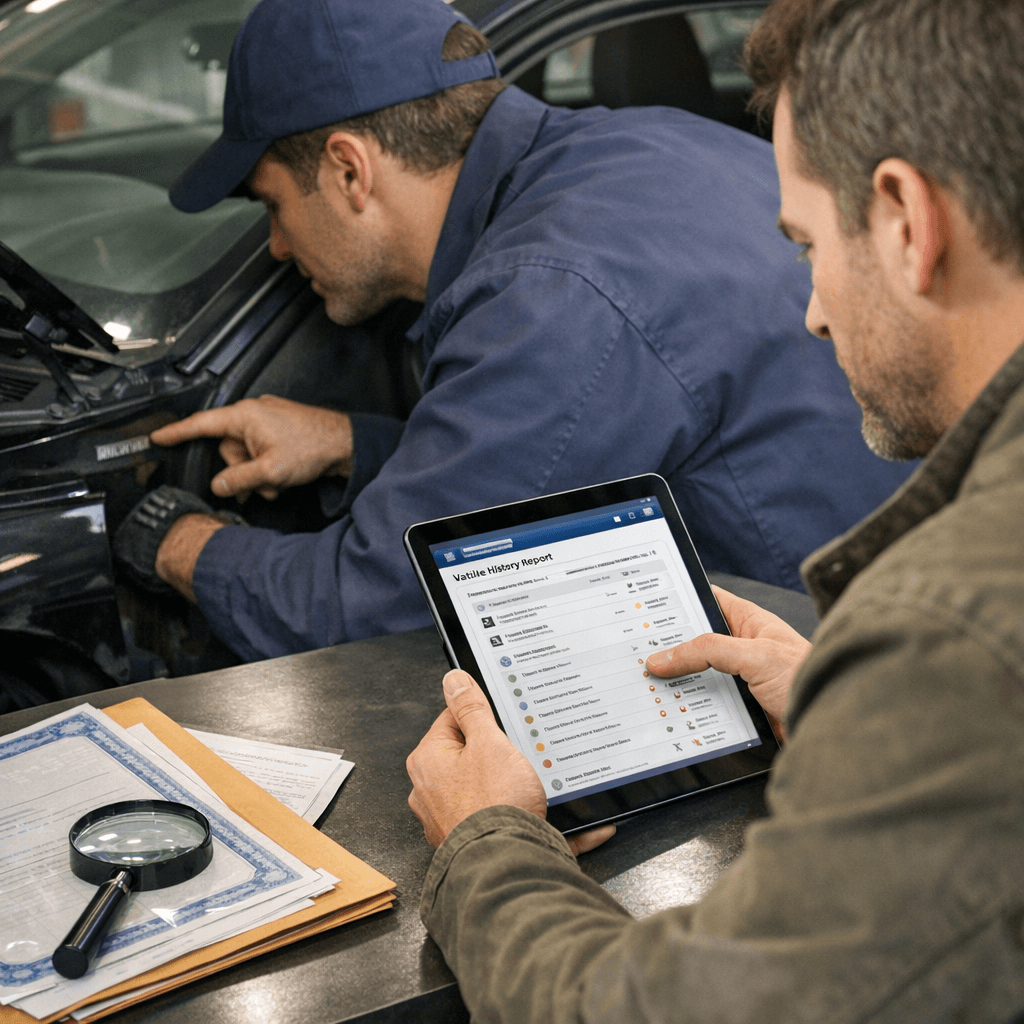
VIN Cloning & VIN Mismatch Risk in 2026: A Buyer, Lender, and Insurer Checklist
VIN cloning and VIN mismatches are not dramatic crimes in every story. In many cases, they are just weak signals in the paperwork and in the data chain that go unnoticed until money has already changed hands.
One buyer I know had a clean-looking listing, VIN report, and photos. The issue showed up only after title processing: lender required VIN confirmation and got a different chain than what the seller described. That is expensive, stressful, and avoidable if you treat VIN identity as a checklist, not a checkbox.
This post is about how people lose money when VIN identity is treated like a single field instead of a chain of evidence.
The issue is usually boring, not cinematic
VIN-related fraud usually enters quietly. It often looks like one of these patterns:
- The VIN plate is hard to read, recently tampered with, or has paint transfer around the stamp.
- The title brand history and VIN history service disagree on prior ownership regions or major repair events.
- The same VIN appears in odd seller or auction inventories, with inconsistent mileage jumps.
- A lender declines the VIN match later because the vehicle has unresolved lien or title chain status.
None of these alone proves cloning. They signal that the car needs deeper verification before you negotiate.
Three things everyone should verify before a private sale
-
VIN visibility in physical space.
Verify the VIN on the windshield tag, driver-side B-pillar, and title paperwork all match exactly, including character spacing.
-
Cross-check title chain and lien history.
If the history report says one chain and the seller says another, pause and request seller documentation for the mismatch.
-
Validate with the lender before payment.
Ask whether underwriting can review VIN details before final approval. If they cannot verify now, don't rush to close.
That 3-step pass won't eliminate every bad deal, but it catches most "looks fine until registration" outcomes.
Why lenders care, and why insurances may block underwriting
VIN mismatch risk is not just a buyer headache. It changes credit risk and premium risk too:
Lenders
Collateral confidence
If VIN identity is unclear, lenders can tighten approval or decline financing entirely.
Insurance
Exposure scoring
Unclear origin or title history can alter underwriting terms and coverage confidence.
Resale
Liquidity drag
Buyers are less willing to pay quickly on a VIN with unresolved identity or title questions.
A practical inspection flow for high-trust decisions
Here is the practical flow I recommend for private deals and trade-ins:
- Step 1: Capture VIN photos in daylight from every visible VIN location.
- Step 2: Run the VIN through history checks and compare branding, accidents, and odometer history.
- Step 3: Cross-check lien release records and title chain dates before inspection.
- Step 4: Ask for repair invoices and pre-sale photos for any event cluster (high-value claims, title brands, major mechanical repairs).
- Step 5: Only then request finance pre-approval and final insurance quote on the same VIN.
- Step 6: If any one step flags a mismatch, renegotiate heavily or walk away.
The point is not to create fear. The point is to avoid paying twice for one used car: once at checkout, once in administrative cleanup.
Watch and learn: VIN integrity, title transfer, and fraud prevention
Here are three short videos worth watching if you want a better sense of how VIN and title identity failures happen in real deals:
How VINSCRIBE changes the decision quality
VINSCRIBE does not replace inspection, inspection photos, or state-level verification. It does make identity checks faster and much harder to fake because the VIN report gives you one place to compare:
- Branding, theft, and salvage signals from VIN history data.
- Ownership and mileage consistency across major reporting windows.
- Title-related flags that should not be ignored in a pricing decision.
Use it early, not as a final step. The earlier you identify a mismatch, the less money and emotion you spend defending a bad deal.