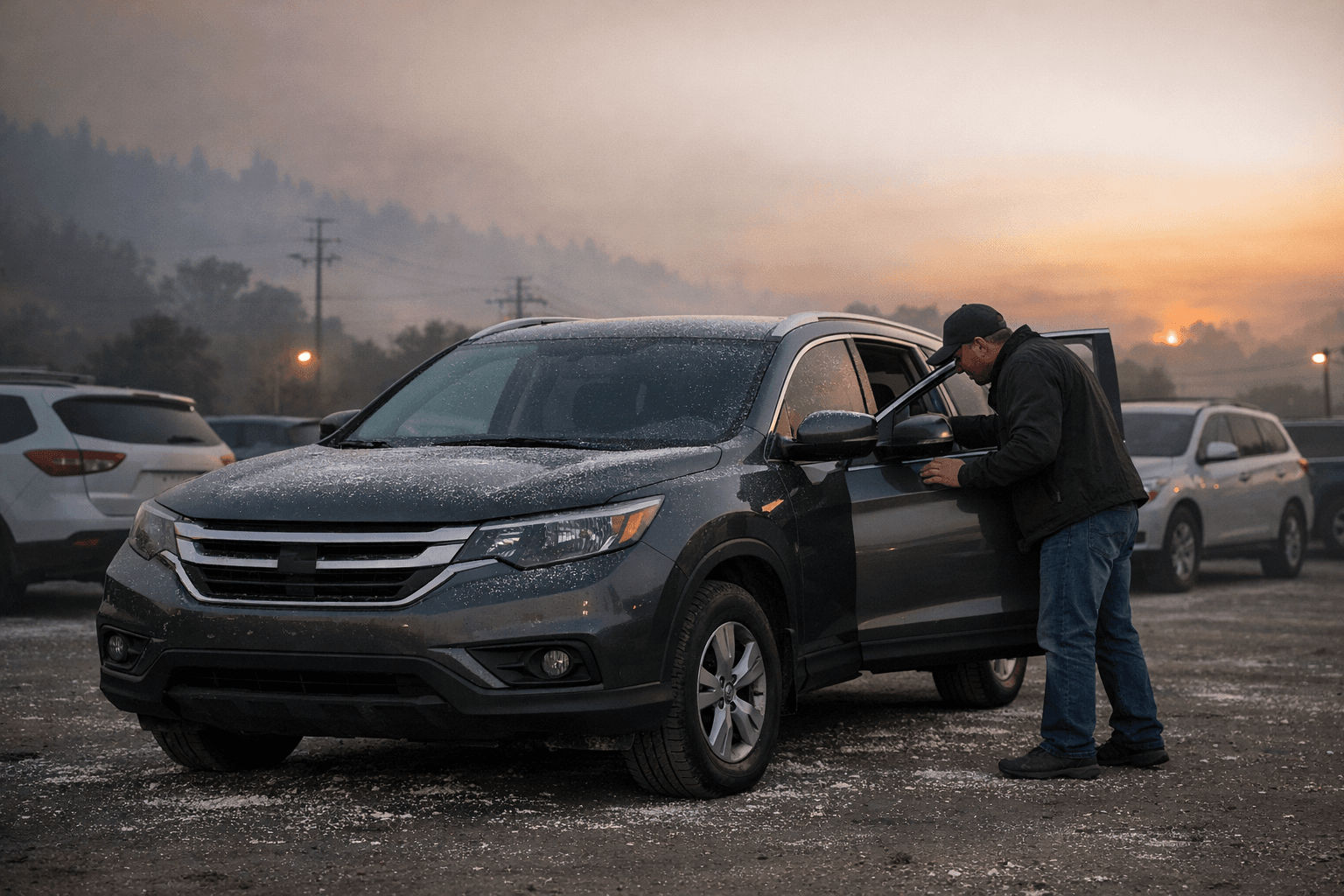
Wildfire Smoke Damage Risk in 2026: How to Catch Ash, Heat, and Hidden HVAC Problems Before You Buy
Flood cars scare people. Hail cars do too. Wildfire-exposed cars are trickier because the paperwork can look perfectly ordinary while the damage hides in the cabin, the paint, and the plastic bits that only start failing after you live with the car for a while.
That is the part buyers miss. A used car does not need visible flame damage to have a wildfire story. Weeks of smoke, ash, heat, and rushed cleanup can leave you with a car that smells strange in the morning, fogs the cabin faster than it should, eats through filters, and keeps needing little fixes that somehow never stay little.
This is also why the topic deserves its own post instead of getting folded into our flood, hail, or title-fraud coverage. Wildfire risk is usually a contamination and heat-aging problem. The title may still be clean. The seller may not even think of it as "damage." You still end up paying for it.
Why wildfire cars slip past smart buyers
Clean Paper
Low Suspicion
A smoke-exposed car may never get a branded title, so buyers lower their guard before the inspection even starts.
Quick Cleanup
Smell Masking
Fresh detail work, ozone treatment, and heavy fragrance can cover the first impression long enough to close the deal.
Delayed Failure
Death By Nuisance
Trim fade, brittle seals, weak blower performance, and lingering odor often show up after the sale, not during a 15-minute test drive.
That combination is what makes these cars dangerous to normal used-car buyers. The risk is real, but it rarely announces itself in one dramatic line item.
What smoke, ash, and heat actually do to a vehicle
-
They contaminate the HVAC path.
Ash and soot can work into cabin filters, cowl drains, blower housings, and vents. Sometimes the only symptom at first is a stale smell when the fan kicks on.
-
They age rubber and plastic faster.
Heat exposure can dry out weather seals, brittle up plastic trim, haze lenses, and leave exterior pieces looking older than the mileage suggests.
-
They mark paint and glass in subtle ways.
Fine ash can etch finishes, especially if it sat on the vehicle and then got wiped or washed carelessly.
-
They create cleanup bills that are annoying, not optional.
Maybe it is filters and detailing. Maybe it turns into vent cleaning, seal replacement, headliner work, or a stubborn odor problem that never fully goes away.
I keep coming back to that last point. Wildfire damage is easy to dismiss because it often looks cosmetic. Then the owner spends the next six months chasing a car that never quite feels clean again.
What a vehicle history report can tell you, and what it cannot
What it can do
A VIN report can surface title brands, prior loss activity, ownership and registration patterns, theft signals, and geography that deserves follow-up questions.
What it cannot do
It cannot certify that the cabin is smoke-free, the vents are clean, or the trim did not spend days baking in wildfire heat.
That does not make the report less useful. It just means you have to use it correctly. If the car spent time in a wildfire-affected region, changed hands shortly after a fire season, or has a seller story that feels thinner than it should, the VIN history gives you context. The physical inspection still has to close the loop.
A practical wildfire-damage inspection routine
-
Smell the cabin before the seller perfumes it again.
Open the car cold. Wait a second. Then run the fan and the heat. A sweet air freshener cloud is not reassuring here. It is suspicious.
-
Check the cabin and engine air filters.
You are looking for unusual soot, ash residue, or a filter that was clearly swapped moments before sale while the surrounding housing still looks dirty.
-
Inspect the cowl, door jambs, trunk edges, and weather seals.
These are the places where fine ash, staining, and dried-out rubber tend to linger after a rushed cleanup.
-
Look at plastic trim in direct light.
Faded wiper arms, chalky mirror caps, brittle cowl trim, and cloudy headlamp surfaces can tell a more honest story than the paint on the hood.
-
Ask the seller where the car lived during recent fire seasons.
This is a simple question, but it changes the whole conversation. Evasive answers matter.
-
Price the cleanup before you call it a bargain.
If you already know it needs filters, detailing, vent cleaning, and trim replacement, that is not future maintenance. That is purchase cost.
Buy it, renegotiate it, or leave it alone
Buy it
History, seller story, and inspection all line up, and you do not find odor, ash residue, or heat-aging that changes the economics.
Renegotiate it
The car is usable, but the cabin cleanup, filters, trim pieces, or seal replacement need real money and should be treated that way.
Walk away
The smell keeps coming back, the seller dodges the wildfire question, or the car looks cosmetically fresh on top and dirty in every hidden place underneath.
That last category is bigger than people think. Once a car starts feeling like a remediation project instead of transportation, the cheap listing usually stops being cheap.
Three seller questions that change the deal fast
-
Where did the car spend the last two fire seasons?
A direct answer is useful. A foggy one is useful too, just in a different way.
-
What has already been replaced or cleaned because of smoke or ash?
If the seller mentions filters, detailing, ozone treatment, or trim pieces, you now know exactly where to inspect harder.
-
Why is the car priced below similar local listings?
Sometimes the answer is simple. Sometimes you get a long, slippery story. Listen for which one you are hearing.
What VINSCRIBE helps you do earlier
VINSCRIBE is useful in wildfire cases for the same reason it is useful in every murky used-car deal: it gives you the VIN-side context before you spend time and money on the wrong vehicle.
- Surface title, loss, theft, and ownership signals that should match the seller's story.
- Show geography and record patterns that make wildfire exposure worth asking about before you show up.
- Help you decide whether the car deserves a serious inspection, a lower offer, or no more attention at all.
That is the real job here. A history report does not smell the vents for you. It helps you avoid wasting a Saturday on the wrong car.