Title Washing in 2026: Why a Clean-Looking Used Car Title Can Still Hide a Bad History
A lot of buyers still put too much faith in a title that looks clean at a glance. I get why. The paper is in front of you. The seller has a decent story. The VIN on the dashboard matches the VIN on the document. It feels official.
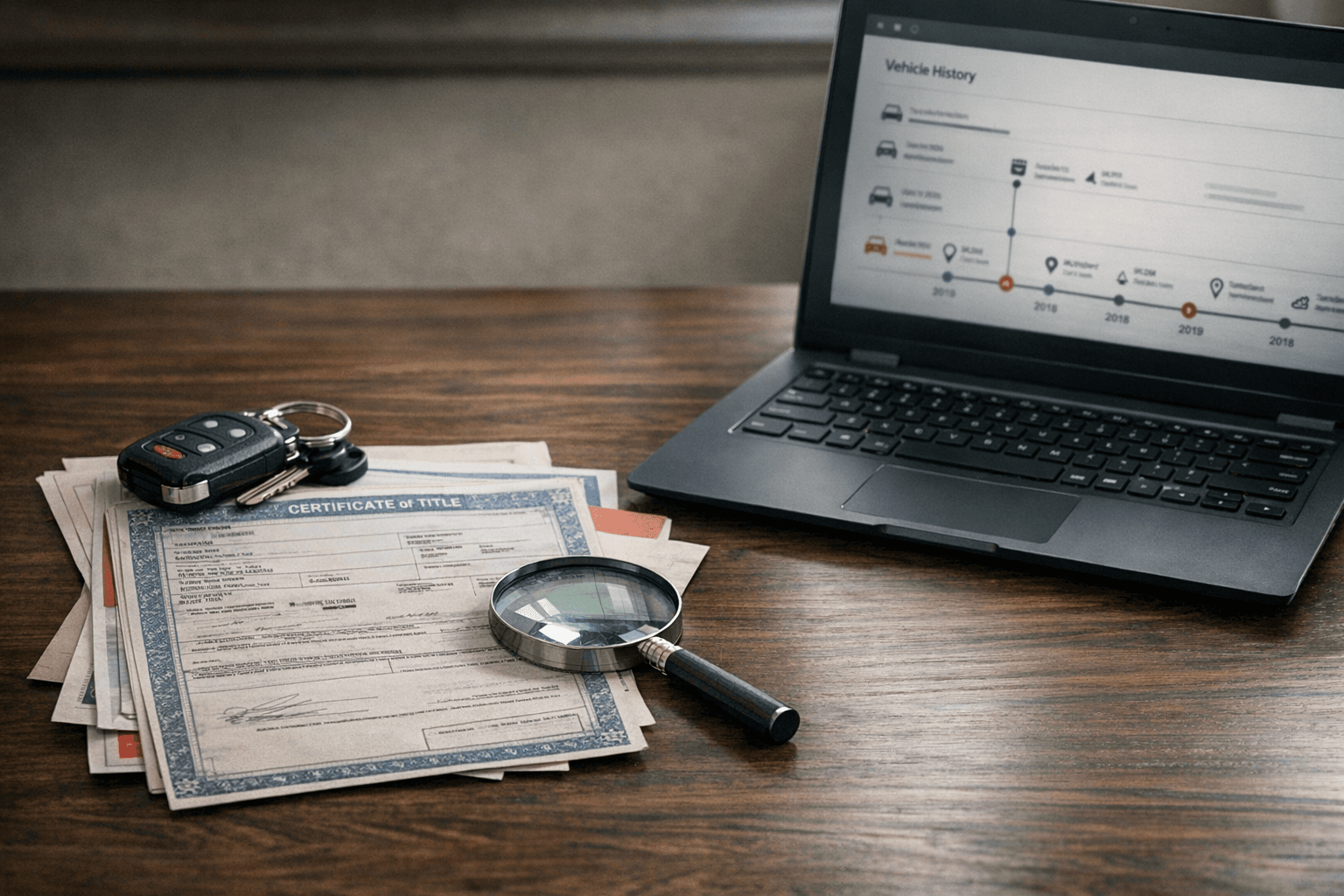
The problem is that a title is a snapshot, not a biography. A car can move across states, pick up a different title status, or get sold after damage in a way that makes the paperwork look calmer than the history really is. That is the basic title-washing problem.
This post is not the same as our salvage-title, junk-title, duplicate-title, or clean-title total-loss pieces. Those focus on specific title states or specific deal failures. This one is about the laundering process itself: how a car with meaningful damage or branding can come back to market with paperwork that looks cleaner than it should. If you want the report context behind that paperwork, start with our vehicle history guide, our rebuilt-title explainer, and our flood-damaged car playbook.
What title washing actually is
Title washing usually means the vehicle's branding history gets blurred, minimized, or misread after a retitle. The exact mechanics vary, but the goal is the same: make the car look more normal than it is.
Paper title
Looks calm
The seller shows a current title that does not scream "problem car."
History trail
Tells more
Prior brand, insurance total loss, salvage reporting, or state-to-state movement tells the real story.
Buyer mistake
Trusting the paper
Buyers assume the current document is the whole file instead of one page from it.
Sometimes there is outright fraud. Sometimes it is more slippery than that: a seller leans on the current title wording and hopes you never look at the broader title and loss history. Either way, the buyer ends up with a car priced like a cleaner vehicle than it really is.
Why this risk keeps showing up in real used-car deals
It is easier to spot obvious damage than paperwork distortion. Flood smell, bad paintwork, crooked panel gaps, and rusty seat rails all give you something physical to react to. Title washing is quieter. It lives in timing, title dates, state transfers, and little story gaps that are easy to wave away when the price looks tempting.
- State differences still matter: brand descriptions and title processes are not perfectly uniform, which is why cross-state history matters so much.
- Natural-disaster inventory keeps feeding the problem: flood and storm losses create the kind of damaged inventory that people try to move quietly.
- Private-party urgency helps the seller: a buyer who feels rushed is less likely to pause the deal over a paperwork story that sounds mostly plausible.
- Online listings flatten nuance: "clean title" in a listing can mean almost nothing if nobody is checking the brand and loss trail underneath it.
That last one is what gets people. "Clean title" is a marketing phrase in far too many listings. It is not the end of the investigation.
The patterns that make me slow a deal down
-
The car bounced across states in a short window.
That does not prove title washing by itself, but quick title movement after a loss event should make you ask better questions.
-
The seller leans hard on the current title but avoids the car's earlier history.
You will hear phrases like "the title is clean now" or "it passed inspection, so it is fine." That is not the same as a clean historical file.
-
The condition and the story do not match.
Fresh interior smell, newer carpet, replaced modules, odd corrosion, or repaint work on a supposedly drama-free car deserve a second look.
-
The price is discounted, but not enough.
Washed-title cars are often priced just low enough to feel like a deal and just high enough that the seller still benefits from the cleaner-looking paperwork.
-
The seller gets irritated when you ask for a VIN history report.
That reaction tells you more than the words usually do.
What title washing can cost you after the sale
Resale value shock
The car can look fine until the next buyer, lender, or dealer appraiser sees the deeper title trail and prices it accordingly.
Financing friction
Lenders care about collateral quality. A vehicle with messy brand history can disrupt loan terms or trade-in value later.
Insurance surprises
Coverage is one thing. Actual cash value, total-loss handling, and claim friction are another when prior history turns out uglier than expected.
Ownership regret
Even if the car drives well today, hidden flood, salvage, or severe-loss history can keep showing up in electrical problems, corrosion, and weak resale options.
This is why I do not treat title washing as a paperwork technicality. It changes value. It changes risk. It changes the kind of car you actually bought.
How to check a used car when the title story feels too neat
-
Run a full vehicle history report before money moves.
You want title history, brand history, insurance loss signals, odometer context, and theft context in one place. If you are still sorting out free versus paid options, use our free vehicle history report guide before the seller controls the pace of the deal.
-
Compare the current title to the timeline.
If the paper in the seller's hand feels cleaner than the historical record, believe the broader record.
-
Look at where the car has been registered.
A chain of state moves around a loss event or a disaster period matters, especially if branding should have followed the car.
-
Inspect the car like the paperwork might be lying.
That means checking under carpet, in the trunk, around seat mounts, inside the spare-tire well, and around electrical connectors instead of stopping at cosmetic impressions.
-
Price the car as the riskier version of itself.
If the history shows prior salvage, flood, or major loss indicators, the valuation should reflect that even if the title in front of you looks cleaner now.
A simple proceed, pause, or walk-away framework
Proceed
The title history, brand history, condition, and seller story line up cleanly. Nothing feels papered over.
Pause
There is a believable explanation, but the state-to-state movement or loss history still needs confirmation before you commit.
Walk away
The seller keeps repeating "clean title" while the history shows brand, salvage, flood, or total-loss context that they are minimizing.
Most bad title-washing deals survive on buyer fatigue. The seller wants you tired, flattered by the price, and just convinced enough to stop asking the next question.
Why VINSCRIBE matters on this specific problem
Title washing is exactly the kind of thing a buyer misses when they rely on a listing, a paper title, and a quick walk-around.
- VINSCRIBE helps you compare the current document to the vehicle's broader history.
- It gives lenders, insurers, and buyers a cleaner way to talk about title risk before the car is priced like a clean-history unit.
- It keeps you from negotiating based on the seller's version of the story alone.
That is the real value here. You are not trying to win an argument about paperwork. You are trying to avoid buying the wrong car at the wrong price.
If the report and the title disagree, trust the discrepancy. That is the signal.
Sources
Continue Your Research
Take the next step before you buy
These hand-picked pages turn broad article research into practical next actions, whether you are comparing report options, narrowing a model shortlist, or checking a real VIN.
Title-risk page
Review the Rebuilt Title Risk Guide
Use this landing page when title branding, prior damage, or salvage concerns are central to the buying decision.
History check
Understand the VINSCRIBE Vehicle History Check
See what a VINSCRIBE report is designed to surface before you commit to a listing or schedule an inspection.
Comparison page
See the Carfax Alternative Breakdown
Compare report value, pricing, and decision support on the landing page built for shoppers weighing alternatives.