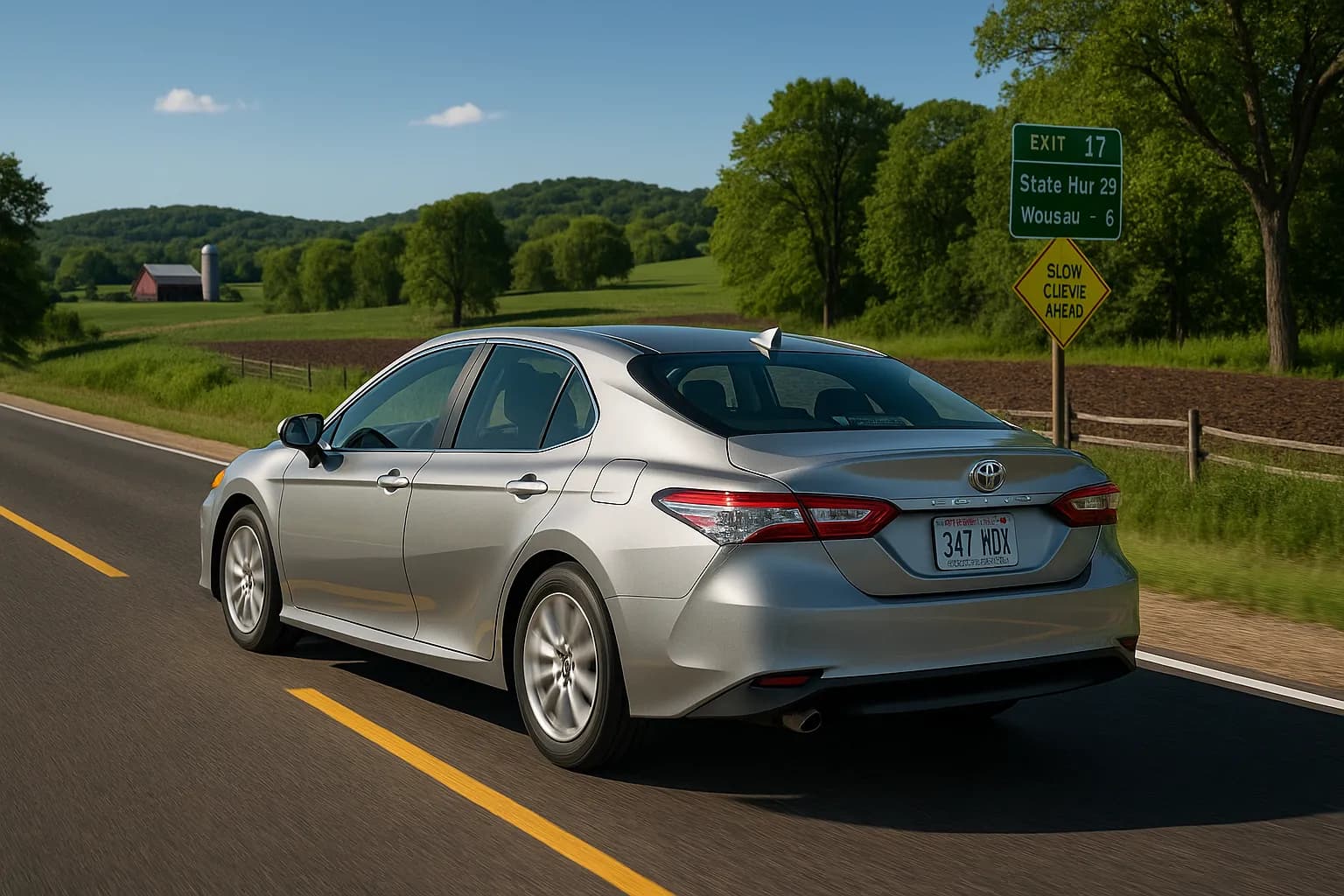
Wisconsin VIN Lookup: Your Guide to Vehicle History in America's Dairyland
VIN Lookups in Wisconsin: What You Need to Know
From the shores of Lake Michigan to the rolling dairy farms of the western counties, Wisconsin vehicles endure some of the harshest winter conditions in the country. Months of subzero temperatures, aggressive road salt application, and freeze-thaw cycles take a relentless toll on cars and trucks across the Badger State. Wisconsin does not require safety inspections for passenger vehicles, and emissions testing is limited to southeastern counties—meaning many vehicles are never officially checked for mechanical soundness. That makes a thorough VIN lookup one of the smartest moves you can make before buying a used car in Wisconsin.
What a VIN Lookup Reveals
A Vehicle Identification Number (VIN) is the unique 17-character code assigned to every vehicle built since 1981. A comprehensive VIN lookup pulls data from national databases to uncover:
- Accident and damage history — collisions, structural damage, and airbag deployments reported to insurance companies and law enforcement.
- Title brands — salvage, flood, rebuilt, and other designations that signal major past issues.
- Odometer readings over time — a mileage trail that helps detect rollback or tampering.
- Ownership and registration history — how many owners, where the vehicle was registered, and how long each owner kept it.
- Open recalls — manufacturer safety recalls that haven't been addressed.
Wisconsin Division of Motor Vehicles (DMV) Resources
Vehicle titles in Wisconsin are managed by the Wisconsin Division of Motor Vehicles (DMV), which handles title issuance and registration. The DMV maintains records of:
- Title history: Basic ownership and title brand records for vehicles titled in Wisconsin.
- Lien records: Outstanding liens on vehicles registered in the state.
- Salvage and rebuilt designations: Records of vehicles branded as salvage or rebuilt within Wisconsin.
- Emissions test history: Results for vehicles in counties that require emissions testing.
These state-level records are limited to Wisconsin activity. They won't show you a wreck that happened in Illinois, a flood title from Iowa, or service records from any state. VINSCRIBE pulls from NMVTIS and other national databases to give you the complete picture across all 50 states.
Inspection and Emissions Requirements
Wisconsin does not require safety inspections for passenger vehicles. Emissions testing is required only in the seven southeastern counties of the Milwaukee metro area—Kenosha, Milwaukee, Ozaukee, Racine, Sheboygan, Washington, and Waukesha—for vehicles that are model year 2007 or newer. Vehicles outside these counties face no emissions or safety checkpoint whatsoever. This means a vehicle with severely corroded brake lines, a rotted subframe, or bald tires can be legally driven and sold without any official documentation of its condition. For buyers, independent pre-purchase inspections and comprehensive VIN reports are essential.
Key Wisconsin Title Laws
- Salvage threshold: Wisconsin brands a vehicle as salvage when the cost of repair exceeds 70% of its fair market value—a lower threshold than many states, meaning more damaged vehicles receive the salvage designation.
- Rebuilt title: A salvage vehicle can be retitled as "Rebuilt" after passing a DMV inspection verifying the repairs were properly made.
- Flood title disclosure: Vehicles with water damage affecting major components are required to receive a flood brand on the title.
- Title transfer: Wisconsin requires title transfer at the time of registration. The state charges a 5% sales tax plus a 0.5% county tax, along with title and registration fees.
- No odometer disclosure required for 20+ year old vehicles: Wisconsin follows the federal exemption for vehicles over 20 model years old, making odometer fraud harder to detect on older cars without a VIN report showing the mileage history.
Wisconsin-Specific Risks and Common Issues
Wisconsin's brutal winters and Great Lakes geography create some of the toughest conditions for vehicles anywhere in the lower 48 states.
Climate and Environmental Risks
- Road salt corrosion: Wisconsin applies massive quantities of road salt from November through April. This accelerates rust on undercarriages, brake lines, fuel lines, exhaust systems, and body panels. Wisconsin sits squarely in the rust belt, and vehicles with just a few winters of exposure can develop serious structural corrosion that compromises safety.
- Extreme cold and freeze-thaw cycles: Temperatures regularly plunge well below zero, stressing batteries, engine components, rubber seals, and fluids. Repeated freeze-thaw cycles crack pavement and create potholes that damage suspension, wheels, and tires. These cycles also work moisture into body panel seams, accelerating hidden rust.
- Deer collisions: Wisconsin consistently ranks among the top states in the nation for deer-vehicle collisions. These accidents often cause significant front-end damage, including radiator, frame, and airbag damage that may be repaired cosmetically without full structural correction.
- Flood damage: Areas along the Mississippi River in western Wisconsin, the Fox River Valley, and low-lying areas near Lake Michigan are susceptible to seasonal flooding. Vehicles can sustain hidden water damage during spring thaws and severe summer storms.
- Lake-effect moisture: Proximity to Lake Michigan and Lake Superior creates persistent humidity and moisture in eastern and northern Wisconsin, accelerating corrosion even without direct salt exposure.
Common Scams and Red Flags
- Concealed rust damage: The most common issue in Wisconsin. Sellers may apply undercoating, bed liner spray, or fresh paint over severely corroded frames, subframes, and structural components. What looks solid on the surface may be paper-thin underneath.
- Title washing across state lines: Wisconsin borders Illinois, Iowa, Minnesota, and Michigan. Vehicles with salvage or flood titles from neighboring states may be brought to Wisconsin to obtain a cleaner title, especially from states with higher salvage thresholds.
- Undisclosed deer strike repairs: Deer collision damage can be repaired cosmetically at body shops without insurance involvement. Without a VIN report, buyers may not know the front end was rebuilt after a high-speed deer strike.
- Odometer fraud on older vehicles: The federal odometer disclosure exemption for vehicles over 20 model years old means tampering on older Wisconsin vehicles is difficult to detect without a VIN report showing the complete mileage history.
- Curbstoning: Unlicensed dealers operating as private sellers to avoid Wisconsin's dealer disclosure requirements, particularly common with vehicles bought at auction and flipped quickly.
Regional Variations Within Wisconsin
- Milwaukee metro area: Urban driving wear, emissions testing required, heavy road salt use, and dense traffic contribute to accelerated brake and transmission wear. This is where you'll find the most vehicles with documented emissions histories.
- Madison: College town with a mix of commuter vehicles and student cars. Vehicles may have been driven by multiple young drivers or used primarily for short trips, which can be hard on engines and batteries in cold weather.
- Green Bay / Fox Valley: Lake-effect moisture from Lake Michigan combined with heavy road salt creates ideal conditions for corrosion. Industrial use and towing for recreational boating add wear on trucks and SUVs.
- Northern Wisconsin (Northwoods): Extremely harsh winters with deep snow and prolonged cold. Vehicles here are often driven on rural roads, used for towing snowmobiles and boats, and may have higher-than-average wear from gravel roads and off-pavement use.
- Western Wisconsin (Mississippi River corridor): Flood risk along the Mississippi and its tributaries. Vehicles from La Crosse, Prairie du Chien, and other river towns should be checked carefully for water damage history. This region also sees vehicles crossing from Minnesota and Iowa.
Buying a Used Car in Wisconsin: Practical Guide
With no safety inspection requirement and a climate that silently eats vehicles from the inside out, buying smart in Wisconsin means doing thorough due diligence on your own.
Pre-Purchase Checklist
- Run a VINSCRIBE report before visiting the vehicle. Check for title brands, accidents, deer strike claims, and mileage history.
- Check the NHTSA recalls database for any open safety recalls on the specific VIN.
- Budget for Wisconsin's 5% state sales tax plus 0.5% county tax, title fees, and registration costs.
- If buying in a Milwaukee-area county, verify the vehicle has a current passing emissions test for 2007+ model years.
- Arrange for a pre-purchase inspection by an independent mechanic who will put the vehicle on a lift—this is critical in a no-inspection state with severe rust issues.
Inspection Tips for Wisconsin Vehicles
- Get it on a lift: This is non-negotiable in Wisconsin. Inspect the undercarriage for rust on the frame rails, subframe, control arms, brake lines, fuel lines, and exhaust. Surface oxidation is normal—flaking, scaling, or perforated metal is a deal-breaker. Poke suspect areas with a screwdriver to test for integrity.
- Check for fresh undercoating: Recently applied undercoating or rubberized spray on a used vehicle is a red flag. It may be hiding severe rust rather than preventing it. Ask why it was applied and by whom.
- Look for deer strike evidence: Examine the front end for mismatched paint, uneven panel gaps, aftermarket headlights, or a replaced radiator support. Check the VIN report for any collision history.
- Test cold-weather systems: Verify the heater blows hot quickly, the defroster works on all settings, the battery holds charge, and the block heater (if equipped) functions. These are essential in Wisconsin winters.
- Inspect wheel wells and rocker panels: These areas trap road salt and are among the first places to rust through. Push on the rocker panels—if they flex or crumble, the vehicle has serious corrosion.
- Have a mechanic check it: Since there's no state inspection, a thorough evaluation by a trusted mechanic is your best protection against hidden mechanical and structural issues.
Title Transfer Process
- Obtain the signed title and bill of sale from the seller.
- Visit your local DMV service center to complete the title transfer at the time of registration.
- Pay the 5% state sales tax plus 0.5% county tax, title fee, and registration fee.
- Provide proof of liability insurance (Wisconsin requires 25/50/10 minimum coverage).
- If the vehicle is from out of state, a VIN inspection may be required by the DMV.
- If buying in an emissions-testing county, the vehicle must have a valid emissions test.
Wisconsin DMV vs. VINSCRIBE
| Feature | Wisconsin DMV | VINSCRIBE |
|---|---|---|
| Geographic Coverage | Wisconsin only | Nationwide (all 50 states via NMVTIS) |
| Accident History | Limited to Wisconsin-reported incidents | Comprehensive accident history across all states |
| Title Brand History | Wisconsin title brands only | Full title brand history from all states |
| Service Records | Not included | Includes records from participating service facilities |
| AI Analysis | None | AI-powered risk assessment and plain-language analysis |
| Recall Information | Not included | Active recall data with completion status |
Table can be scrolled horizontally on mobile devices.
See VINSCRIBE in Action
Watch these demos to see how VINSCRIBE helps Wisconsin buyers uncover hidden vehicle history and make confident purchasing decisions: